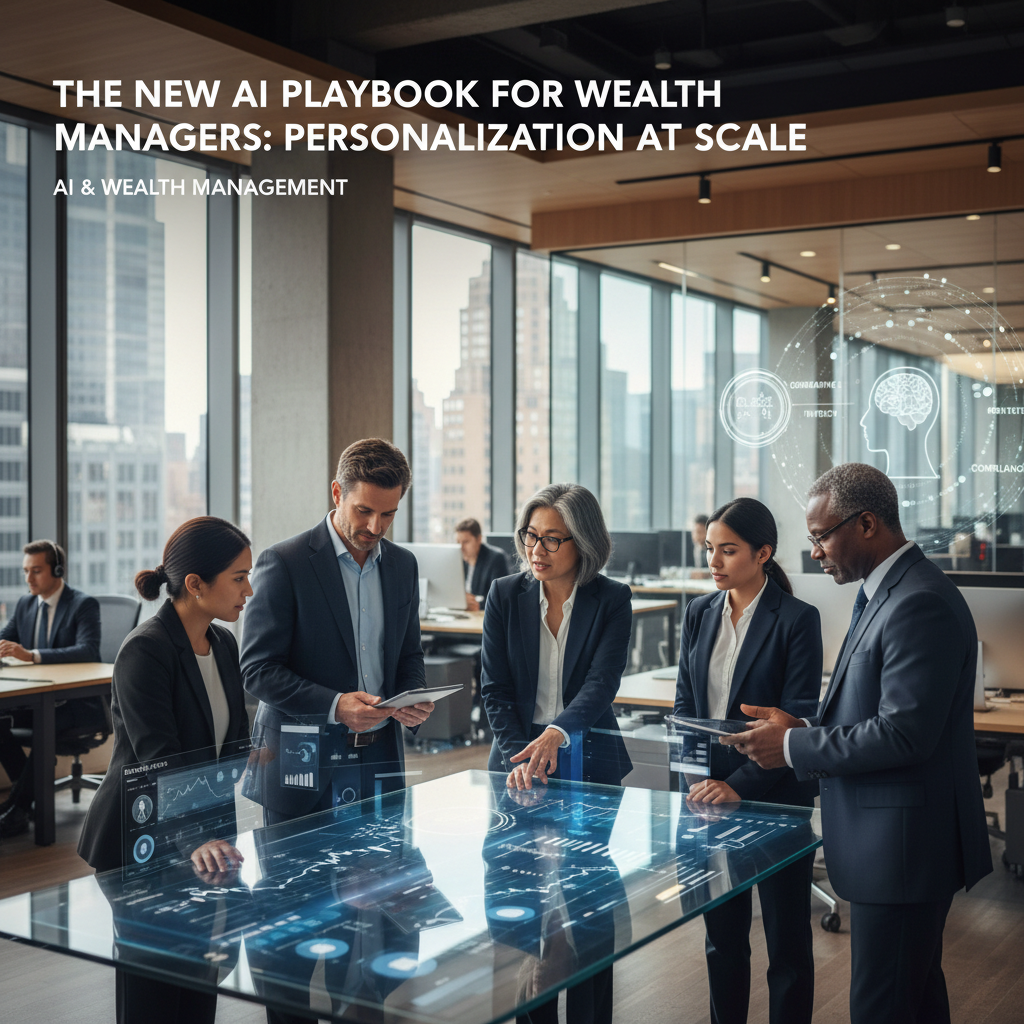
The last decade in wealth management was about automation and scale. The next one will be shaped by voice, context and nuance. Generative AI is letting advisers produce guidance that reads less like algorithmic output and more like a trusted counselor — but the tradeoffs are real.
Why this matters now
Robo-advisors solved asset allocation; big wealth teams digitized reporting. Now large language models add something different: natural-language conversations that span planning, tax scenarios and behavioral nudges. That shifts the product from a static portfolio to an ongoing relationship — one that weaves tailored narratives around money. What’s interesting is how that narrative itself becomes part of the service proposition.
A quick snapshot of what's new
- Hyper-personalization: models can synthesize tax lots, cashflow forecasts and life events into concise, next-step advice.
- Real-time client engagement: conversational touchpoints triggered by market moves, milestones or calendar events.
- Operational scaling: firms claim they can broaden advice without matching headcount growth.
Those claims are compelling. In practice, though, adoption is messy. Early adopters report better client stickiness, but margins are squeezed while firms test fee structures and bundled services. Clients want relevance; they rarely pay for bells and whistles alone.
Concrete examples and industry direction
Boutique RIAs and fintech startups are the most aggressive, integrating LLMs into portals and compliance workflows. Big incumbents are piloting hybrids: proprietary client data married to vetted models to avoid raw outputs that can hallucinate. Think less map, more guided tour — same destination, but with somebody pointing out the tricky bits.
What could go wrong
- Hallucinations and factual errors: an AI recommendation that misreads a tax rule can have tangible financial consequences.
- Model bias and fairness: highly personalized advice can unintentionally amplify biases in training data.
- Data governance and privacy: feeding sensitive financial records into third-party models invites regulatory heat.
- Compliance and recordkeeping: advisers still need to demonstrate suitability and keep auditable records, which complicates conversational workflows.
Regulators and compliance teams are already active. Expect more granular guidance on model validation, explicit disclosure when AI is used, and tighter audit trails — reminiscent of the post-2008 algorithmic risk work, but now focused on explainability and client protection.
Signals to follow
- Technology splits: firms that control data integration and guardrails will capture more value than those reliant on generic APIs.
- Fee dynamics: personalization can justify premium pricing, but only if outcomes improve measurably and clients actually perceive the difference.
- Talent reshaping: the highest-value roles will be hybrid — advisors fluent in client psychology and model governance.
The upshot
Generative AI is not a plug-and-play add-on. It is a redesign of the advice stack that rewards firms able to pair product creativity with rigorous controls. Clients will get smarter, more accessible guidance; firms that ignore guardrails or overpromise may find regulatory and reputational costs outweigh short-term gains.
Practical next steps for executives
- Pilot with controlled datasets and human-in-the-loop approvals. Don’t rush to generalize early results.
- Invest in explainability and audit trails from day one so recommendations can be defended.
- Run pricing experiments tied to measurable outcomes, not just access to chat features.
This is an evolutionary moment for wealth management. The winners will be those who treat AI as a craft tool, not a marketing slogan.