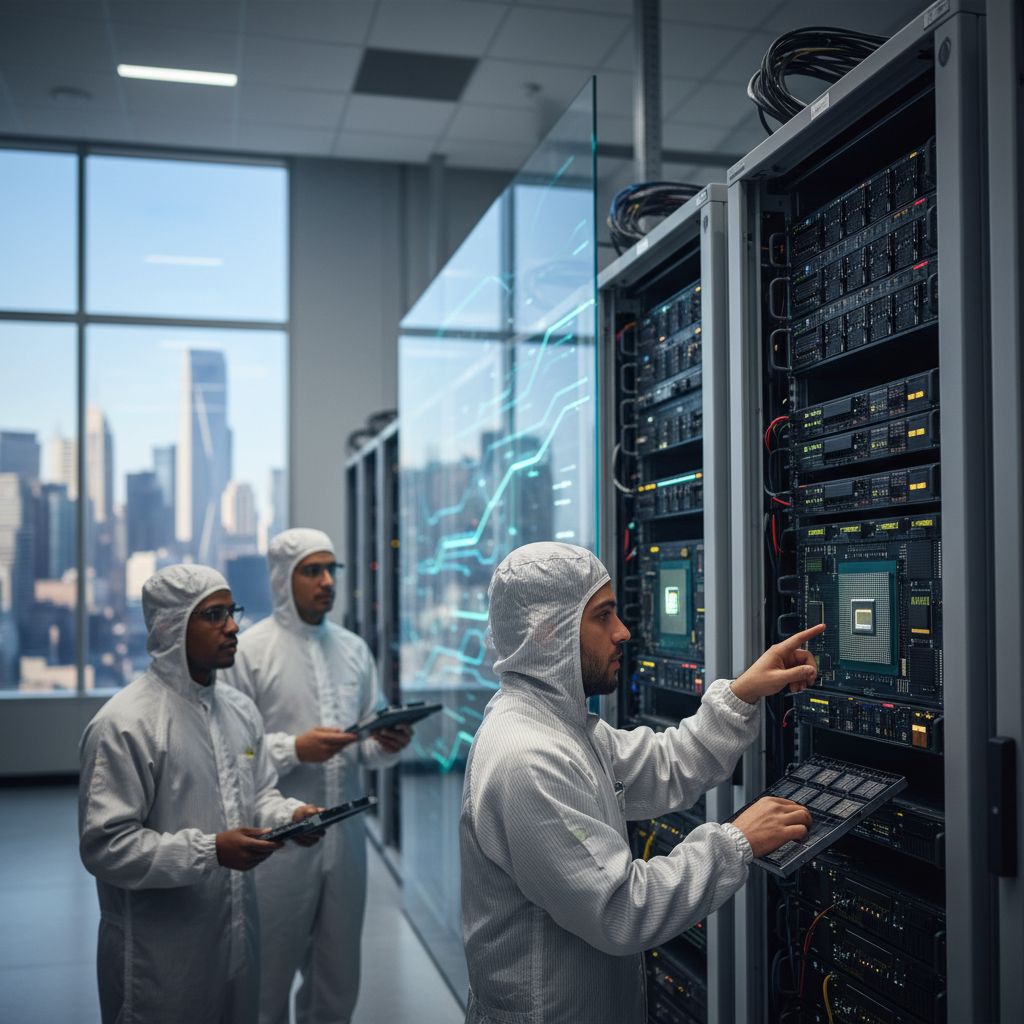
Nvidia rewrote the rules of AI training, but the next phase of value is quietly moving to inference chips, bespoke accelerators and the data-center plumbing that connects them.
This is not a replay of the GPU gold rush. Think of the 2000s PC era: Intel owned the processors, yet a whole ecosystem — peripherals, software, services — captured real profit. AI looks similar. One clear leader creates the market; as workloads multiply, the rest of the supply chain begins to collect the margins.
Why this matters now
- Training grabbed the headlines because it costs a fortune and makes for dramatic demos. Large language models need massive GPU farms, and that is what vaulted Nvidia to a dominant position.
- Most real-world AI runs in inference: search queries, recommendation engines, voice assistants, on-device personalization. Inference happens in cloud racks, at telecom edge sites, even on phones. Each location cares about different trade-offs — latency, power use, cost — and that opens space for many chip designers.
- Network and I/O bottlenecks are starting to matter as much as raw FLOPs. Shunting trillions of parameters around racks is expensive. Smarter switching, compression and task-specific accelerators cut operational costs in ways raw compute cannot.
Who looks poised to benefit
- Nvidia (NVDA) — still the frontrunner for training hardware. That position is powerful, but the stock is sensitive to slower upgrade cycles and rising execution expectations.
- AMD — gaining traction with data-center GPUs and tighter system play after the Xilinx acquisition. Its roadmap is designed to make multipurpose racks less Nvidia-dependent.
- Intel — stumbled early on discrete GPUs, but Habana for inference and renewed bets on accelerators make it a dark-horse for heterogeneous data centers.
- Broadcom — not the sexy name in AI chips, yet its networking silicon and moves into data-center software give it real influence as workloads become fabric-centric.
- Marvell — quieter, but important. Its chips for storage, networking and edge infrastructure start mattering when inference scales broadly.
How to think about risk and timing
- Valuation versus moat: Nvidia has a deep hardware-plus-software moat, but that premium can be hit hard if upgrade cycles stall. Smaller chipmakers offer more upside, at the price of execution and adoption risk.
- Workload fragmentation: If models converge on a standard inference pattern, a handful of vendors could capture most of the market. If architectures keep diverging, many niche players stand to win.
- Macro and capex cycles: Demand is strong, but data-center spending is lumpy. A single big pause in capex reshuffles where returns land.
Practical portfolio moves
- A straightforward play: keep a core holding in the leader to cover training exposure, and use smaller satellite positions for accelerators, networking and edge specialists.
- Favor companies with mixed revenue streams. Firms that sell both silicon and software or services tend to ride cycles more steadily.
- Focus on adoption signals, not just glossy guidance. Telecom edge rollouts, cloud partnerships and real production deployments are more telling than benchmark numbers.
A quick checklist before buying
- Are they shipping silicon into production inference workloads? Real revenue beats theoretical benchmarks every time.
- Do they control software stacks or have partnerships that raise switching costs? That kind of interoperability becomes a practical moat.
- How exposed are they to cyclic capex? High exposure means short-term share-price volatility.
The upshot
Nvidia wrote the opening chapters of the AI hardware story. The next chapters will be messier. Value is migrating into inference accelerators, networking silicon and chips tuned for the edge. For investors the task is less about naming one winner than mapping where AI workloads will actually run in two years and buying the parts that monetize those paths. Expect surprises, incremental winners and a premium on practical deployments over PR-friendly benchmarks.
Authorial note: I watch telecom and cloud rollouts as the real leading indicator. When carriers begin putting inference nodes into production at scale, companies that were irrelevant overnight become relevant — and fast.