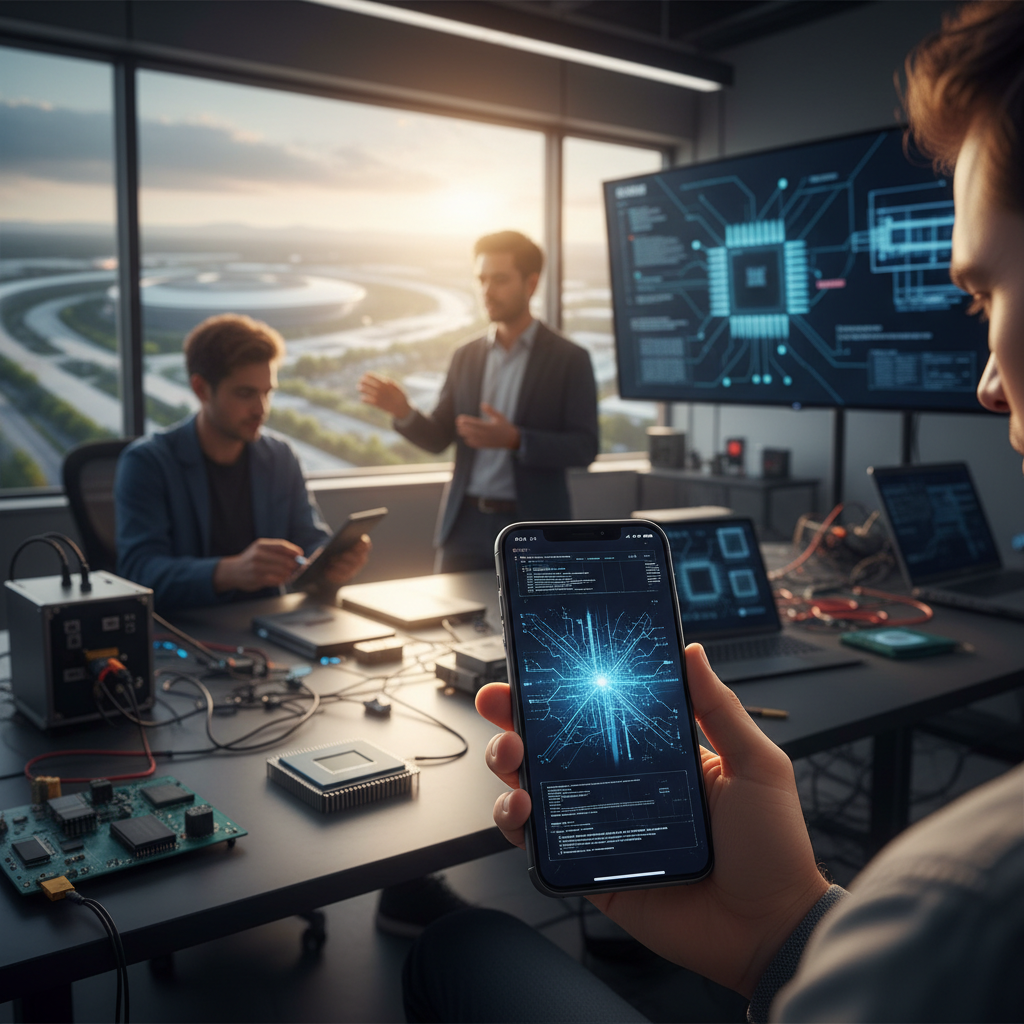
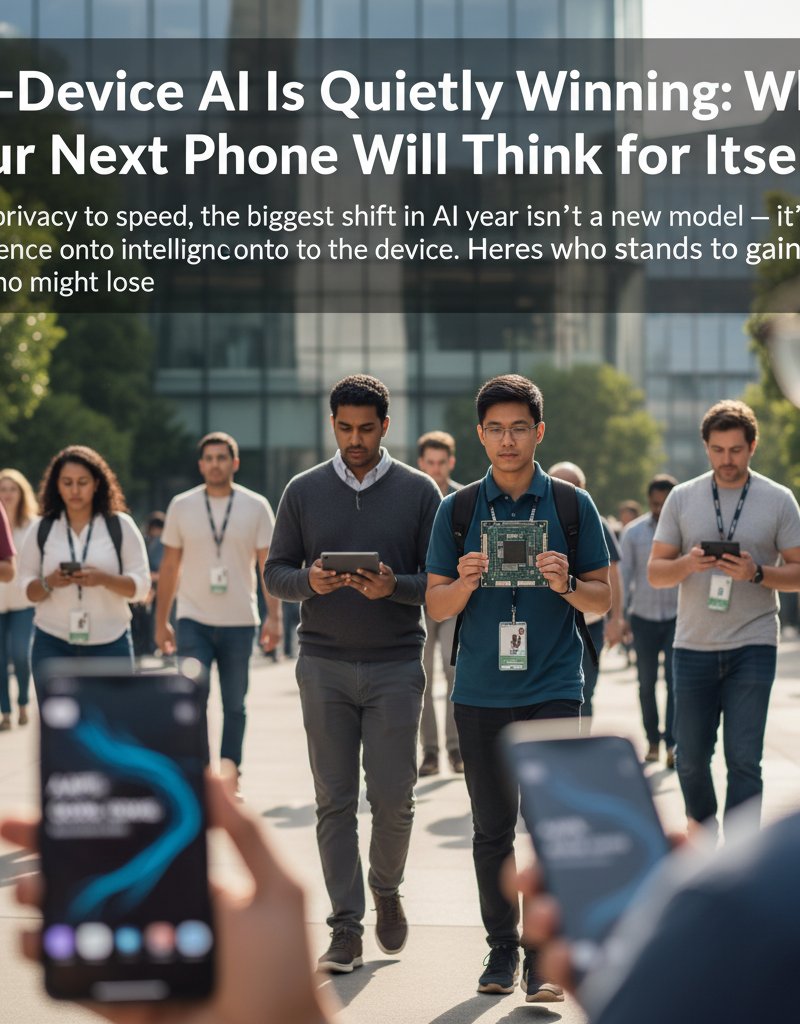
Simple headline: after years of cloud dominance, serious AI work is migrating back onto the device in your pocket.
This isn't vapor. It’s a mix of engineering advances, open-source toolchains and shifting economics that make trimmed-down large language models runnable on phones, tablets and laptops. The tradeoffs change: privacy and latency improve, while power consumption, updates and monetization get messier. That shift matters more than it might look at first glance.
Why now?
- Model efficiency has finally caught up. New compact LLMs and runtimes — GGML, Llama.cpp and their kin in the open-source world — let local inference run on mobile NPUs and even CPUs that were mostly idle before.
- Hardware matters again. Apple’s Neural Engine, Qualcomm’s recent Snapdragon AI blocks and more efficient low-power silicon from Intel and AMD give usable on-device throughput without constant cloud calls.
- People care about privacy and offline use. Models that work without network access appeal to users who want faster responses and less data leaving their device.
Real-world signals
- Independent developers are shipping chat apps and productivity tools that run completely without servers. Enterprise pilots are testing on-device inference for sensitive health and finance workflows — not widespread yet, but getting real.
- App makers are trying hybrids: a small personal model stays on-device for routine tasks; heavier models in the cloud handle big jobs or periodic updates.
Why investors and product teams should look up from the cloud
- Hardware suppliers stand to win. Companies providing NPUs, memory bandwidth and neural runtimes — notably Apple (AAPL) and Qualcomm (QCOM) — are well placed if on-device AI moves from novelty to platform feature.
- Cloud giants face a headache. Alphabet (GOOGL) and Microsoft (MSFT) still dominate model training and server-scale inference, but migrating workloads to the edge will pressure margins and product strategies.
Counterpoints and costs
- Capability ceilings exist. Local models trade parameter count and training scale for latency and power. For now, the most sophisticated, knowledge-rich LLMs still run in the cloud.
- Security and update headaches multiply. Shipping models to millions of devices expands the attack surface: malware, model poisoning and stale versions are practical risks.
- Monetization is unsettled. Subscriptions tied to server inference are straightforward; selling or licensing on-device models forces a rethink of SDKs, app-store rules and vendor economics.
A quick history repeat
This feels oddly like the early smartphone era, when apps displaced the open mobile web and remapped platform control. On-device AI could trigger a similar scramble: new experiences tied to hardware, and a fresh round of regulatory and antitrust questions. It’s familiar—and a little unnerving.
Signals to watch
- Benchmarks and killer apps. The consumer moment will come from a few low-latency, high-utility features — instant summarization of local files, private assistants that manipulate device data, or offline triage tools for medicine. Those will make the tech obvious.
- Edge tooling and standards. Widespread adoption needs solid runtimes, compact model formats and clearer licensing. The open-source ecosystem will be the trial ground for many ideas.
- App store rules and privacy law. Platform owners and regulators will help decide who controls models, updates and data flows. Expect friction.
The upshot
On-device AI isn't a plot to replace cloud models; it's a rebalancing. Users get faster, more private experiences. Companies face a new battleground: chip designers, OS makers and independent developers will compete for who owns the personal AI on your phone.
Over the next 12–24 months experiments should separate from scalable product patterns. The winner will control the user interaction layer and, importantly, the economics of everyday AI. In other words, the future may depend less on raw compute in distant data centers and more on the intelligence that lives with you — on your device, under your control.