Why QT matters now
Quantitative tightening isn’t flashy. It won’t get the same headlines as a policy-rate move, yet by draining reserves it quietly raises banks’ effective funding costs. For someone juggling a mortgage, a retirement plan, or small-business credit, QT is the slow nudge that shows up in your monthly bill — sometimes when you least expect it.
A quick anatomy of the mechanism
- The Fed stops reinvesting in Treasuries and mortgage-backed securities, or actively sells them, so it buys less long-duration paper than before.
- That reduced bid pushes up Treasury yields and increases the liquidity premium on MBS, which can lift mortgage rates even if the policy rate itself sits unchanged.
- Banks run with thinner reserve cushions. That widens interbank spreads and shrinks the wiggle room for lending.
Why this feels different from a plain rate hike
Rate hikes are headline events; QT is a background tightening. Think of rate increases as pressing the brake pedal. QT is more like siphoning oil from the engine while you’re still driving — not dramatic at once, but it raises the odds of stutters and surprises down the road. History gives us cautionary examples: 2013 and 2018 both show that when liquidity is pulled back against an uneasy macro backdrop, market volatility and cross-asset frictions tend to spike.
Real-world fallout: mortgages, banks, and asset prices
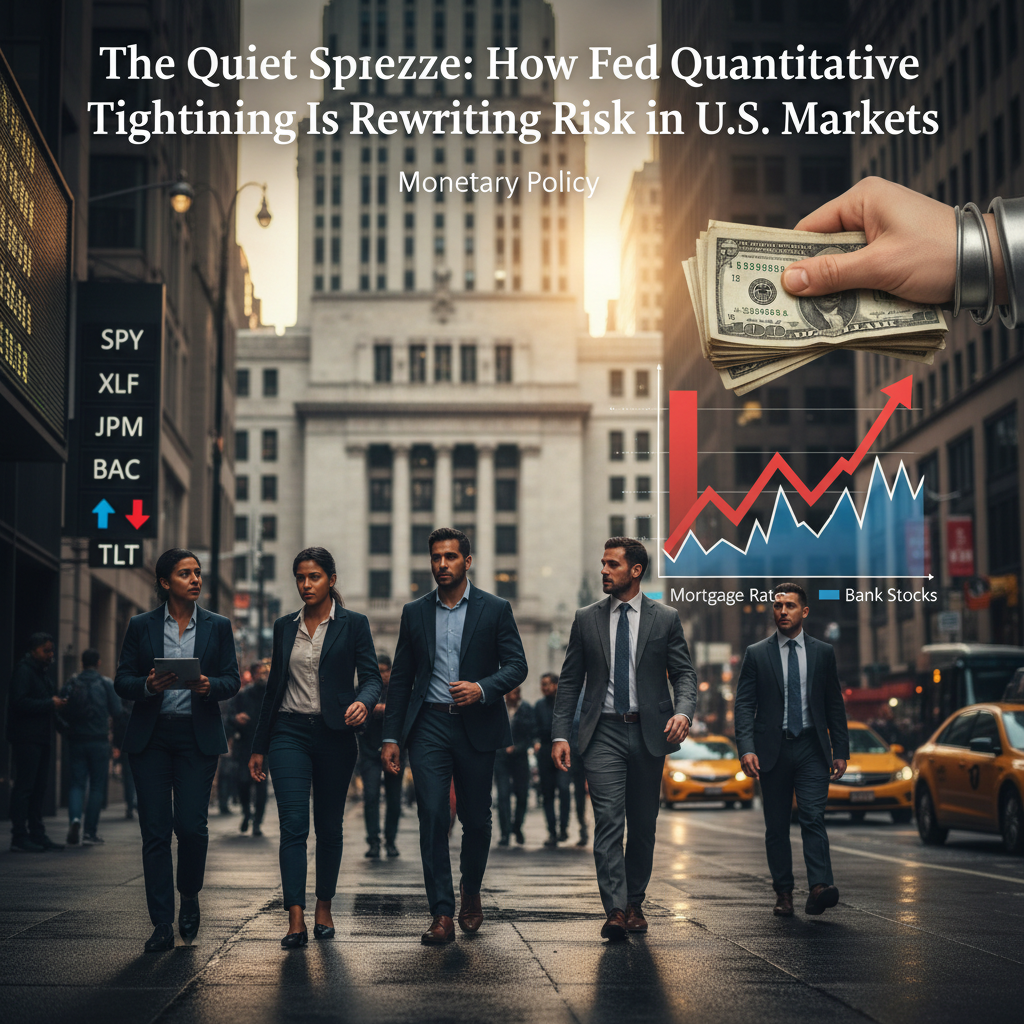
- Mortgage rates. Small moves in the 10-year Treasury can translate into equal or larger moves in 30-year fixed rates because MBS liquidity deteriorates. The practical consequence: higher monthly payments and tougher refinancing math.
- Banks. Effects vary. Large, well-funded banks may pick up margins from higher short yields; regional and smaller lenders can be hit by rollover costs and mark-to-market losses on securities inventories.
- Stocks and bonds. Less Fed demand for long-duration paper raises term premiums, which pressures long-duration equities and bond ETFs. Insurers and pension funds, forced to rebalance in thinner markets, often feel the squeeze more than headline investors realize.
The other side of the story
- Markets often price QT in well before the Fed starts selling; some of the move is already expected.
- If growth surprises on the upside, rising yields might simply reflect stronger fundamentals — and that can be supportive for equities overall.
- The Fed has more knobs than outright sales. Repos, reverse repos and targeted Treasury operations can be deployed to blunt acute dislocations.
What history suggests investors do — and what they tend to miss
- Manage duration. A small tilt in bond duration changes sensitivity to rising term premiums materially.
- Be selective in financials. Funding diversity and capitalization matter; not all banks react the same.
- For homeowners and buyers: locking a mortgage has become as much about watching Treasury moves as it is about Fed-speak.
A short checklist for the coming months
- Track Treasury term premiums and MBS spreads, not just Fed statements.
- Reconsider cash posture: higher short-term yields alter the trade-off between holding cash and chasing yield in longer instruments.
- Stress-test portfolios for higher yields and thinner liquidity — the kind of scenario a quiet QT can produce faster than most expect.
Editorial take
The Fed can argue balance-sheet normalization is tidy optics. Reality is messier: QT is a blunt tool that tightens the plumbing of finance in ways rate announcements do not capture. For anyone planning a mortgage, retirement drawdown, or a loan, this backstage policy shift matters more than another basis point of policy rate. If you care about where interest rates go over the next year, watching the balance sheet is no longer optional.