What happened
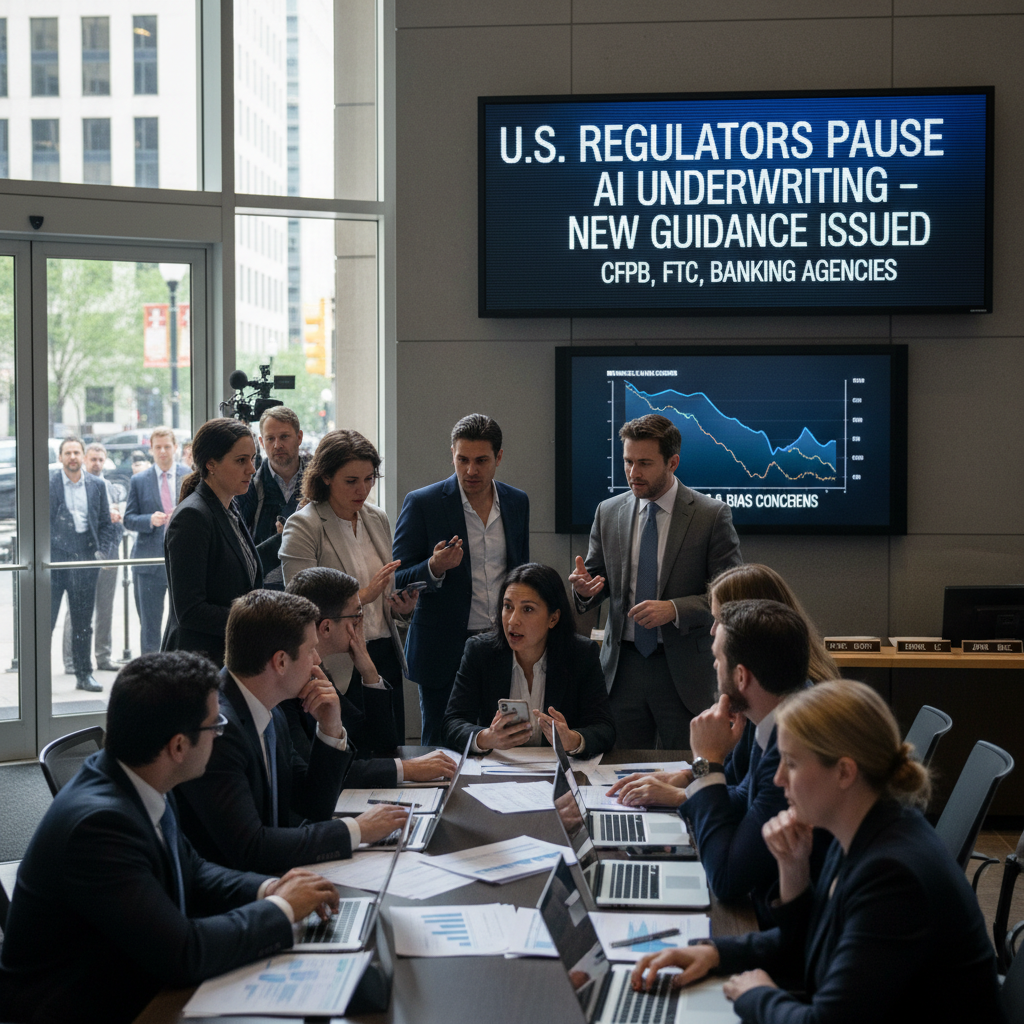
Late today the Consumer Financial Protection Bureau, the Federal Trade Commission and the federal banking regulators issued a coordinated, formal guidance tightening rules around the use of AI in consumer credit underwriting. The memo pushes for clearer documentation, required fairness testing for disparate impact, and stronger human oversight where models materially affect loan decisions.
Why this matters — and quickly
This is not a gentle nudge. Regulators are tying long‑standing fair‑lending laws and consumer‑protection rules directly to algorithmic systems — meaning opaque “black‑box” models will be treated the same as human decisioning. For fintechs that built underwriting on machine learning, that raises immediate legal and business risk: think more litigation exposure, slower product rollouts and tougher vendor scrutiny.
Who’s in the crosshairs
- Pure‑play AI lenders and marketplaces that rely on complex models for approvals.
- Big banks that have adopted third‑party AI tools without deep model governance.
- Small lenders that lack the resources to stand up the compliance programs the guidance assumes.
(How aggressively any regulator pursues each firm will vary, but the signal is clear.)
Illustrative examples
- An alternative‑lending startup using nontraditional data could be required to disclose key model inputs and run new disparate‑impact analyses.
- Banks using vendor AI scores must show they validate and can explain third‑party models — not merely point to the vendor contract.
What regulators want
- Full model documentation, including training‑data lineage and version history.
- Routine disparate‑impact testing plus documented bias‑remediation plans.
- Human‑in‑the‑loop checkpoints for adverse‑action decisions.
- Stronger vendor governance when models are sourced externally.
These are concrete expectations, not just suggestions.
What this means in practice
- Near term: expect a spike in compliance spending as firms beef up model‑risk, legal and audit teams. Smaller fintechs will feel the margin squeeze first.
- Operations: some lenders may pull back on new model deployments or rework scoring pipelines, which could tighten loan volumes for a spell.
- Longer term: institutions with transparent, auditable AI stacks — or those that prefer simpler, explainable models — will likely gain an edge.
There’s nuance here: firms that invested early in governance can adapt more cheaply; others face a costly rebuild.
For investors: quick checklist
- Monitor filings and guidance updates from fintechs with heavy model exposure.
- Favor banks and platforms that already disclose governance practices and have sizeable compliance budgets.
- Be skeptical of valuation stories that rely solely on scale‑through‑AI without clear controls.
Bigger picture
This follows a string of enforcement actions and public complaints about algorithmic bias. Regulators are no longer treating AI as a novelty; they’re folding it into existing consumer‑protection frameworks. Think of today’s memo as a kind of fairness‑focused stress test — not for capital, but for explainability and equal treatment.
The upshot
The guidance raises the compliance floor. Startups face a stark choice: build governance now or risk losing market access; incumbents must decide whether to invest in explainability or pay later in remediation and reputational damage.
Expect a rush of industry comment letters — and at least one enforcement action within a year if firms don’t move.