When the Machines Beat the Floor: Why AI Hedge Funds Are Running Ahead — and Why That’s Dangerous
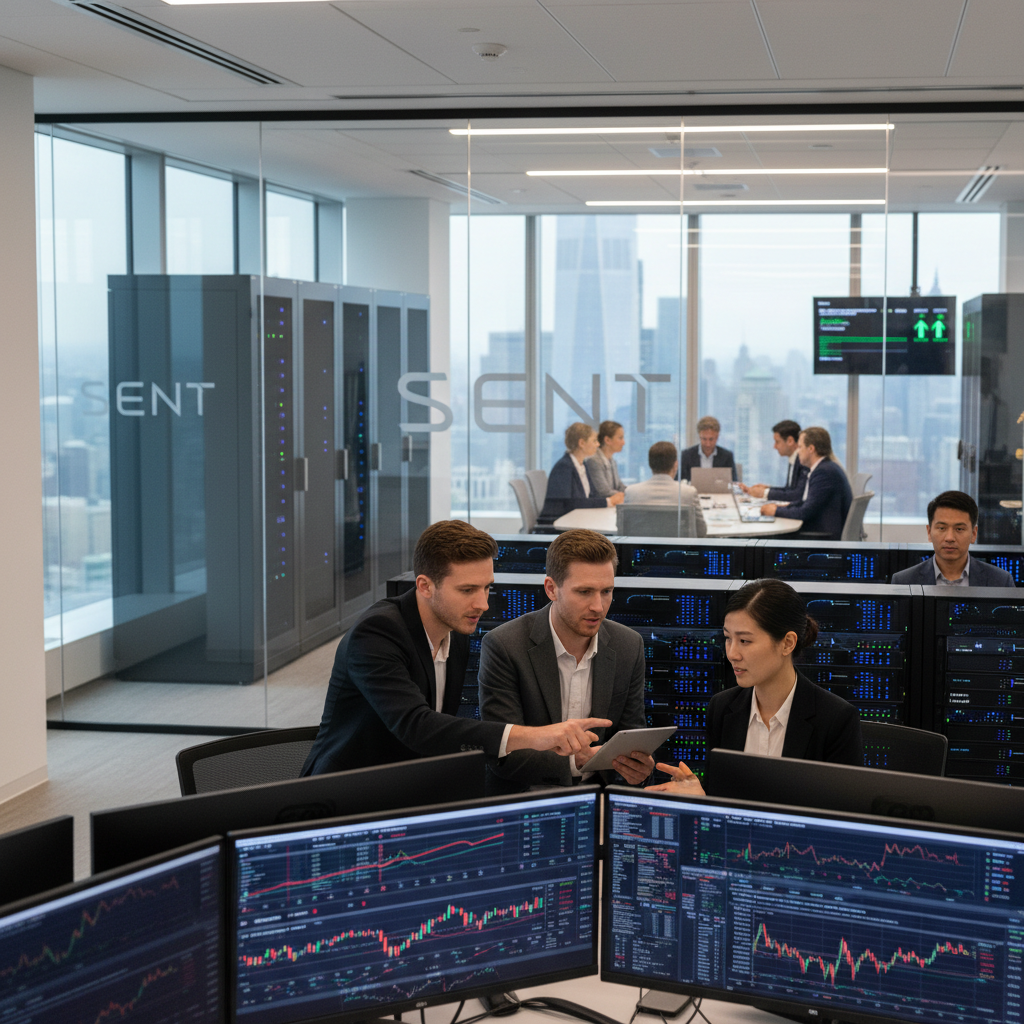
Wall Street has a new leaderboard. In Q1 2024 a clutch of AI-driven hedge funds posted returns that left traditional discretionary managers squinting at their screens. The numbers are crisp: funds built around machine learning and alternative data are routinely topping benchmarks. Sentient Capital — one of the better-known outfits trading this way — disclosed a 25% return in the quarter, roughly double the industry average. That’s not a rounding error. It’s a tectonic nudge.
This story isn’t about a single algorithm getting lucky. It’s about an industrial upgrade: better models, cheaper compute, richer data, and fund managers who finally stopped treating AI as an occasional toy and started treating it as the desk’s operating system.
Why the pull ahead happened (short version)
- Models now chew datasets humans never could—satellite imagery, anonymized card flows, web-scrape sentiment, tick-level microstructure—and turn them into tradable signals fast.
- Cloud GPUs and proprietary feature stores let quants iterate in days instead of quarters.
- Firms that invested early in ML ops and data pipelines are reaping a compound return on that infrastructure.
The market feels different. Fast. Brutal. Efficient in the ways humans aren’t.
Not just speed. The character of returns looks different too. AI funds are running portfolios that shift exposures intraday, rotate sectors based on supply-chain signals, and size positions by predicted liquidity rather than gut. They catch small edges across thousands of securities and string them together. That’s a different kind of alpha than the long-short thematic bets discretionary PMs have perfected for decades.
Why this matters to investors (and allocators)
If you manage money, one sentence sums it up: performance begets capital. Good quarterly numbers attract inflows, which buy infrastructure, which—if harnessed properly—can widen the lead. We’re already seeing allocation committees ask different questions: What is your data pipeline? Who owns your models? How do you stress-test against regime shifts?
But the runway for these strategies is not infinite. There are three blunt constraints most sales decks downplay:
-
Crowding and feedback loops
When multiple funds feed similar signals into the market, what was an edge becomes a fragility. Liquidity dries up faster than you expect. Price moves amplify the signal, then reverse violently. That’s the textbook liquidation spiral — only now it happens at electronic speeds.
-
Model blindness to the novel
ML models are superb at interpolating history. They are lousy at price behavior when history stops being a useful teacher. Black swan events — policy shocks, abrupt credit freezes, geopolitical fire — expose the same weakness that sank quant funds in past crises. If your model believes the recent past is a perfect guide, you are asking for trouble.
-
Data and operational risk
The “alternative data” boom is turning into a regulatory and ethical headache. Scrubbed, aggregated card transactions and scraped social datasets may be legal today and litigated tomorrow. Vendor outages, mislabeled inputs, or a single corrupted feature store can flip months of performance in a week.
Regulators are awake to this. The SEC and a few international counterparts have started asking tougher questions about model governance, vendor due diligence, and the systemic implications of concentrated algorithmic strategies. Don’t expect a blanket ban. Expect paperwork, audits, and an emphasis on stress testing.
What incumbents are doing
Some traditional shops are running for cover — and for GPUs. The big macro and multi-strat firms have been on a hiring binge for ML engineers, not because they want robots to replace portfolio managers, but because they need better signal engineering and live risk tooling. Others are doubling down on what humans still do better: narrative synthesis, discretionary event bets, and complex macro positioning where sparse data and judgment matter.
The hybrid model is emerging as the sensible middle ground: machine speed to surface opportunities, human judgment to veto and contextualize. That’s the role most boutiques and multistrats are positioning for publicly — and privately, the battle for talent and data is fierce.
What allocators should ask now
If you’re allocating capital, stop treating “AI-powered” as a label and start interrogating these realities:
- Data provenance: Where does the data come from? Is it repeatable and auditable?
- Capacity: How much capital can the strategy deploy before its edge decays?
- Liquidity assumptions: How would the portfolio behave if market depth halved?
- Governance: Who can shut models off? Under what rules?
- Scenario testing: How did the strategy fare in stressed simulations that break historical correlations?
Short-term winners, long-term sorting
Expect a messy phase. Q1 winners will attract capital and talent. Some will scale successfully. Others will founder on the shoals of crowding or a single data failure. The industry will bifurcate: a handful of scale players with institutional-grade ML ops and diversified, proprietary data, and a longer tail of shops whose early gains prove ephemeral.
A final, counterintuitive note: human judgment isn’t obsolete. It’s valuable in a different way. Machines excel at micro-patterns across billions of datapoints. Humans excel at causal reasoning and interpreting novel events — things models still misread until we teach them otherwise. The funds that win will be those that marry both capabilities and keep a clear-eyed playbook for when models misbehave.
The headline is accurate but incomplete. Yes, AI funds are outpacing traditional strategies today. No, this is not the wholesale replacement of human managers. It is the start of a re-sorting: of capital, talent, and risk. And like every re-sorting on Wall Street, it will reward ruthlessly adaptive firms and punish overconfident ones.
If you have money in the market, start asking hard questions. If you manage money, assume your edge is perishable. And if you’re watching the leaderboard, remember this: the machines are fast, but the market is unforgiving.