The gist
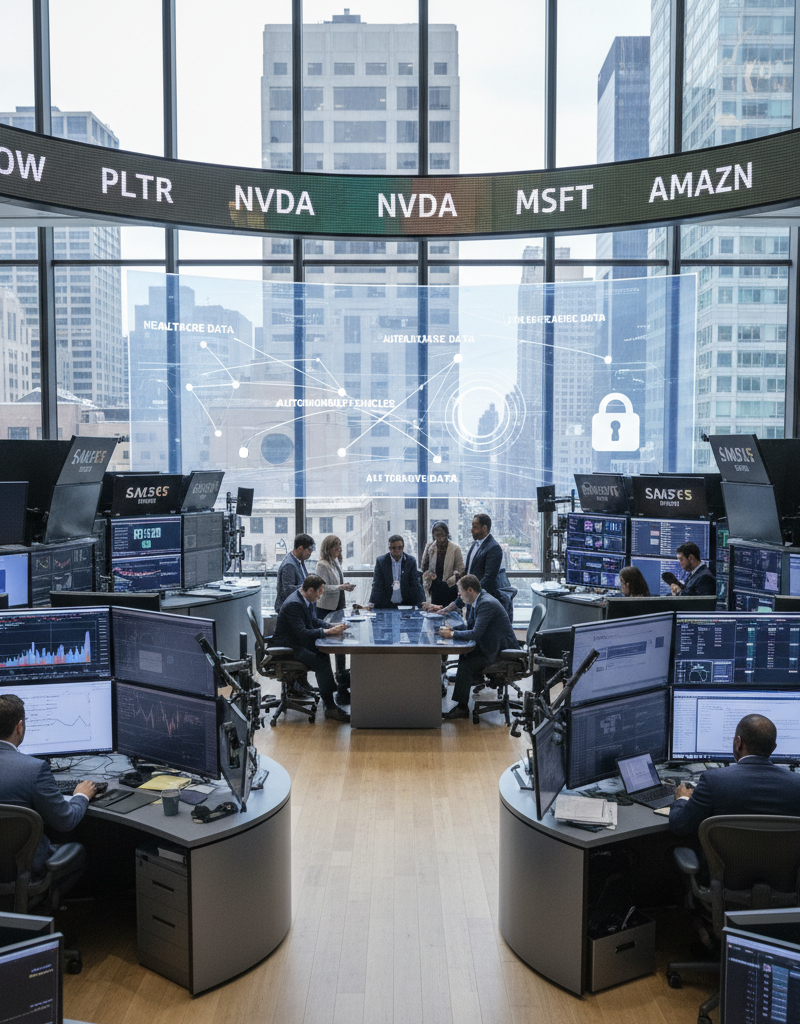
Wall Street has moved past curiosity. Large banks are no longer merely piloting generative AI; they are folding large language models into trading signals, client advice, and the operational plumbing that keeps everything running. That shift matters because the economic gains are already splitting across three buckets: the banks that deploy models, the cloud platforms that host them, and the chipmakers that power them.
Why this matters now
- Scale of compute is rising fast. Modern models need GPUs and data pipelines most banks can't cost-effectively build themselves.
- Cloud and chips are the chokepoints. Firms with privileged access to Nvidia GPUs and hyperscale cloud deals iterate faster and push down per‑unit costs.
- Regulation and risk are catching up. When models touch trading or credit decisions, you create new vectors for model risk, market impact and compliance headaches.
A new value chain — and an uneasy division of spoils
Think of the AI stack like crude oil: banks are the demand, infrastructure firms do the refining. Early signs show the refiners grabbing much of the profit. Two trends matter.
- Infrastructure concentration. A small set of cloud providers and GPU vendors now enable almost every production‑scale deployment. That gives them real pricing power.
- Feature parity among banks. After tuning, many client‑facing features become table stakes; true differentiation shifts to data quality, execution speed and institutional trust.
This echoes the algorithmic trading era in the 2000s, when exchanges and colocation providers captured structural rent and sell‑side margins squeezed. The pattern is familiar, but broader now — it reaches advisory, compliance and customer service as well as execution.
What banks are actually doing (concrete examples)
- Putting assistants into advisor workflows to summarize research, draft pitches and run scenario analysis.
- Using generative models to translate regulatory filings and flag anomalies in transaction streams.
- Applying machine learning to price discovery, risk overlays and liquidity forecasting.
These are not science‑projects. They are production rollouts at scale. The trade‑off: banks must now manage model drift, answer explainability requests from regulators and cope with the operational frictions of hybrid cloud deployments.
Regulatory and market risks
- Model opacity. Regulators will scrutinize AI-driven decisions that affect portfolios and credit outcomes. Expect more intense exams and stricter documentation requirements.
- Herding risk. If many firms use similar models or the same datasets, market signals could become self‑reinforcing and amplify volatility in stressed markets.
- Concentration risk. Heavy reliance on a few cloud or chip suppliers creates single points of failure — a strategic pain point for CFOs and risk officers.
Investor takeaways
- Follow the infrastructure, not just the banks. Providers of GPUs and large cloud capacity are poised to capture outsized economics for now. Hardware and cloud names deserve attention in any AI‑in‑finance thesis.
- Don’t confuse hype with revenue. AI can raise productivity and cut costs, but meaningful top‑line gains for legacy banks will be uneven and often slow to show up.
- Watch regulation closely. Tougher guidance on model governance would lift compliance costs and slow time‑to‑market for new services.
Wall Street is sprinting into generative AI, yet the winners may be the middlemen more than the runners. For investors and clients that means a pragmatic curiosity: track the partners powering the models, demand transparency, and be skeptical of one‑size‑fits‑all promises about instant profits.
Pedro Marini