The story so far
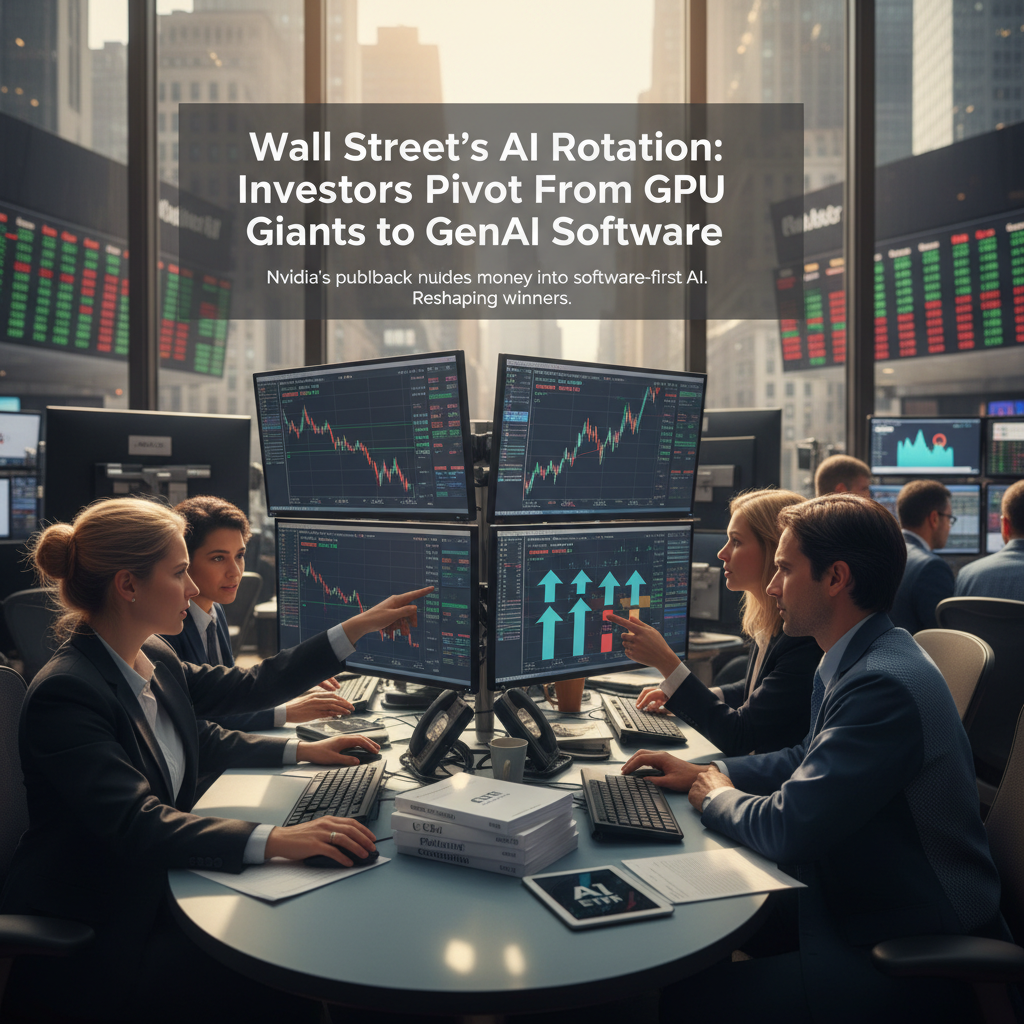
It used to be a straightforward trade: buy the GPU leader and ride the model-training boom. Nvidia made that easy. After a meaningful pullback, though, investors — both managers and retail traders — are asking a different question: which companies actually make money from generative AI, rather than merely powering it? That shift is nudging money away from hardware-heavy bets and toward GenAI software and application plays.
Why this matters now
- Nvidia endured a sharp wobble after a long run, which trimmed headline returns and prompted profit-taking.
- A number of AI ETFs and quant funds have quietly rebalanced toward software vendors that show clearer revenue paths from large language models and AI tools.
- Concerns about GPU supply cycles, margin pressure in hardware, and frothy valuations are steering the hunt toward subscription-style, recurring-revenue alternatives.
Where the flows are going
Managers I spoke with (on background) point to three buckets getting capital:
- Pure-play GenAI software with subscription economics and rapid adoption curves.
- Data and security firms that help enterprises deploy models safely at scale.
- Smaller cloud-native outfits building vertical AI apps for finance, legal and healthcare.
Names on people’s radars include C3.ai (AI), Palantir (PLTR) and CrowdStrike (CRWD) — firms that can show direct monetization of AI investments, instead of just selling GPUs.
Notable implications for investors
- Valuation re-rating risk is real. Software often trades at richer multiples for steady recurring revenue; rotation can push those multiples higher, but sentiment can flip fast.
- Earnings cadence matters more. Expect big volatility around guidance as GenAI features remain an early part of enterprise contracts.
- ETF mechanics amplify moves. A small number of funds hold concentrated stakes across hardware and software; their rebalances can accelerate short-term flows.
A quick historical frame
This feels a bit like the late 1990s, when investors moved from telecom infrastructure into consumer-facing web platforms. Back then the winners converted traffic into sustainable revenue. The same filter applies here: not every model-adopting firm will monetize effectively.
Counterpoints and risks
- Hardware remains the gating factor for large-scale training. If demand for new chip architectures or generational upgrades comes back, chip makers could easily resume leadership.
- Many software vendors rely on hyperscalers for compute — that dependency squeezes margins and makes consolidation more likely.
- Regulatory and privacy headwinds could slow enterprise rollouts, which would hurt names that need broad adoption to justify high multiples.
Trade ideas and watchlist (for research, not advice)
- Track AI ETFs for large rebalancing notices — those often presage fast flows into mid-cap software names.
- Focus on subscription growth and revenue retention in quarterly reports; they’re better leading indicators of sustainable AI monetization than product announcements.
- Favor partnerships where software vendors embed proprietary models or unique vertical data, not just repackage a cloud provider’s model.
Takeaway
This rotation is not a dismissal of GPUs so much as a maturing of investor thinking. Early winners were obvious; the next wave will be harder to pick. Investors who treat AI as an ecosystem — hardware, platforms, data and vertical apps — and insist on clear revenue signals will probably do better than those chasing headlines.
If you want a short checklist for evaluating AI stocks — one tailored to growth or value approaches — say the word and I’ll put one together.