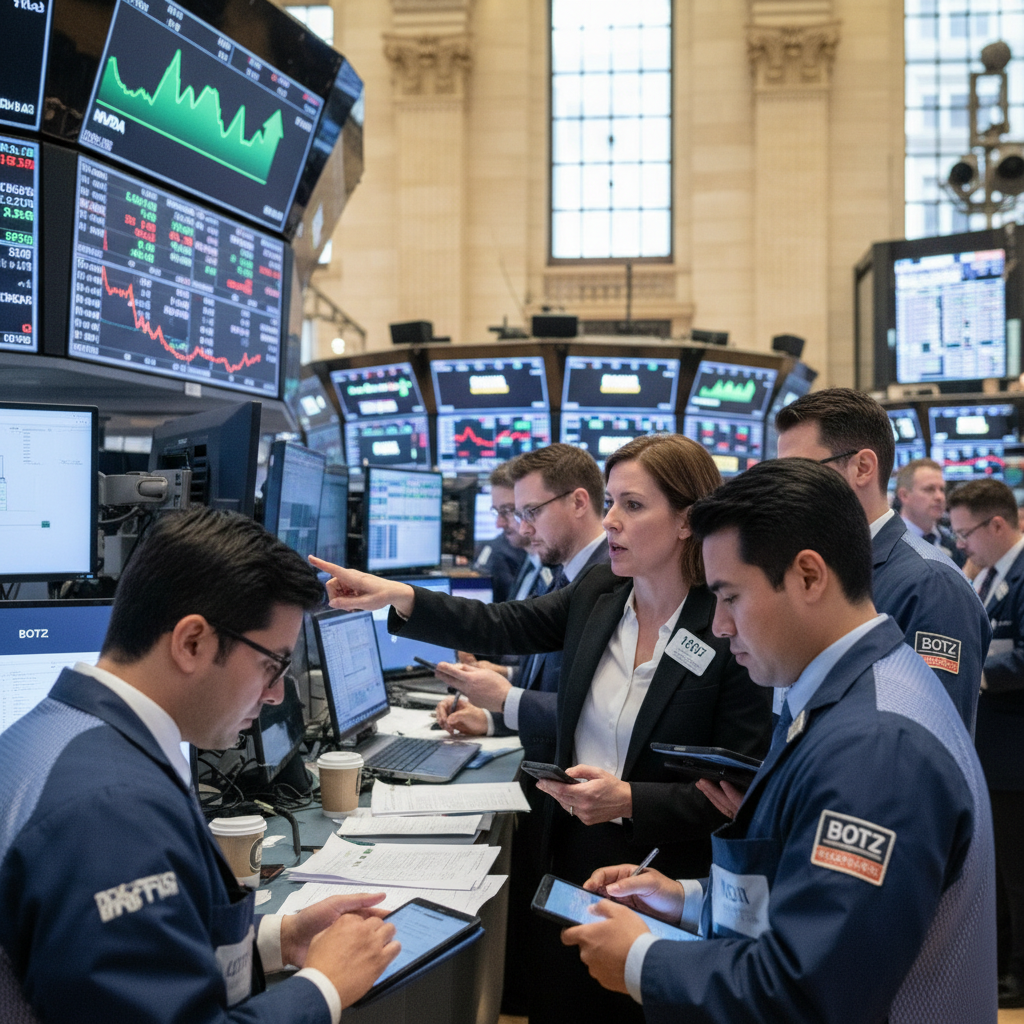
Quick take
AI-themed ETFs jumped after Nvidia ran up, but the excitement hides real trade-offs: heavy concentration, valuation risk, and rising regulatory scrutiny. For investors who prefer ETF exposure over owning one or two names, the nuances matter — and now is a good moment to think them through.
Why this matters now
- Nvidia’s outsized success has pushed AI from niche to mainstream for both retail and institutions.
- That interest funnels into ETFs, which promise diversification but often load up on a handful of mega-cap winners.
- The upshot: easy access to the AI story, plus the familiar hazards of crowding and stretched multiples.
Concrete facts to keep in mind
- Many AI ETFs put 30–50% of their weight in the top five holdings. In other words, a product billed as diversified can behave like a leveraged bet on a few firms.
- Valuation gaps between the biggest AI names and mid-cap enablers are unusually wide. If growth expectations wobble, rotations could be sharp.
- Regulators are paying more attention to large AI models. That oversight — and any short-term limits on commercialization — could compress near-term returns even while long-run demand for AI compute persists.
Practical checklist for positioning
- Inspect the holdings. Prefer ETFs with clear weighting rules and look through the top 10 before you buy.
- Size it sensibly. Treat AI as a thematic sleeve, not your whole equity allocation — something like 5–10% is a reasonable starting point for many investors.
- Consider active or multi-factor options. Some managers consciously avoid the extreme concentration that passive AI ETFs tend to inherit.
- Pay attention to liquidity and tax behavior. Structure matters when volatility spikes and rebalances trigger capital gains.
A few counterpoints
- For patient investors, the firms that build AI infrastructure could act like modern toll roads — very profitable if they keep pricing power.
- Still, short-term moves mostly reflect sentiment, not fundamentals. Momentum can outlast rational valuation, so timing and entry points matter.
A historical lens
Think of the late 1990s: excitement clustered around a small set of internet names. Outcomes varied wildly. A few became platform monopolies; many others imploded. AI is different in that enterprise spend and cloud economics give it a stronger footing, but the market dynamics — concentration, crowding, sharp sentiment swings — are eerily familiar.
For US investors
AI ETFs are an efficient way to get exposure to a major secular trend, but they are not a safety shortcut. Allocate deliberately, read the prospectus, and cap conviction positions. If you want the upside without single-stock gamma, favor funds that limit concentration or blend passive exposure with active specialists who can pivot when the trade gets crowded.
Author’s note: I lean toward a barbell — broad-market core plus a modest thematic sleeve for AI. It keeps upside intact while limiting damage if sentiment reverses.