The story so far. Nvidia (NVDA) set the last market narrative: one company, one product line, a valuation magnet that pulled in anything tagged “AI.” But when guidance softens or supply hiccups appear, the market doesn’t stop caring about AI — it simply reallocates.
What’s changing this week: the big chips still matter, but the implied risks — concentration, supply limits, margin cyclicality — are nudging investors toward parts of the stack that actually benefit as models scale, rather than a single-name lotto ticket.
Why that matters
- Memory and interconnects. Large language models burn through DRAM and HBM. When deployments pick up, memory vendors and switch makers get sustained orders — more of a structural tailwind than a one‑quarter spike.
- AI servers and systems. Building dense racks and solving thermal/power headaches is a specialty. High-density server integrators are seeing more demand from hyperscalers and enterprises that want turnkey capacity fast.
- AI software and managed services. Not every firm will build its own models. Subscription revenue from inference, monitoring and model ops tends to scale and stick around even when hardware cycles wobble.
Names to keep an eye on (and why)
- NVDA (Nvidia) — still the bellwether. A soft guide can presage slower near-term capex from cloud giants, but the ecosystem moat hasn’t vanished.
- SMCI (Super Micro) — the quiet builder of dense AI servers. When hyperscalers need racks yesterday, they call system integrators.
- MRVL (Marvell) and AMAT (Applied Materials) — chips for memory interfaces, networking silicon and the fab tools that keep production humming.
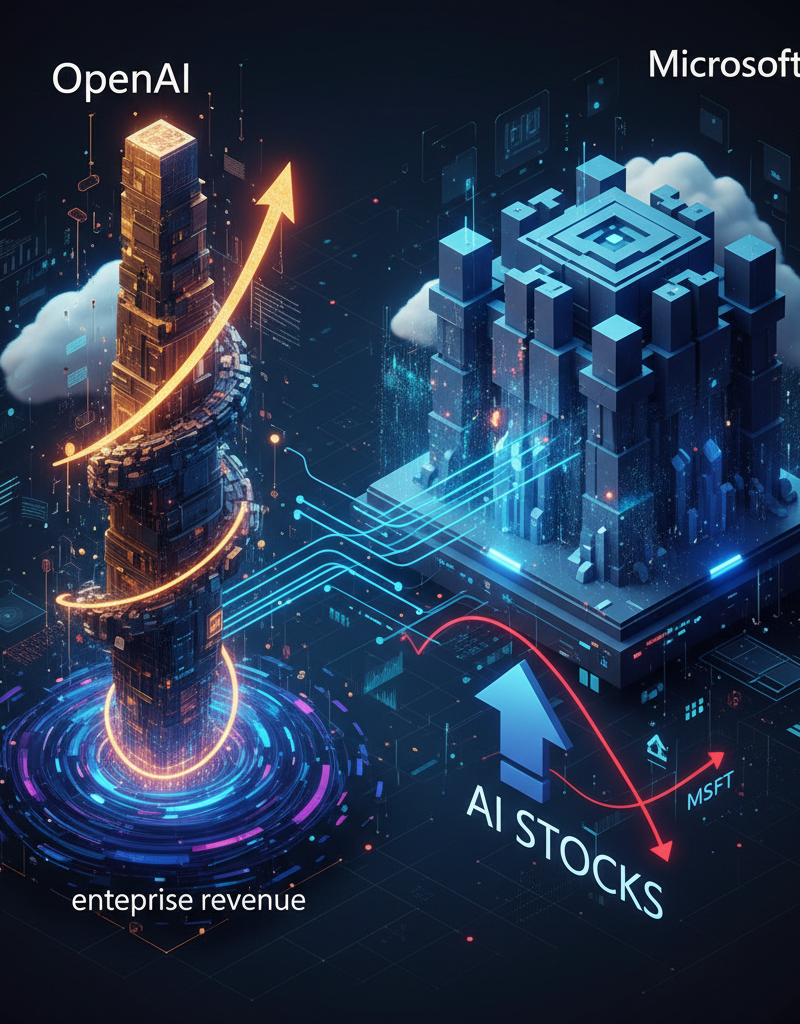
- MSFT (Microsoft), C3.ai (AI) and PLTR (Palantir) — software plays that monetize inference, tooling and enterprise deployments.
A few less obvious points
- This is not “Nvidia is dead.” Think of the move as diversifying from owning the engine designer to owning the highway, the trucks, and the toll booths.
- Margins versus predictability. Hardware can deliver eye-catching margins. Software and managed services usually offer recurring revenue that investors prize when growth forecasts wobble.
- Supply chain gravity. Foundry constraints, mask tools and logistics — the physical realities of semiconductor manufacturing — keep premiums on certain suppliers. It’s less glamorous, but often steadier and profitable.
What to watch next week
- Memory price trends and billings at major system integrators.
- Cloud capex commentary — if hyperscalers delay racks, hardware winners will show it first.
- Contract wins for software vendors around inference, model monitoring and cost-management tools.
The market is getting pickier. The quick-money story around one stock is yielding to a more nuanced approach: own enablers and monetizers of AI, not just the marquee chip maker. If you’re positioning for the next leg, remember that steady, less flashy platforms often compound more reliably than one-hit breakthroughs.
Not investment advice — this is a reading of current flows and structural demand. For any portfolio move, layer in research on contracts, customer concentration and supply exposure.