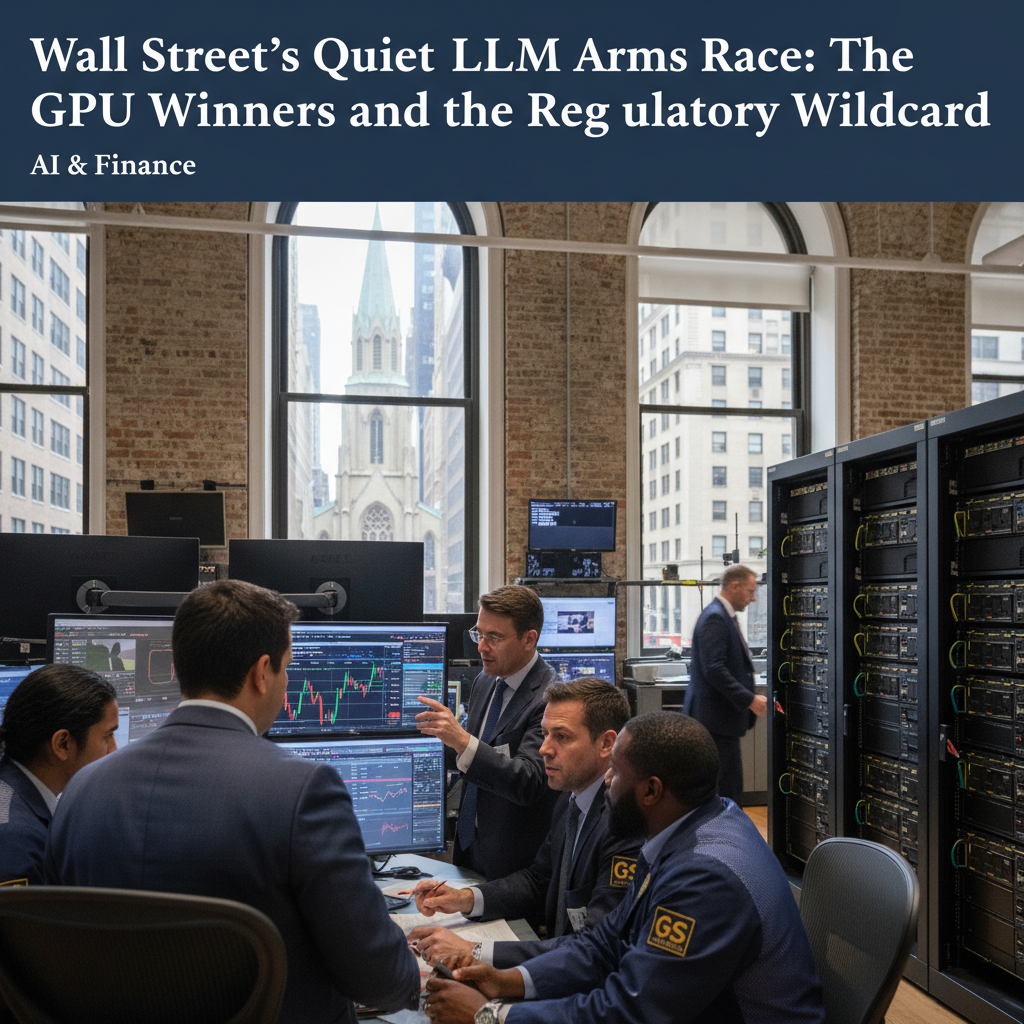
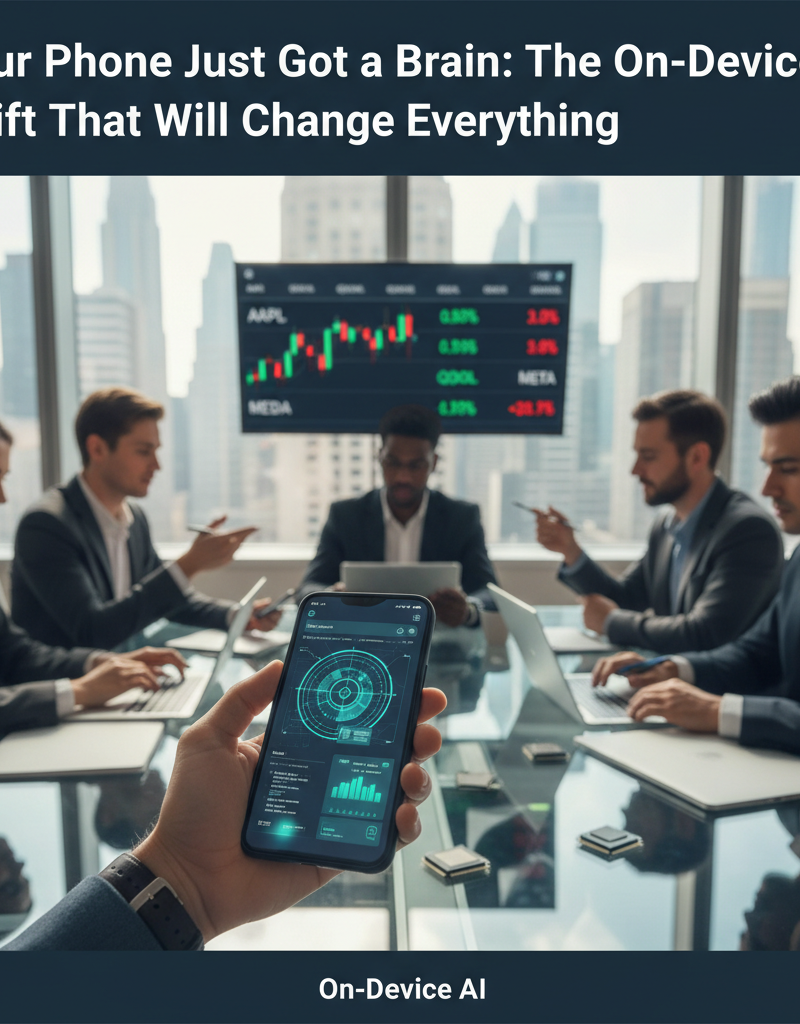
The new frontier on Wall Street is less about faster fiber and more about smarter models. Over the past 18 months, trading firms — big and small — have been quietly sewing large language models into research, signal generation, even trade execution. It looks like a familiar tech arms race: concentration on the hardware side, software iterating fast, and an open question about how regulators will react.
Why this matters now
- Firms are not just buying datasets and hiring quants anymore. They are buying inference scale and bespoke LLMs that summarize earnings calls, turn research into feature sets, and even sketch rules for execution layers. That shifts spending away from desks and toward datacenters.
- The blunt consequence is that GPUs now sit near the top of any portfolio manager’s checklist. Whoever controls low-latency inference at scale gets a practical edge.
Short history, long lessons
This is not the first exotic tech shift on Wall Street. In the 1990s and 2000s quants found edges with statistical models and co-location. The contrast now is in what counts as the edge. Models are intellectual capital — useful but brittle, often opaque, and in many cases reproducible. Hardware and low-latency inference have become the new toll bridges.
Moves worth watching
- Large quant shops and sell-side research desks are building in-house LLMs to speed idea generation. Instead of wading through 10-Ks, traders prompt models that spit back structured signals quicker.
- Smaller shops are outsourcing inference to cloud GPUs. That saves up-front capital but concentrates risk with a handful of vendors.
Where winners and losers may emerge
- Likely winners: GPU makers, data-center operators, and software firms that orient trading workflows around model outputs. Margins should expand for those who pair hardware with well-tuned inference stacks.
- Risks for incumbents: Treating LLMs as black boxes invites model risk — overfitting to spurious correlations, hallucinated conclusions in research, and fragile performance when regimes shift.
Regulatory and operational wildcards
Regulators won’t ignore incidents that cause market disruption. If a model-driven strategy amplifies volatility, trade surveillance and model governance will hit the headlines. Expect compliance to demand audit trails, reproducible signals, and clearer data provenance — none of which come neatly packaged with off-the-shelf LLM APIs.
A slightly messy comparison
The quant revolution was a sprint: faster math beat slower intuition. Adopting LLMs feels more like a marathon. You’re mixing human-language context with numerical signals. That makes tuning less showy, but potentially more durable — until a single data leak or a hallucination topples a strategy.
Investor checklist — what to watch
- Hardware concentration: Are GPU suppliers still the bottleneck? Watch orders and capacity commitments.
- Cloud exposure: Which firms rely on public clouds for inference and do they have fallback plans?
- Model governance: Do teams version-control models, backtest prompts, and log inference outputs?
- Regulatory signals: Scan guidance from the SEC, FINRA, and banking regulators around model risk and data handling.
The upshot
LLMs are already reshaping how trading ideas are generated and executed. The competitive advantage will settle along three axes: data, models, and low-latency compute. Early returns may flow to hardware and cloud providers, but the most durable winners will pair engineering with rigorous governance. Expect churn — in market behavior and in which companies capture the profit pool as strategies and oversight collide.
Pedro Marini