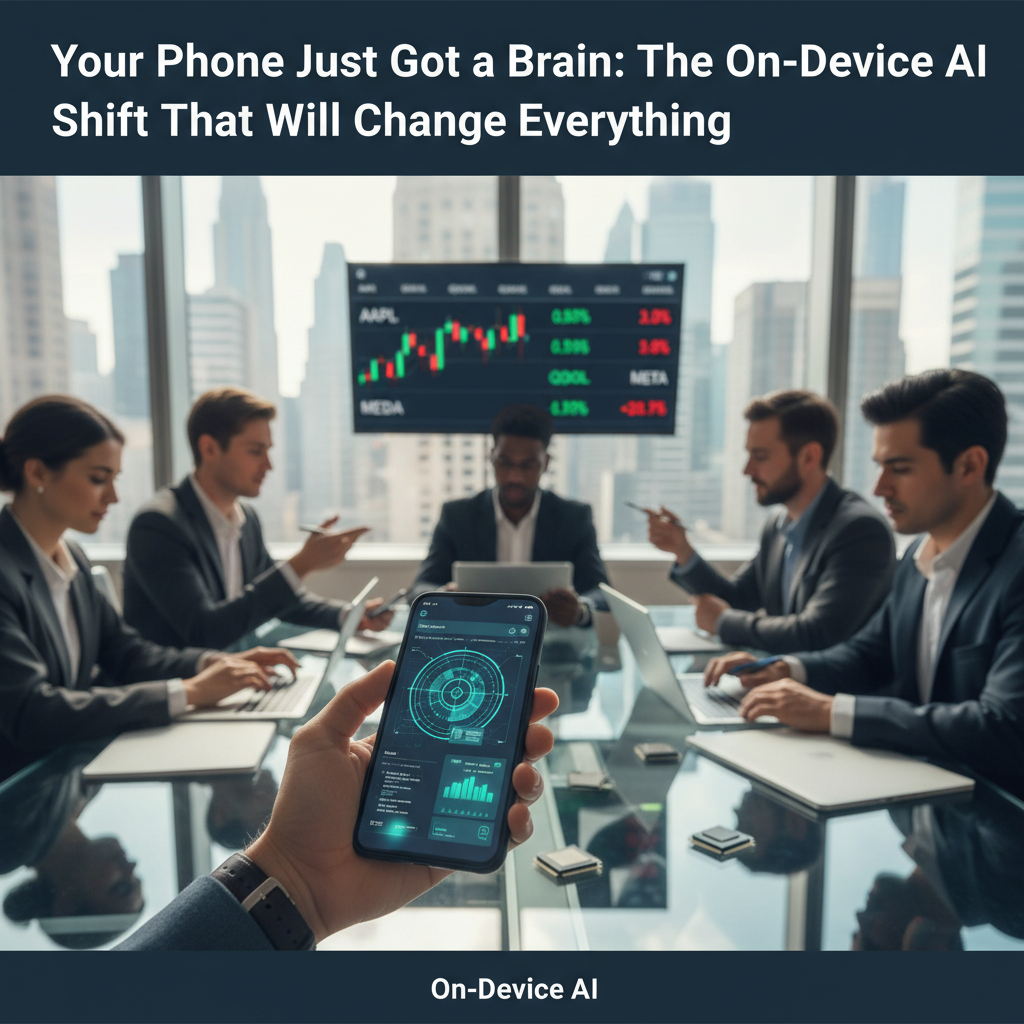
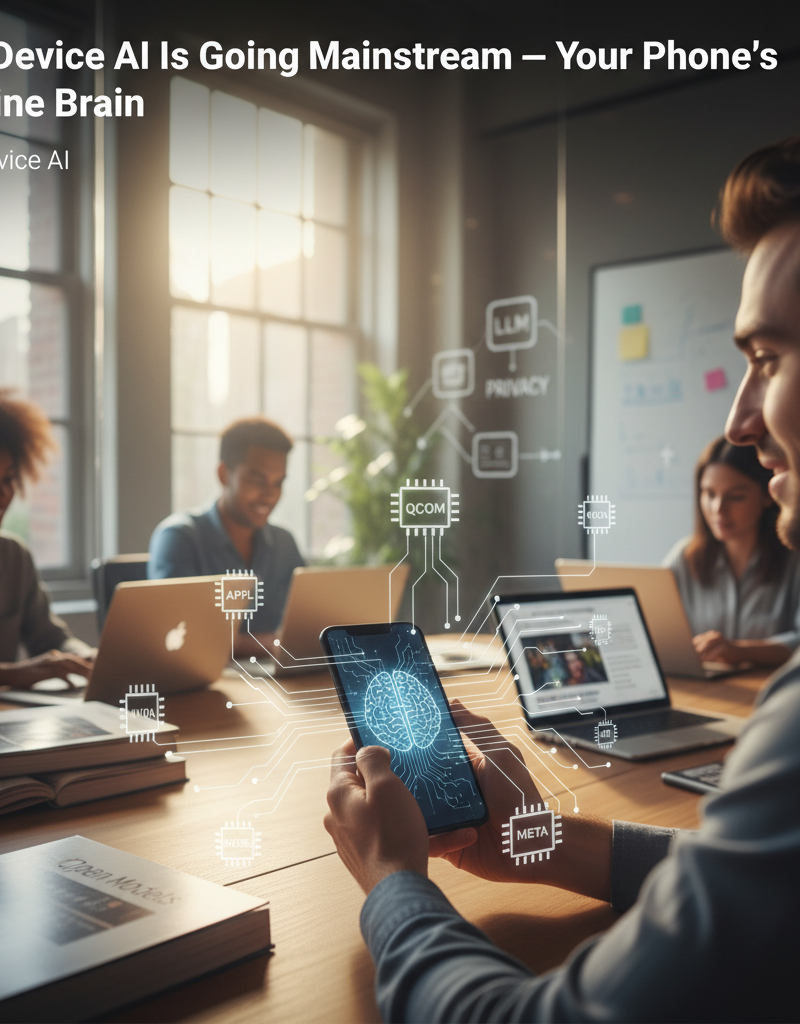
The headline is simple: phones and laptops are about to do things that, a year ago, only servers could handle. Not marketing fluff — it’s a real hardware-plus-software shift driven by dedicated neural engines, aggressive quantization tricks and a burst of compact open models.
The technical arc is familiar, only faster. For years on-device intelligence meant tiny classifiers: spam filters, face unlock, wake words. Now several changes are converging, and together they make larger language models practical on end-user devices.
- Dense neural accelerators in new chips from Apple, Qualcomm and others accelerate matrix math without wrecking battery life.
- Quantization and pruning let 7B-parameter models run in 4-bit modes with acceptable accuracy loss.
- Open weights — think Llama‑2, Mistral small and community forks — reduce the need to hit a remote API for every query.
What this looks like in practice: a messaging app that drafts sensitive replies offline, or a tax app that summarizes receipts without uploading your data. These aren’t just demos; developers are shipping prototypes that run conversational agents locally on flagship phones and higher-end laptops. I’ve tried a few myself — they work, though imperfectly.
Cloud still matters. For large-scale creativity, multimodal training, coordination across users, and enterprise governance, datacenter models remain indispensable. On-device AI isn’t a replacement so much as a new tier in the stack — useful for privacy, latency and ownership, but not the sole answer.
Why product and investment teams should care
- Privacy and regulation: local processing avoids many compliance headaches, which matters in healthcare and fintech. Expect product teams to advertise offline modes and lower compliance burdens.
- New monetization shapes: one-time purchases or edge-enabled premium features can challenge subscription-first cloud APIs.
- Hardware winners and losers: sellers of NPUs, memory and efficient silicon will gain influence — though fragmentation could create developer friction.
Real-world tradeoffs
- Batteries and thermals still bite. Running an LLM for long stretches eats power far faster than a background classifier.
- Updates get messier. Pushing model improvements to millions of devices needs new distribution and trust systems.
- Hallucinations and safety are tougher to control when models are decentralized, which raises legal and reputational risks.
A short history: we moved from rule-based on-device features in the 2010s to a cloud-first LLM boom in the early 2020s. Now we’re sliding into a hybrid era: models live where they make sense — datacenters when scale and freshness matter, devices when privacy, latency or ownership matter more.
This is an evolutionary swerve, not a hard fork. On-device AI hands more control to users and smaller developers, reshuffles who captures value, and introduces fresh technical and regulatory headaches. Watch the apps you trust — their choices will tip whether this becomes a real privacy win for consumers or just another source of fragmentation.
Keep an eye on three things
- Developer tooling: how quickly Core ML, TensorFlow Lite and ONNX make deployment painless and robust.
- Business models: will users pay once for on-device smarts, or will hybrid subscriptions prevail?
- Regulation: laws that treat local inference differently could shift the economics overnight.
Phones are quietly getting smarter. That matters because intelligence at the edge changes incentives — and the winners will be the companies that actually combine hardware chops, solid developer tools and product discipline.