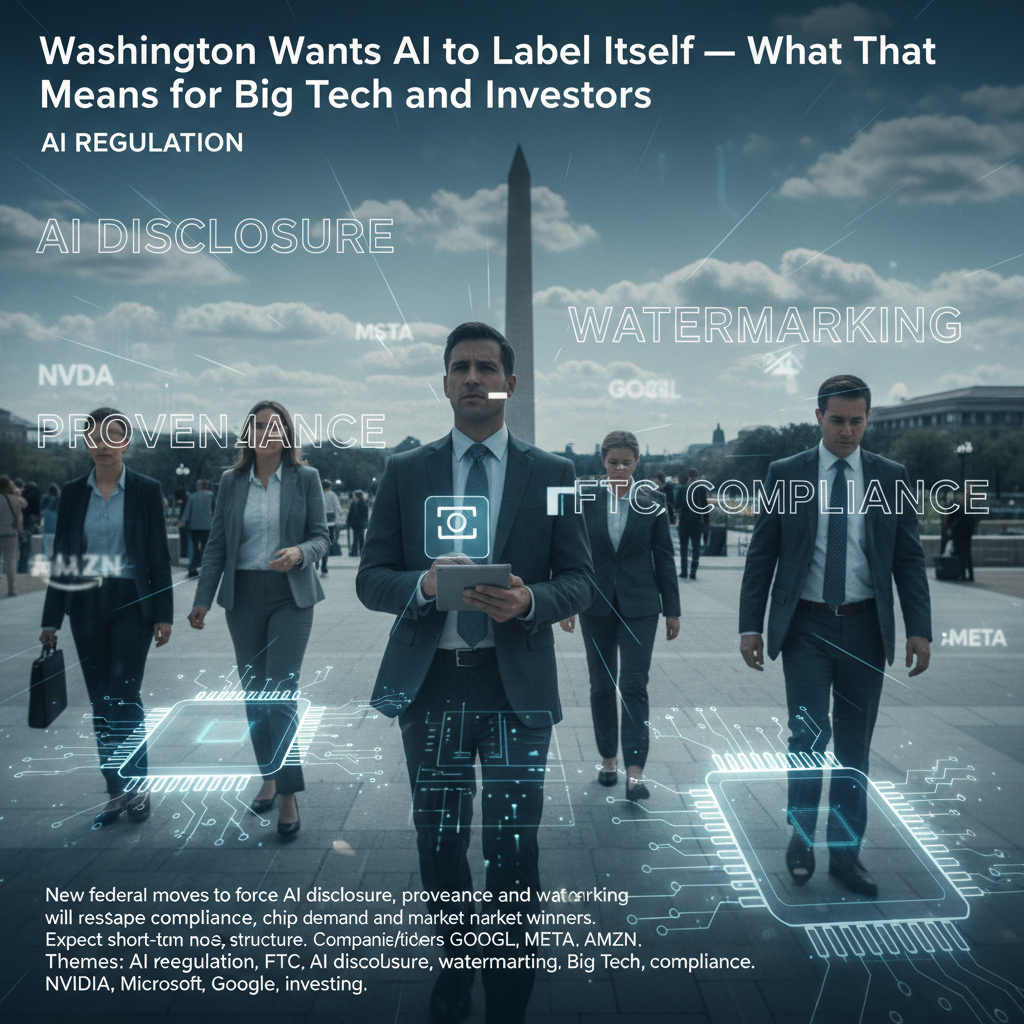
Washington is suddenly serious about knowing when we are talking to a machine
Federal regulators and lawmakers are converging on rules that would force companies to disclose AI use, document where training data came from, and attach machine-readable watermarks to generated content. It sounds bureaucratic. And yet this kind of structural change can reprice risk across the whole tech sector.
Why now
- Regulators sell this as consumer protection: deepfakes, fraudulent ads, biased automated decisions and hidden training sources are drawing political heat.
- Technologists and investors want certainty after years of ad hoc enforcement. Firms prefer rules they can design systems around rather than hope enforcement stays light.
- The EU moved first with its AI rules; the U.S. seems set on a more piecemeal, sector-by-sector approach rather than a straight ban.
What the rules would require — in practice
- Clear labels in advertising and political content when AI generated or assisted the material.
- Provenance records for datasets: who supplied the data, what licenses apply, and whether personal data was used without consent.
- Watermarking or metadata standards so platforms can trace AI-generated images, audio and text.
Real implications, not just legal paperwork
Compliance costs will not be spread evenly. Big tech can eat audits and build provenance pipelines; startups cannot. That short-term tilt helps incumbents. For firms selling compute and chips, like NVIDIA, two forces tug in opposite directions: added compliance may slow some large-scale model training projects, yet clearer rules could make enterprises more comfortable buying auditable AI, which steadies demand. Advertising platforms and content hosts will need better labeling tools and guardrails. That creates niches for vendors that specialize in governance, watermarking and dataset auditing — and those vendors will be busy.
What's interesting is how practical frictions play out: provenance logs are useful but costly to stitch into legacy pipelines. In practice, though, the story is messier than a memo can capture.
A quick historical comparison
Think of this as the GDPR moment for AI, but with a twist. GDPR imposed cross-border privacy standards and heavy fines; the EU AI rules add risk-based classifications. The U.S. path looks more patchwork — agencies, sectoral rules, and enforcement by existing regulators. Messier, yes. But it also leaves room for market-driven fixes and quicker iteration where the market can act.
Who benefits and who loses
- Winners: established cloud and software suppliers of governance tooling, consultancies that perform audits, and enterprises that want compliant AI stacks.
- Losers: small startups with thin legal budgets, bad-actor aggregator sites, and firms that depend on opaque, scraped datasets.
Counterpoints and trade-offs
- Broad disclosure mandates could chill research and push some innovation offshore. Building provenance and auditing systems is not cheap.
- Civil liberties groups rightly worry that provenance records could be repurposed as surveillance tools. Requiring detailed data logs has benefits and risks beyond transparency.
Signals investors should watch
- Regulatory text and comment periods. The difference between a voluntary standard and a binding FTC rule can mean billions in compliance costs for some companies.
- Vendors offering AI governance, watermarking and dataset-auditing tools; these niches could scale quickly.
- Chip-demand indicators. If major retraining projects pause to rearchitect data pipelines, vendors like NVIDIA might see a short wobble but steadier enterprise spend later.
What this means
We are shifting from opaque model-building toward an environment where provenance and labels matter. Boring on the surface, but with big effects at scale. Expect short-term pain for startups and some media businesses. The likely result: a more transparent ecosystem that favors auditable, enterprise-grade AI offerings. For investors, the practical play is straightforward: back companies that can absorb compliance costs or sell the tools others will need to comply.
Near-term milestones
- FTC notices and public comment windows over the next 60–120 days.
- Draft language from Congressional AI bills that could turn agency guidance into statutory mandates.
- Earnings calls where management teams discuss compliance budgets and any slowdown or re-phasing of model training work.
This policy pivot is not just another headline. It will help determine which firms own the next decade of trust and infrastructure in AI — and that matters a great deal.