Generative AI is no longer an academic sidebar. Over the past year enterprise automation crossed an inflection: models that understand context and even produce code are making it easier for nondevelopers to design processes, and for IT teams to stitch systems together faster.
It doesn't feel like one dramatic launch so much as a tectonic nudge. Think of it this way: spreadsheets stopped being just ledgers and quietly became the original low-code platform. Generative models are the next migration — from macros to natural‑language orchestration. The comparison isn't perfect, but it helps explain the speed and the scope.
Why this matters now
- Microsoft has embedded Copilot into Power Automate, so prompts can turn into flow templates and connectors. That removes a lot of friction for business users who used to call RPA vendors or pull in developer time.
- UiPath still dominates RPA mindshare, but the moat is thinner when anyone with a keyboard can describe a workflow in plain English and get a runnable draft.
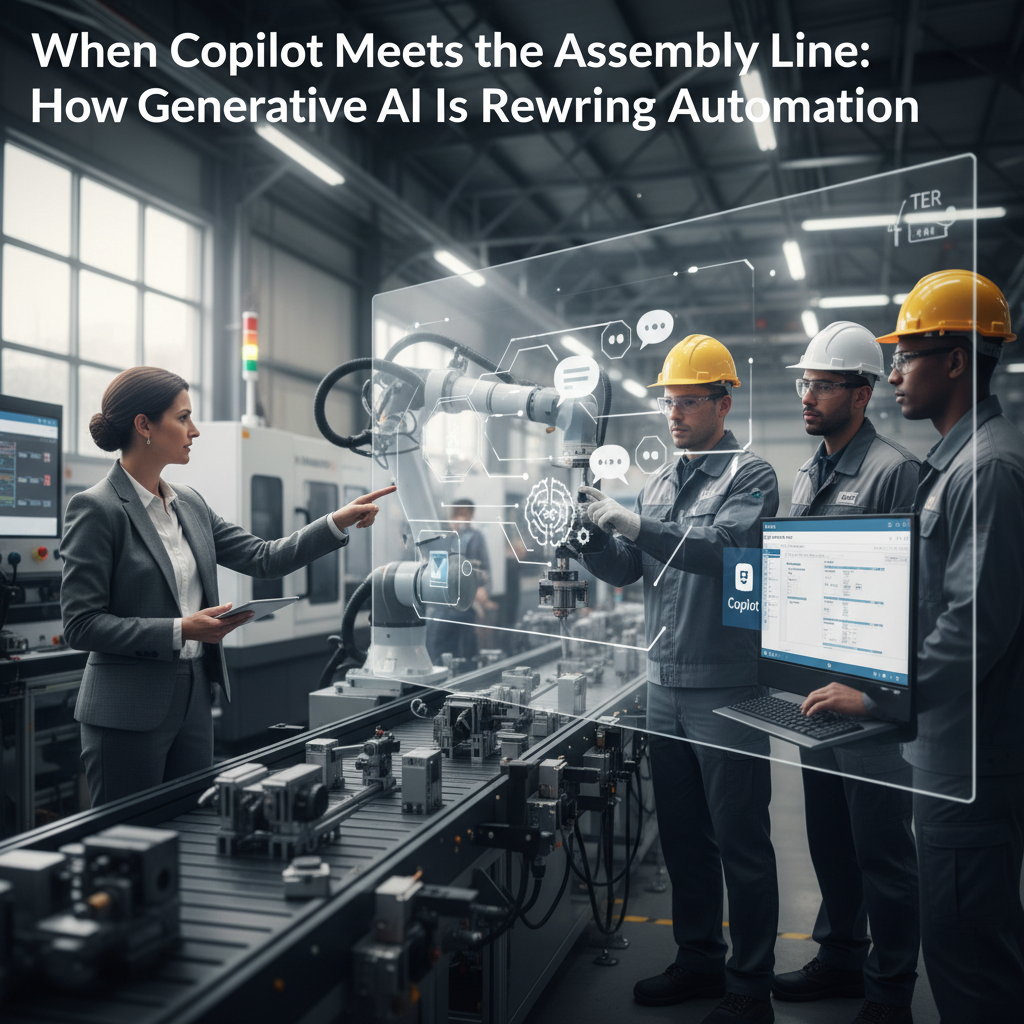
- Industrial robotics and machine-vision players such as Teradyne and ABB face a parallel shift: prototyping orchestration and vision pipelines is getting easier, which speeds adoption on factory floors and in warehouses.
A few concrete implications
- Speed of adoption goes up. Projects that used to take months can now start in days. Great — except governance and hidden technical debt become urgent problems.
- Vendor consolidation becomes more plausible. Big cloud and SaaS vendors can fold conversational automation into their suites, putting pressure on pure-play RPA firms unless they carve out deeper enterprise capabilities.
- The skill mix changes. Fewer people writing glue code, more people crafting prompts, cleaning data, and designing resilient processes. That is not simply jobs being eliminated; roles shift and new ones appear.
Risks and pushbacks
- Hallucinations and brittle automations are real. A model-generated connector or script can look convincing and then fail silently at scale.
- Compliance, audit trails, and change control get messier when citizen developers build flows. Financial services and healthcare can't treat this as a toy.
- Integration still costs time and attention. Generative text helps design, but systems need solid APIs, error handling, and observability to run reliably.
What CIOs and operators should do now
- Pilot with guardrails: pick low‑risk workflows, require automated tests, and enforce logging from day one.
- Clarify ownership: who signs off, who watches runs, and who fixes things when they break.
- Watch vendor roadmaps closely: is your RPA provider embedding generative models, or are they doubling down on enterprise-grade UX and controls?
- Invest in data hygiene. Better inputs make for sturdier outputs; garbage prompts still produce fragile automations.
A slightly contrarian note
Generative models won't make traditional engineering obsolete. What they do is compress the front end of automation development — ideation and prototyping — while increasing the downstream need for observability, security, and systems thinking. The winners will be firms that pair conversational builders with hardened runtime platforms.
Sure, bold products and cheap prototypes will grab headlines. But the quieter battle — earning trust in automated systems — will determine where enterprise budgets actually go. That's where incumbents with operational rigor can still outmaneuver flashier newcomers.