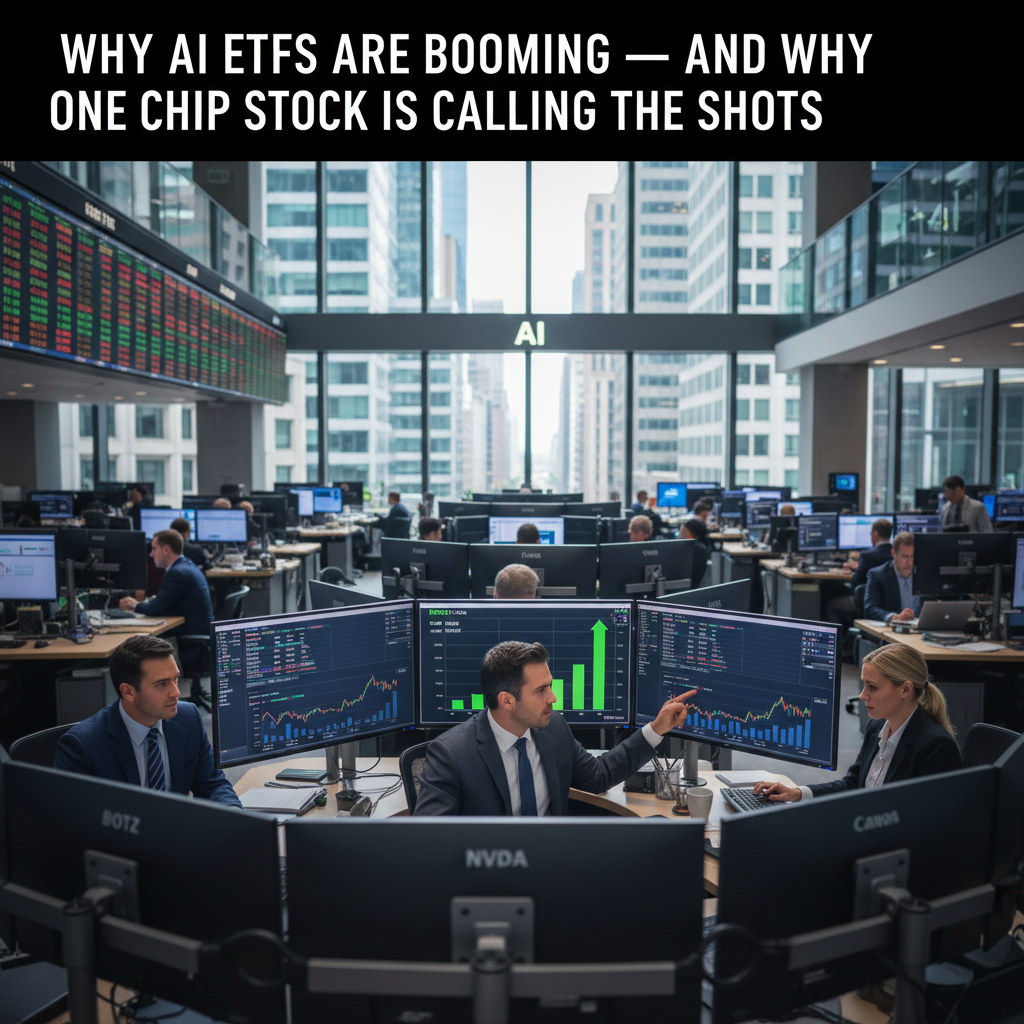
The headline is simple: ETF money is piling into AI, but a single chip maker is turning those funds into a levered bet.
Passive products built to capture the AI story have done what index funds do best — they route capital toward the biggest, most tradable names. That amplifies winners and piles on downside risk. The paradox: funds labelled as broad AI exposure can behave like concentrated plays on one or two semiconductor stocks.
Why concentration happens
- Many AI ETFs follow market-cap or factor-weighted rules. When one company outgrows its peers, its weight jumps without anyone lifting a finger.
- Retail and momentum flows chase winners. Performance attracts more performance — a self-reinforcing loop.
- Liquidity and execution costs nudge managers toward mega-caps, so practical trading considerations boost those allocations.
What's interesting is how mechanical this becomes. It’s not malice or foresight — just rules plus cash.
Implications most headlines skip
- An ETF with AI in the name can feel diversified while acting as a de facto single-stock proxy. That’s relevant the moment the chip cycle turns or supply chains hiccup.
- Passive flows now amplify earnings surprises. A beat from one large supplier can lift multiple AI funds; a miss can sap sentiment across the theme.
- Active managers face a choice: ride the crowded trade or bet against it. Both moves carry risk — dispersion can remain low longer than models expect.
History repeats, with different tempo
This pattern isn’t new. The late 1990s funnelled retail cash into internet winners and concentration amplified the bust. The 2020–2023 tech rally did the same with mega-caps dominating returns. The twist for AI is pace: adoption and headlines accelerate price discovery — and sometimes its reversal.
What to watch now
- ETF prospectuses and methodology. Labels lie by omission; look at weighting rules.
- Chip supply signals: equipment orders, foundry utilization rates, inventory levels. They give earlier warnings than earnings calls.
- Options activity. Heavy call skew and surging open interest in one name often foreshadow volatile repricing.
Tactical moves by investor type
- Conservative portfolios: stick to broad-market funds or smaller, fundamentally vetted AI companies. Size positions so no single name can derail you.
- Opportunistic investors: split exposure. Keep a core ETF stake, then add direct positions in overlooked suppliers or the software firms that actually run the models.
- Risk managers: use collars or variance swaps to blunt tail risk when concentration is unavoidable.
The AI story is far from written. Enterprise capex, deployment cycles and geopolitical shifts in chip supply will keep it front-page news. Still — and this matters — thematic branding is not the same as true diversification. When a crowd rushes for the same exit, convenience turns into concentrated risk. Read the fine print, not just the ticker.