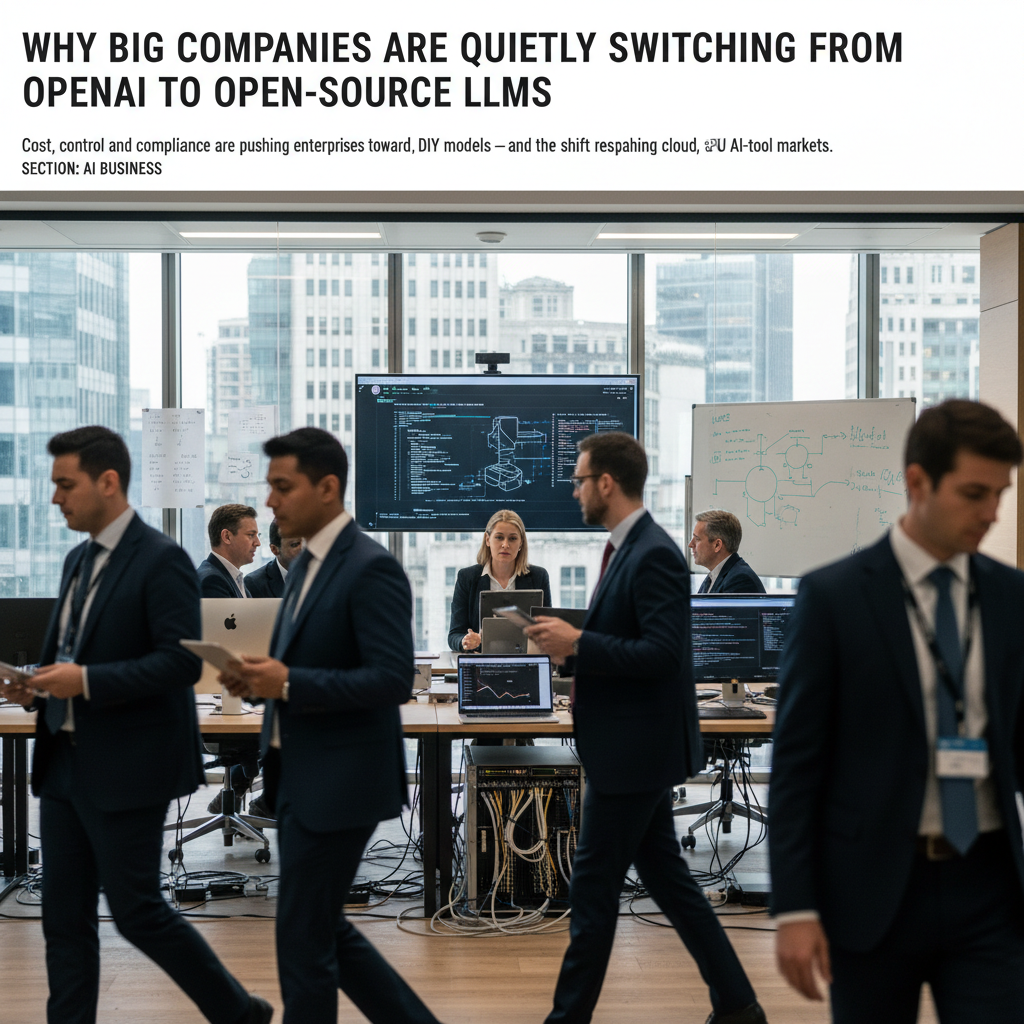
A mid‑sized fintech told its board last quarter it was moving customer‑facing chat features off a third‑party API and onto an internally hosted Llama2 variant. This wasn’t a PR stunt. It was a practical reaction to bill shock, regulatory scrutiny and a need to tweak model behavior at the token level.
What’s changing
Enterprises are increasingly experimenting with open‑source LLMs — Llama2, Mistral, research lab weights and tuned variants from shops like MosaicML and Hugging Face — instead of defaulting to pay‑per‑call APIs. On paper it looks like a small operational tweak. In practice the move ripples through costs, governance and market structure.
Why it matters
- Lower marginal cost, more pricing control. For steady, high‑volume workloads the math often favors hosting your own model. You accept a bigger capex/ops bill up front and, in return, much cheaper interactions down the line.
- Customization and IP containment. Firms want models trained or tuned on proprietary data, plus the ability to inspect, freeze or roll back behavior — things opaque commercial APIs make awkward.
- Data residency and regulatory pressure. Banks, healthcare providers and governments care where data goes. Self‑hosting or private enclaves ease a lot of compliance headaches.
That said, this isn’t an instant mass exodus. Running LLMs at scale is costly, technically tricky and GPU‑hungry. Nvidia H100s are still central to most serious deployments; specialized inference stacks, climate control for racks and MLOps teams are real line items. So hybrid approaches — local inference for sensitive or high‑volume work, APIs for rare or cutting‑edge tasks — are becoming the common pattern.
A historical echo
It feels a lot like the early public‑cloud era. First came the convenience of managed services; then firms pushed back for cost predictability and control. Expect the same: tooling and managed private LLM platforms will grow to hide complexity for companies that don’t want to build everything themselves.
Market effects
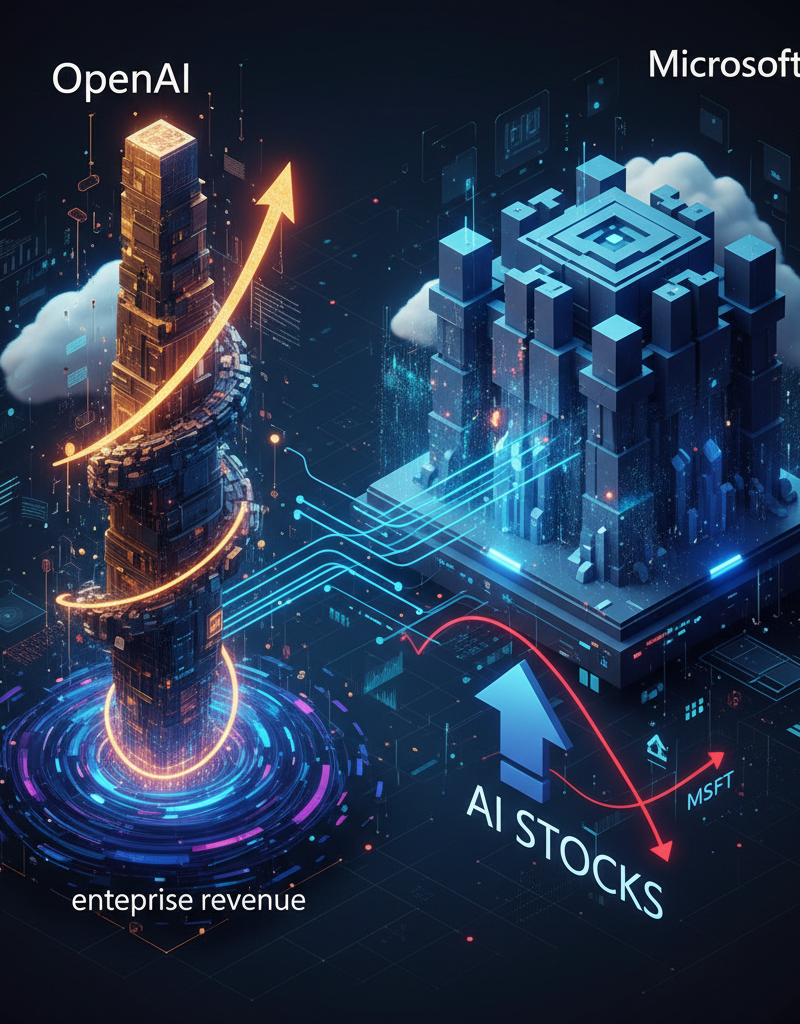
- Cloud vendors win in multiple ways. They sell the GPUs, storage and networking for self‑hosts and they package managed model offerings to capture API dollars. Watch AWS Bedrock, Azure model deployments and Google’s Vertex AI for bundling moves.
- Nvidia stays central. Scarcity of top‑tier accelerators gives Nvidia pricing power for the foreseeable future.
- New winners: MLOps and tuning specialists. Startups that can deploy compliant, cost‑efficient private LLMs and safely update them will either scale quickly or get acquired.
Keep an eye on
- GPU supply and pricing — a constrained market can freeze DIY plans.
- Model governance rules — any law on provenance, auditability or permitted data use will give an edge to on‑prem solutions.
- The capability gap — if open models reach commercial parity adoption will accelerate; if not, APIs will hold their premium.
Not a blanket rejection of APIs
This wave isn’t simply about ditching providers like OpenAI. It’s creating a segmentation: some buyers will keep paying for convenience; others will pay up front for control. That split opens opportunities — and creates headaches — for cloud providers, chipmakers and enterprise software vendors. For execs, the choice is strategic rather than binary: find the hybrid balance that fits your cost profile and governance obligations.
Examples to keep in mind: MosaicML’s enterprise stacks, Hugging Face’s model hub and private deployment services, and specialist system integrators tuning models for regulated industries. They’re quietly changing how organizations buy AI.
If you’re considering moving a product off an API, model three years of GPU spend, map latency requirements, and assess the legal risk of sending data off‑site. Do that triage and you’ll know whether DIY is an ambitious advantage or an expensive liability.