OpenAI’s ChatGPT Enterprise: Not Hype. A Quiet Rewrite of Office Workflows.
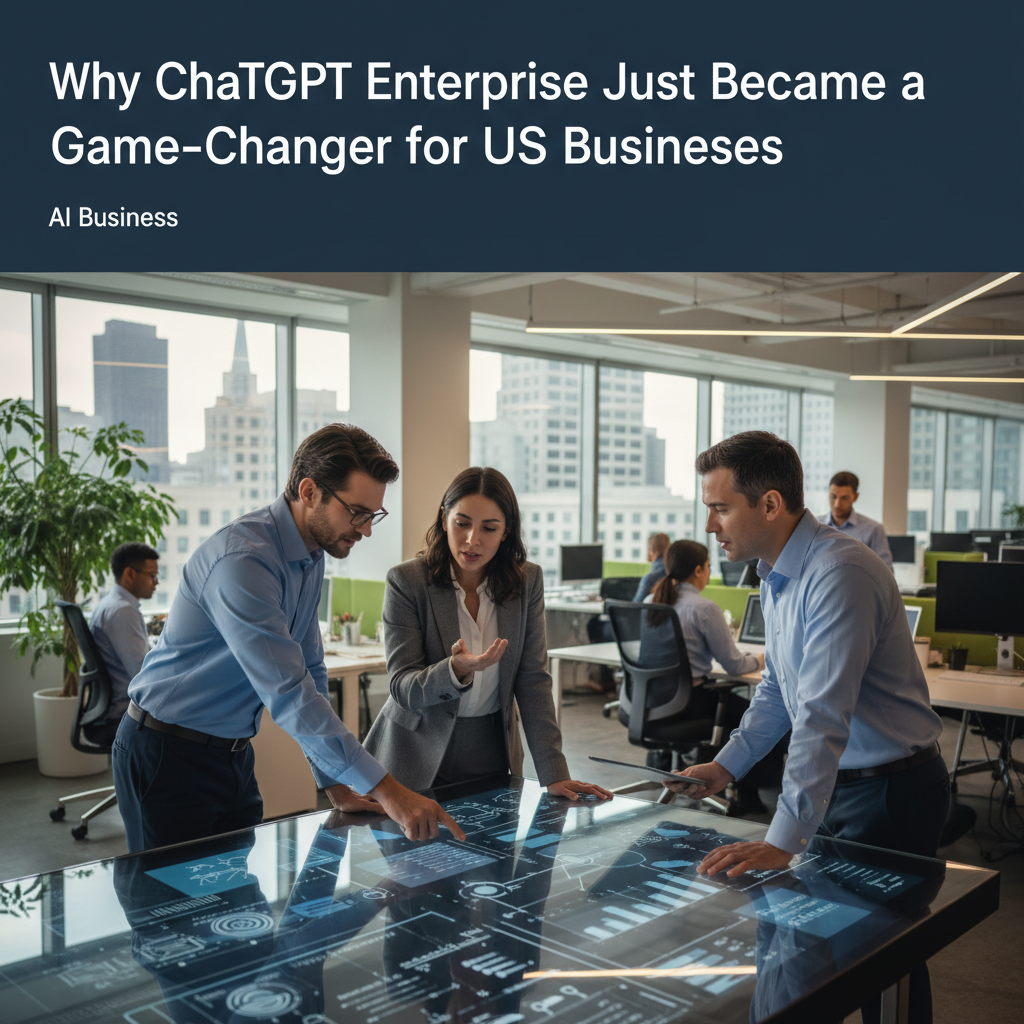
OpenAI just handed corporate IT teams a kind of permission slip: bring the chatbot into the server room. ChatGPT Enterprise is not a new consumer toy with a bigger logo. It’s an attempt to solve the two things that have kept AI out of most boardrooms for years: control and risk. If it works the way OpenAI says it does, companies won’t be adopting a flashy feature so much as swapping out an entire layer of daily work—summaries, drafting, triage—for an always-on assistant that sits behind the corporate firewall.
That matters because organizations don’t adopt tech they can’t control. They adopt tech that doesn’t make the legal, compliance and security teams lose sleep.
What’s actually different
- Security and governance first. The pitch centers on enterprise-grade privacy: admin controls, single sign-on, audit logs and data handling rules that promise corporate firewalls rather than forum-style openness. For teams that live and die by audit trails—investment compliance, legal ops, risk—those are table stakes. OpenAI adds end-to-end encryption and admin visibility into prompts and usage, not just outputs.
- Speed and scale. Early beta users report response times that are noticeably quicker than the Plus tier—“nearly double as fast,” in some accounts. Speed isn’t a gimmick here. For a sell-side analyst or a credit team that relies on quick syntheses of filings, shaving seconds off each query compounds into real time saved.
- Customization and data recall. The Enterprise model lets organizations feed it corporate data and have the model act on it without mixing those inputs into the public model pool. That’s the daily dream: a model that knows your contracts, your playbooks, your product specs, and doesn’t leak them into the wider internet.
- Admin controls and usage telemetry. IT gets to see who asked what, set limits, and integrate with internal identity providers. That’s the difference between an experiment in a Slack channel and a sanctioned tool on everyone’s desktop.
Who benefits first—and why
Start with places that run on documents and time: banks, law firms, consultancies, and marketing teams. But “benefit” looks different in each.
- In fixed-income desks and credit departments, the value is speed and consistency: faster memo generation, automated first-drafts of research, and quick reconciliation of data points across reports. That reduces low-skill grunt work and forces a rethink of who gets promoted for what.
- For legal ops, the pitch is automated contract redlining and clause libraries that learn firm-specific language. That saves junior associates hours and keeps partners focused on judgment calls rather than formatting.
- Marketing teams see quicker ideation and localization at scale—tailored campaigns across dozens of markets without a huge agency fee.
A concrete scenario: a mid-market bank uses Enterprise to auto-draft credit memos by pulling client exposure data, covenants from contract text, and market rates into a single summary. The junior analyst reviews instead of writes. The bank trims three hours per loan review and reduces a cycle time that previously stretched across days.
Market effects (short and medium term)
This isn’t just about productivity. It reshapes where value accrues in software and services.
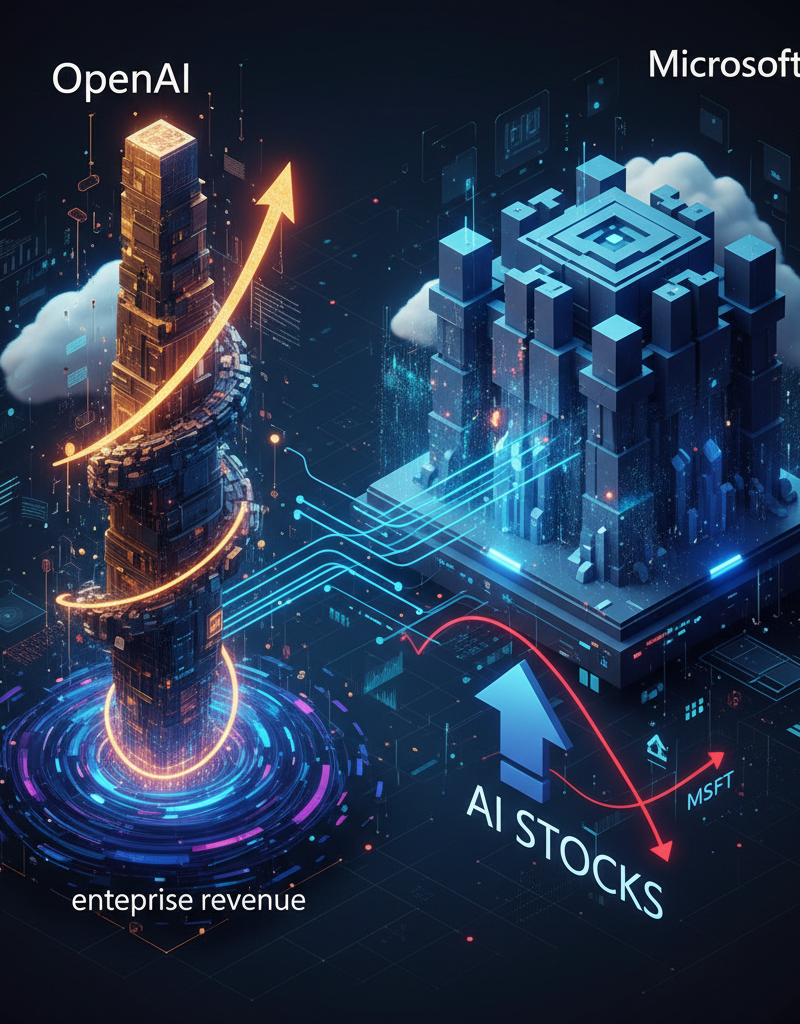
- Big cloud vendors and incumbents get a new battleground. OpenAI’s enterprise push forces Microsoft, Google, and AWS to sharpen their enterprise NLP and workflow offerings. Expect tighter Azure integrations and competing “Copilot for enterprise” plays.
- Consulting and outsourcing firms face compression. Tasks that used to justify large teams—first drafts, triage, routine discovery—can be automated. Not eliminated overnight, but repriced.
- Startups that provide industry-specific models or compliance tooling get a lifeline: either they integrate with these enterprise LLM backbones or they get squeezed out.
The catch: governance, hallucinations, and procurement
Don’t mistake enterprise packaging for risk-free AI. Three problems won’t be solved by a fancy control panel.
- Hallucinations are real. A secure model that invents contractual terms or misreads a clause still creates legal exposure. Firms will need rigorous human oversight and standardized validation workflows. Audit logs help you reconstruct a decision path—they don’t stop a wrong answer from becoming policy.
- Integration debt. Enterprise buyers are used to long procurement cycles for ERP, trading platforms and core banking. Embedding an LLM into those workflows requires data mapping, APIs, and change management. That’s expensive and slow, especially for midmarket firms.
- Regulatory attention. Financial services and healthcare regulators aren’t just worried about data leakage. They care about explainability and reproducibility. If a model influences a trading decision or a credit approval, who is on the hook when it goes wrong? Firms will need policies that reconcile model outputs with compliance obligations (FINRA, SEC, GDPR, HIPAA depending on the sector).
- Vendor lock and implicit norms. Giving a vendor operational access to internal knowledge reshapes bargaining power. Procurement teams will ask: how portable are models and data if we switch vendors next year?
What success looks like
Adoption won’t be binary. The winners will be firms that build three things at once: productized use-cases, governance frameworks, and incentives that push employees to use the tech correctly. A bank that stamps AI-assisted credit memos with a required human sign-off, for instance, avoids liability while capturing efficiency gains.
Also watch for a rise in “AI ops” teams—small squads that translate business needs into prompts, templates and monitoring rules. These teams will look less like traditional IT and more like a hybrid of product managers, compliance officers and senior analysts.
A prediction (not a promise)
2025 will probably be the year enterprise AI becomes background hum rather than a boardroom curiosity. Most firms won’t be radically transformed overnight; they’ll be incrementally more efficient in predictable pockets—research, contract review, client reporting. The real disruption will follow when organizations re-train workflows around AI capabilities instead of trying to graft models onto old processes.
Final note: OpenAI has made the enterprise case more plausible, but plausibility isn’t adoption. The heavy lifting comes after the sale—training, controls, audits, and a lot of cultural rewiring. For now, ChatGPT Enterprise is less a magic wand and more a new standard-issue tool for corporate life. How companies choose to bolt it into the engine room will determine whether this becomes a productivity leap—or another expensive experiment that lives in IT’s graveyard.