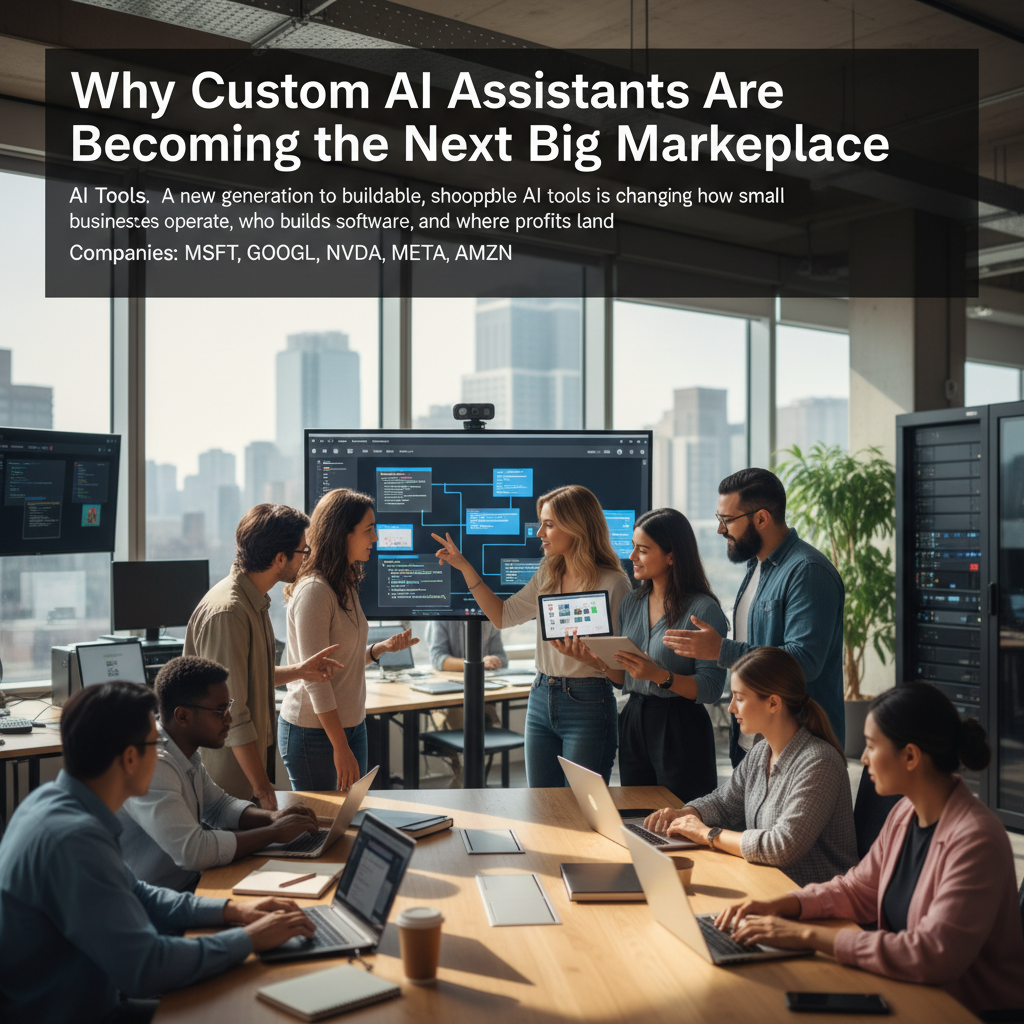
The moment feels familiar: an app store explosion, but for smart assistants.
What began as curious chatbots has quietly become a small economy of customizable assistants — compact, task-focused tools that people and small teams drop into Slack, CRMs or a company intranet.
These are not science-fiction agents. They’re prompt collections, modest datasets and glue code that stitch together APIs, web scraping and internal knowledge. The result is a virtual specialist that answers a narrow set of questions, fills forms or automates routine research.
Why it matters now
- Low technical barrier. Big vendors ship templates and no-code building blocks, so you no longer need to be a developer to assemble an assistant. Consultants, freelance devs and frontline workers can create useful tools.
- New ways to make money. Marketplaces, subscription models and revenue shares are turning assistants into microproducts people will pay for.
- How they spread matters. Plug these assistants into email, calendars or CRM systems and their value multiplies. More integration means faster adoption.
Think of it as an app store moment for these assistants
In the early smartphone era a lone developer could publish a weather app and reach millions. Today a tax or HR consultant can build an assistant that knows their niche, list it in a directory and sell access. Platforms will take a cut; creators usually keep the customer relationship. That shift matters more than it initially seems.
Real tradeoffs — and a few hard limits
- Productivity gains can be immediate: faster drafts, triaged customer requests, fewer repetitive tasks. But accuracy varies. Assistants are only as good as their training data and the guardrails around them.
- Security and compliance are front-and-center. Pushing proprietary contracts or customer records into a hosted assistant without legal protections is a fast path to trouble.
- Platform concentration risk is real. A small set of platforms could end up controlling distribution and pricing — echoing problems the app economy already faced.
Examples and use cases
- A boutique accounting firm runs an assistant that summarizes client tax documents and flags missing schedules before a human reviews them.
- A customer support lead builds a tool that triages tickets, drafts replies and surfaces precedent answers for agents.
- Independent consultants package templates, checklists and SOPs as paid assistants for peers.
What companies and creators should do tomorrow
- Start with one narrow problem and measure the outcome. Pick a single workflow, then track time saved and error rates.
- Treat assistants like feature teams, not finished products. Iterate on prompts, logging and human review.
- Protect sensitive data with on‑prem or dedicated instances, or explicit data‑handling contracts.
- Plan for vendor dependence. Keep exports of your knowledge base and a fallback process if a platform changes pricing or policy.
Bigger picture: shifting economics and a messy decade ahead
Software economics are tilting away from monolithic apps toward a long tail of micro‑apps that monetize vertical knowledge. That opens revenue for domain experts — and creates a bigger attack surface for regulators and compliance teams.
If history is any guide, this won’t be pure disruption or neat regulation. Expect a messy decade: quick wins for early adopters, costly mistakes for those who skip governance, and eventually a new set of market leaders and standards.
For many US businesses the immediate test is practical and small: can a $50/month assistant save a small team enough time to justify the cost? That answer will shape who adopts now and who waits for safer, standardized offerings.