AI is decentralizing. After three years of racing everything to the cloud, a counter-movement has begun — capable language models running locally or in hybrid setups that prioritize privacy, latency and control.
This isn’t a nostalgic throwback to pre-cloud days. It’s pragmatic. Think mainframes to PCs in the 1980s. Cloud LLMs played the role of supercomputers for generative AI; local LLMs are more like the personal computer: accessible, configurable, and genuinely in the user’s hands.
Why this matters now
- Latency and offline capability change the game. On-device models shine for field work: lawyers redacting documents on-site, clinicians using models inside hospitals with flaky internet, salespeople getting AI help during a meeting. Immediate responses matter.
- Privacy and compliance are no longer optional. RAG pipelines that ferry vectors to third-party servers leave audit trails CIOs dislike. Local inference keeps sensitive data inside organizational boundaries.
- Cost math has shifted. For predictable, steady workloads, a one-time hardware purchase plus a local model can outcompete recurring cloud inference bills. It’s not universal, but for many use cases it’s cheaper.
Concrete trends to watch
- Smaller open models are getting better. A well-tuned 7B–13B parameter model can often replace a remote 70B+ call for routine tasks. That’s surprising until you try it.
- Optimization tooling has matured. Quantization, pruning and smarter GPU offloading are real now. Which is why an M-series Mac or a mid-range NVIDIA card looks like a serious AI workstation these days.
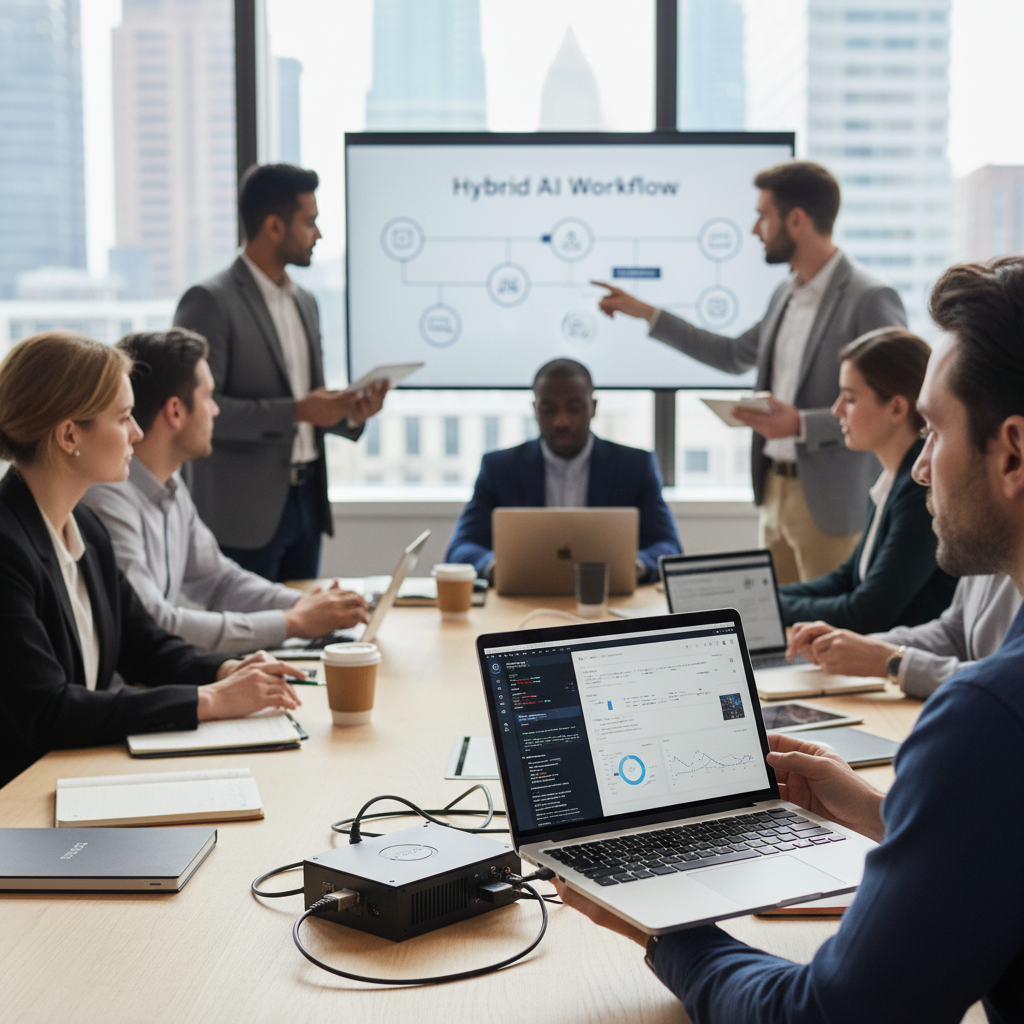
- Hybrid deployments are becoming the default. Companies split workloads: local models for private, latency-sensitive tasks; cloud models when you need heavy reasoning or fresh knowledge.
Use cases that tip the scale
- Regulated sectors. Healthcare, legal and finance are obvious first movers. Running clinical summarization or contract review without sending PHI or PII elsewhere removes a lot of friction — and legal risk.
- Creative workflows. Designers and video editors prize instant iterations and the freedom to work offline. Plus you avoid sudden vendor-imposed throttles or account issues.
- Edge and IoT. Drones, factory controllers, retail kiosks — these often must infer at the edge. Local models reduce single points of failure and network dependence.
Counterpoints and practical limits
- Staleness. Local models don’t auto-update with the news cycle. Without a reliable update pipeline they get stale, and that matters when timeliness matters.
- Security and governance remain hard. Local doesn’t equal secure. Compromised devices, unsigned updates or dubious model provenance create new attack surfaces.
- Cost and ops. Not every organization can swallow the capital expense of GPUs or staff the ops expertise to run on-prem inference at scale.
Financial and competitive implications
- Winners will be vendors that make local deployment painless: easy updates, secure signing, smooth hybrid routing. Simplicity will win more often than cleverness.
- Cloud incumbents will push back with edge-focused offerings and private-cloud enclaves that try to mimic local control while keeping centralized updates flowing.
- Investors should watch infrastructure: chipmakers, orchestration software for hybrid stacks, and niche providers offering certified private LLMs for regulated industries.
A brief history note
Cloud-first won because running big models locally used to be prohibitively expensive and complex. As models got more efficient and tooling improved, the balance changed. This is evolution, not rejection — most organizations will end up with a mix of deployments, much like they use both cloud services and on-prem databases today.
What to do if you run AI in your business
- Map where your data goes. Classify workloads by privacy sensitivity, latency needs and cost profile.
- Pilot a local model on one high-risk workflow — say contract review or patient notes — and measure total cost of ownership versus cloud options.
- Demand signed updates and traceable provenance for model artifacts. A chain of custody will become a basic compliance check.
Local LLMs are a toolset, not an ideology. For companies that value control, predictable costs and privacy, on-device and private inference materially change the calculus. Expect a hybrid era where cloud scale and local trust are stitched together — messy at first, but increasingly practical.
The AI cycle is completing a loop: centralized compute expanding back toward personal, boundary-controllable intelligence. That shift will create winners and losers across software, silicon and enterprise services — and it’s already reshaping priorities.