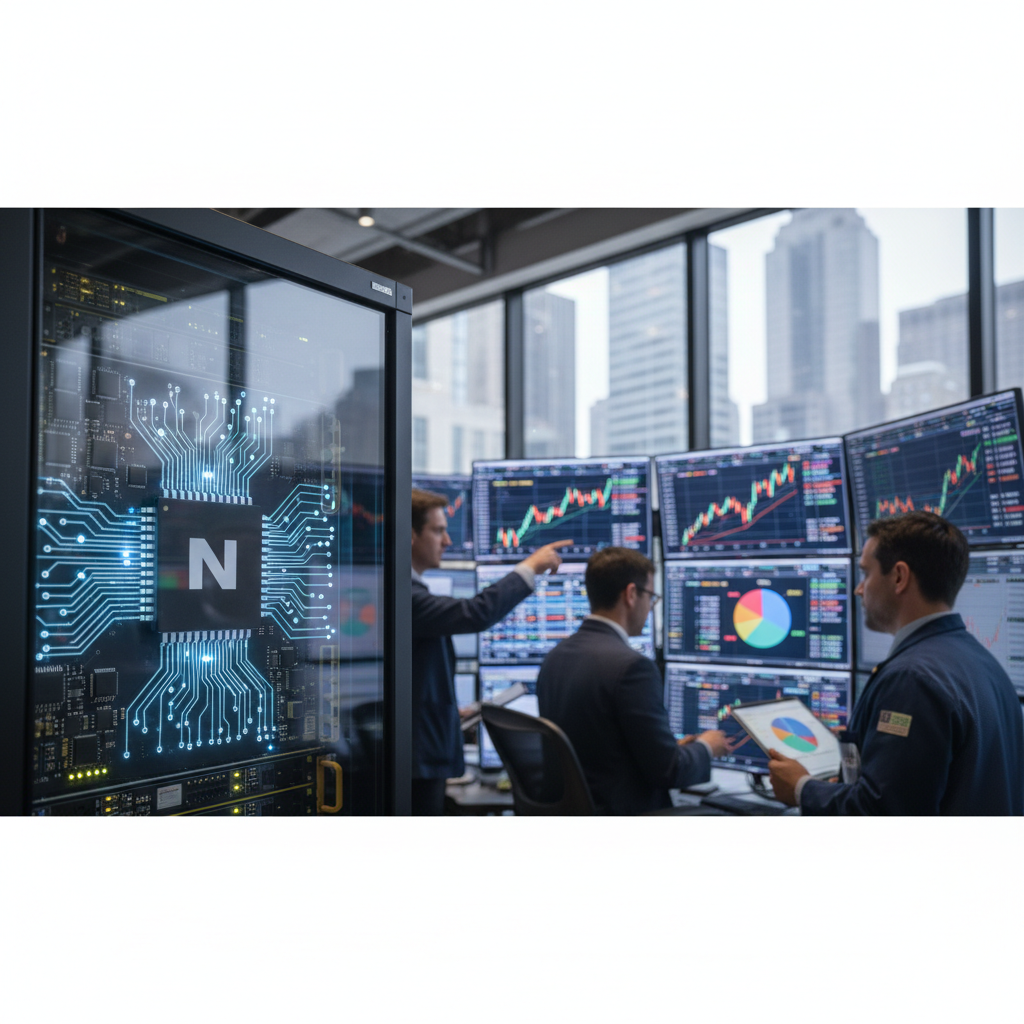
The headline is simple: when investors buy AI ETFs, they are often buying Nvidia by another name.
ETF issuers pitch exposure to an AI future — robotics, cloud AI, enterprise software, chip-level compute. What gets less airtime is that the engine under most of that thesis is a very small set of companies that provide the data-center horsepower. Nvidia sits at the top of that stack.
Why the concentration exists
At root: compute economics and a sticky moat. Nvidia’s GPU architecture, the CUDA ecosystem, and the surrounding software libraries create switching costs that are hard to overcome. Building a true data-center alternative is expensive, time-consuming, and often slower than markets expect. So Nvidia isn’t just a parts supplier; in many deployments it’s the plumbing of generative AI. That matters, because markets have a habit of rewarding platform winners — think Microsoft in enterprise software or Intel in the early PC era. Nvidia is playing that role for AI compute, and investors have already priced that expectation into ETFs and individual stocks.
What this means for investors
- Hidden single-stock risk. Many AI-themed ETFs advertise diversification, but a few names — Nvidia first among them — can drive most of the returns (and the pain).
- Crowded trade dynamics. Positive sentiment funnels money into those ETFs, which pushes the dominant holdings higher; the same loop works in reverse on dips. It amplifies both upside and downside.
- Sector spillovers. Moves in Nvidia ripple outward — cloud providers, memory makers, and software firms react because their demand is correlated.
A short historical detour
If you remember the dot-com era, you’ll recall how a handful of platforms captured the bulk of gains. This looks similar, but not identical. AI’s revenue model is more capital-intensive — data centers, fabs — and value accrues through both hardware sales and software lock-in. That dual revenue stream changes the math a bit.
Counterpoints and why diversification still matters
- Nvidia’s lead is big, but not unassailable. Competitors, custom silicon from cloud providers, or open-source alternatives could erode margins over time.
- Geopolitical risk and export controls are real and can shift fundamentals quickly.
- A significant slice of AI’s economic value may end up with cloud operators and application-layer companies instead of silicon vendors.
Actionable thinking for U.S. investors
- Treat AI ETFs as thematic exposure, not a catch-all diversified bet. Always check top-10 weightings and the concentration in Nvidia.
- If you want concentrated upside, buy Nvidia directly. If you want participation with less single-stock risk, split your allocation: Nvidia + broader plays (cloud providers, memory, enterprise AI software).
- Keep an eye on policy headlines. Changes to export rules or new chip restrictions can move this market faster than earnings. And remember valuation — big exposure at frothy prices is different from the same exposure at a discount.
Buying the AI narrative is tempting and has paid off, but much of the story has become a single- or few-stock show. That’s exciting for traders and nerve-racking for long-term allocators. If you want AI upside without the binary risk of one company, be deliberate: know what your ETF actually holds, size positions with that concentration in mind, and be ready to rebalance when the trade turns into a crowded call option.
This isn’t a prophecy. It’s an observation about how capital flows and technological moats have shaped the last 24 months of returns. If you want exposure to AI’s upside, look at the mechanics — not just the marketing.