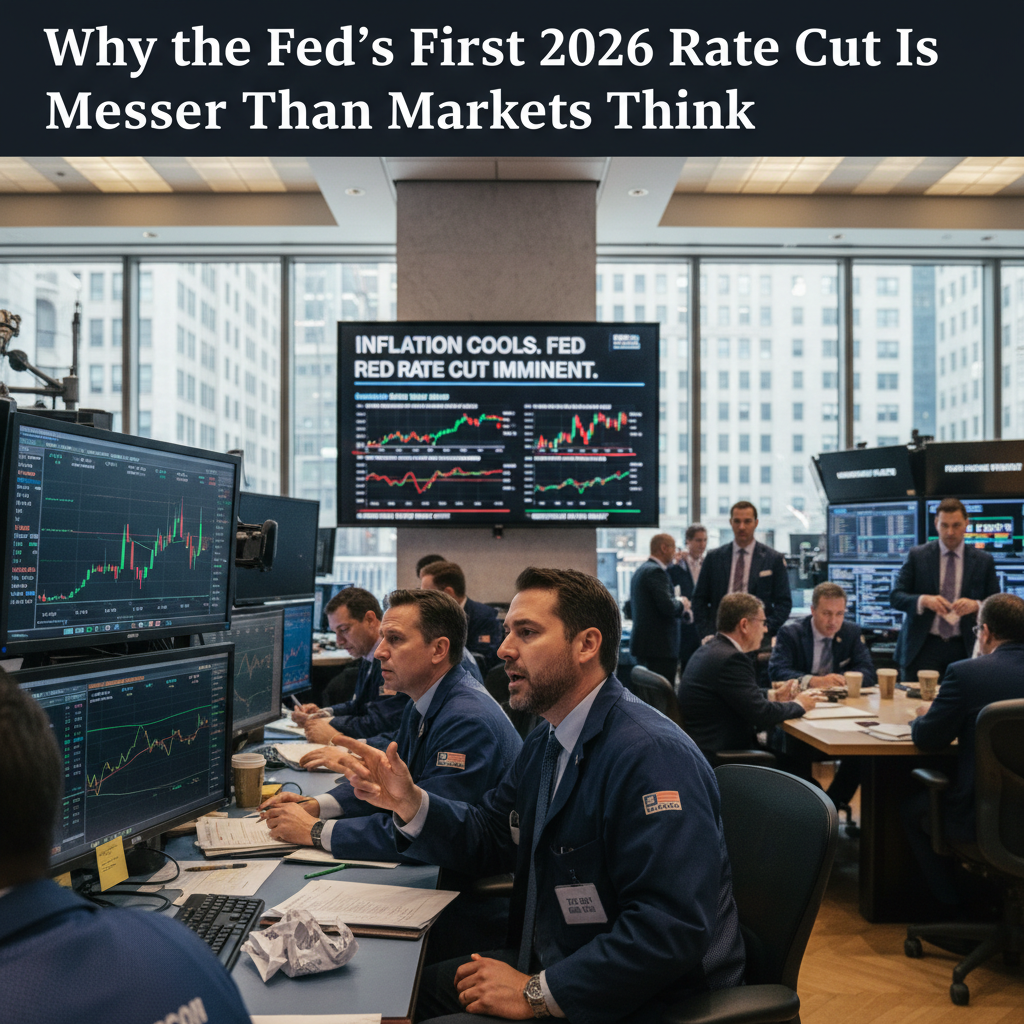
The headline is simple; the aftermath is not.
The Fed trimmed the policy rate by 25 basis points this month, and markets responded in the predictable way: long yields eased, bank shares jumped, growth assets rallied. But this feels less like a tidy policy handoff and more like a messy reshuffling of risk — a short-term relief that raises as many questions as it answers.
Why this cut feels different
- Inflation looks cooler on the surface because energy and goods prices helped pull the headline down. Services inflation, which tracks wages and consumer behavior, remains stubbornly high. So the Fed is celebrating one statistic while quietly worrying about another.
- The labor market is patchy. Some regions are still overheated; others are merely stable. A single fed funds rate is a blunt instrument against that kind of geographic and sectoral variation.
- The yield curve is repricing in fits and starts. Short rates fell quickly; the 10-year barely budged. Investors are pricing in growth uncertainty and the reality of heavy fiscal issuance, not just central-bank policy.
Market implications worth thinking about
- Fixed income: Bond ETFs rallied, but gains are not uniform. Long-duration Treasuries led the move while intermediate parts of the curve compressed. Translation: volatility can spike if macro data surprises.
- Banks: Regional lenders got some breathing room on funding costs, yet that doesn't automatically widen net interest margins. The classic post-cut profit pop assumes loan demand will accelerate — and consumers look cautious.
- Real assets and rate-sensitive equities: Lower real yields help REITs and long-duration growth names. But they also become more vulnerable to an inflation uptick or a shock from larger-than-expected Treasury sales.
Practical, short-term moves
- Reconsider duration exposure. Extending duration can pay off if the Fed keeps easing, but it turns into a liability if inflation picks up again.
- Be selective on bank exposure. Early rallies will be noisy; prefer large national banks with diversified fee businesses over thinly capitalized regionals.
- Watch the fiscal math. Big Treasury issuance can lift long yields even while the Fed cuts, squeezing bond returns and complicating mortgage-rate paths.
Some historical perspective
- Comparable pivots — think 1995–96 or 2019 — show early market exuberance sometimes gives way to choppier trends as policy transmission lags. The initial bounce can be misleading.
- If the 10-year hangs in the mid-3s while inflation stays above roughly 2.5% year-over-year, expect a tug-of-war between risk rallies and renewed rate volatility.
Counterarguments and risks
Some strategists argue the cut will spark a durable rally: cheaper short-term funding, stronger consumption, and better corporate sentiment. That depends on confidence turning into actual demand, not just higher asset prices. The alternative is a premature easing that rekindles asset bubbles, weakens the dollar, and imports inflation through pricier imports.
The takeaway
This first cut of 2026 signals intent more than it guarantees outcomes. For investors that means discipline: be explicit about duration, favor balance-sheet strength over narrative bets, and keep a close eye on services inflation and Treasury supply. The Fed has bought time — what happens next is a market negotiation about where the economy goes from here.
Pedro Marini