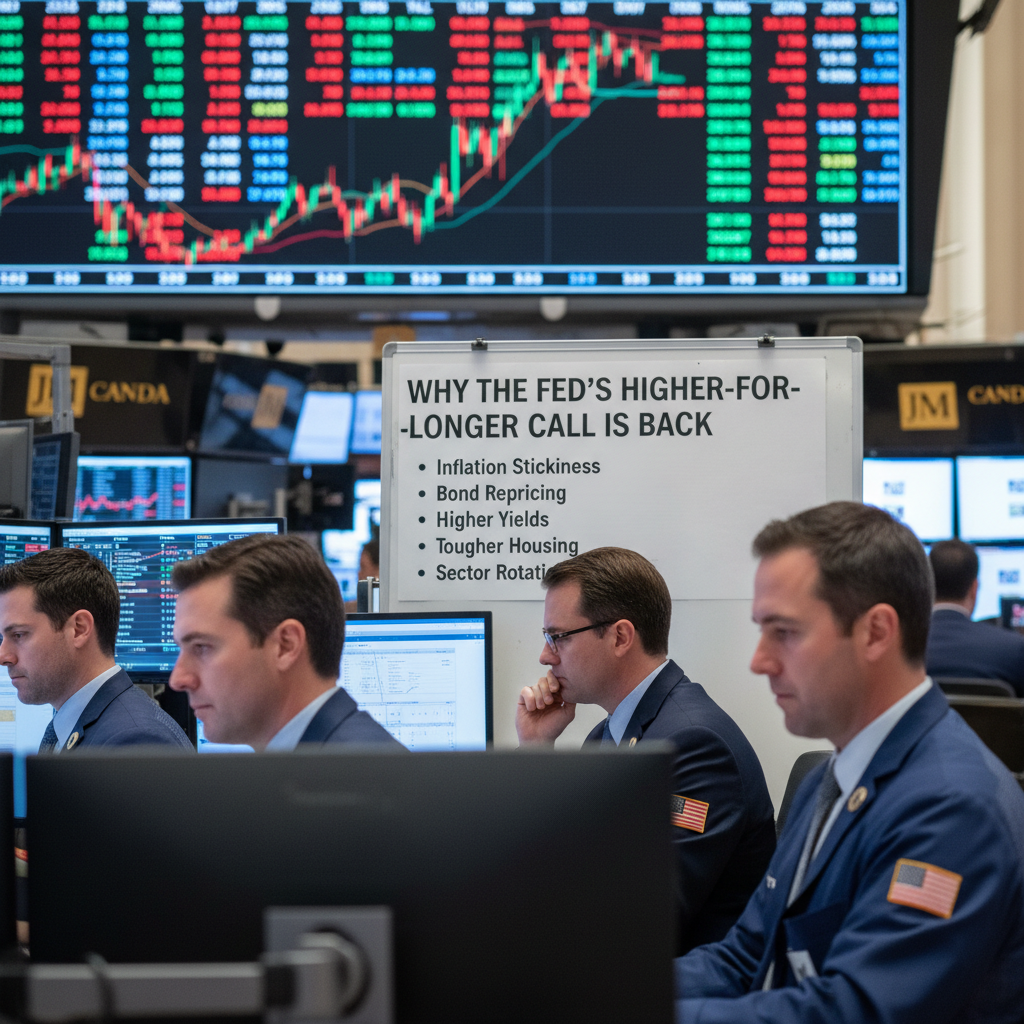
Federal Reserve policy is testing investor patience again. After months in which markets priced in aggressive rate cuts, a fresh spate of stubborn services inflation and surprisingly solid payrolls has shoved the Fed’s higher-for-longer story back into the foreground.
This isn’t just another routine policy wobble. Think of it as a familiar episode with different players: bond desks demanding more pay for short-term risk, equity investors repricing growth multiples, and ordinary consumers noticing it in mortgage quotes and credit-card statements.
What changed
- Sticky services inflation and resilient jobs data knocked the immediate odds of rapid cuts off the table.
- Short-term Treasury yields have risen, which squeezes duration-sensitive assets and the ETFs that behave like long bonds.
- The market mood shifted from a simple risk-on, rate-cut fantasy to a more complicated reallocation across banks, value stocks, and select tech names.
What's interesting is how quickly positioning can flip. Some traders were aggressively long duration; now they’re paring back. That pivot matters more than it initially seems.
Market implications, in plain terms
- Bonds: Long-duration instruments remain exposed. A repricing of expected yields is correcting the prices that had flourished in the low-rate era. Investors will need to choose duration deliberately.
- Banks: A higher-rate environment helps net interest margins, sure, but it’s not an unalloyed boon. Credit cycles and loan growth will determine winners and losers — regional banks won’t look like the big banks.
- Tech and growth: Higher discount rates hit valuations for long-dated cash flows. Expect multiple compression among the most rate-sensitive names and the ETFs heavy on them.
- Housing and consumers: Mortgage rates tend to follow Treasuries. Even modest upward moves can cool housing activity and raise monthly debt-service burdens for households.
In practice, though, outcomes are messy. Some sectors respond quickly; others take months to reflect tighter policy through slower credit and investment.
Concrete angles to watch
- Treasury curve dynamics: If the 2-year stays high relative to the 10-year, chatter about recession risk and curve inversion will pick up again.
- Fed language in upcoming meetings: Policymakers say they’re data-dependent, but the bar for cuts now looks higher than it did a few months ago.
- Corporate refinancing windows: Companies that postponed borrowing at cheap rates may face a tougher, costlier refinancing environment.
There are counterarguments worth noting. Not everyone thinks higher-for-longer will last. Some strategists still expect cuts later this year if inflation cools and growth decelerates. That would help growth stocks and long-duration bonds. The critical question is not whether cuts will occur but how confident you should be about their timing and size.
A quick historical frame
The current re-pricing echoes the mid-1990s tightening, when surprise moves forced fast portfolio reshuffles. Use the analogy cautiously — it’s not a prediction — but it’s a reminder that monetary cycles create second-order effects, from credit conditions to business investment and hiring, that take months to play out.
Actionable takeaways
- Reassess duration exposure. Holding ultra-long bond positions blindly invites volatility.
- Stress-test mortgage and debt scenarios if you manage household or corporate cash flows.
- Consider a barbell approach in equities: stable financials and selected cyclicals on one side, high-quality growth with visible cash flows on the other.
Monetary policy has a way of surprising narrative-driven markets. The higher-for-longer reality is a useful corrective for investors who treated cuts as a foregone conclusion. Not an alarm bell — more a prompt to swap certainty for preparation.
Pedro Marini