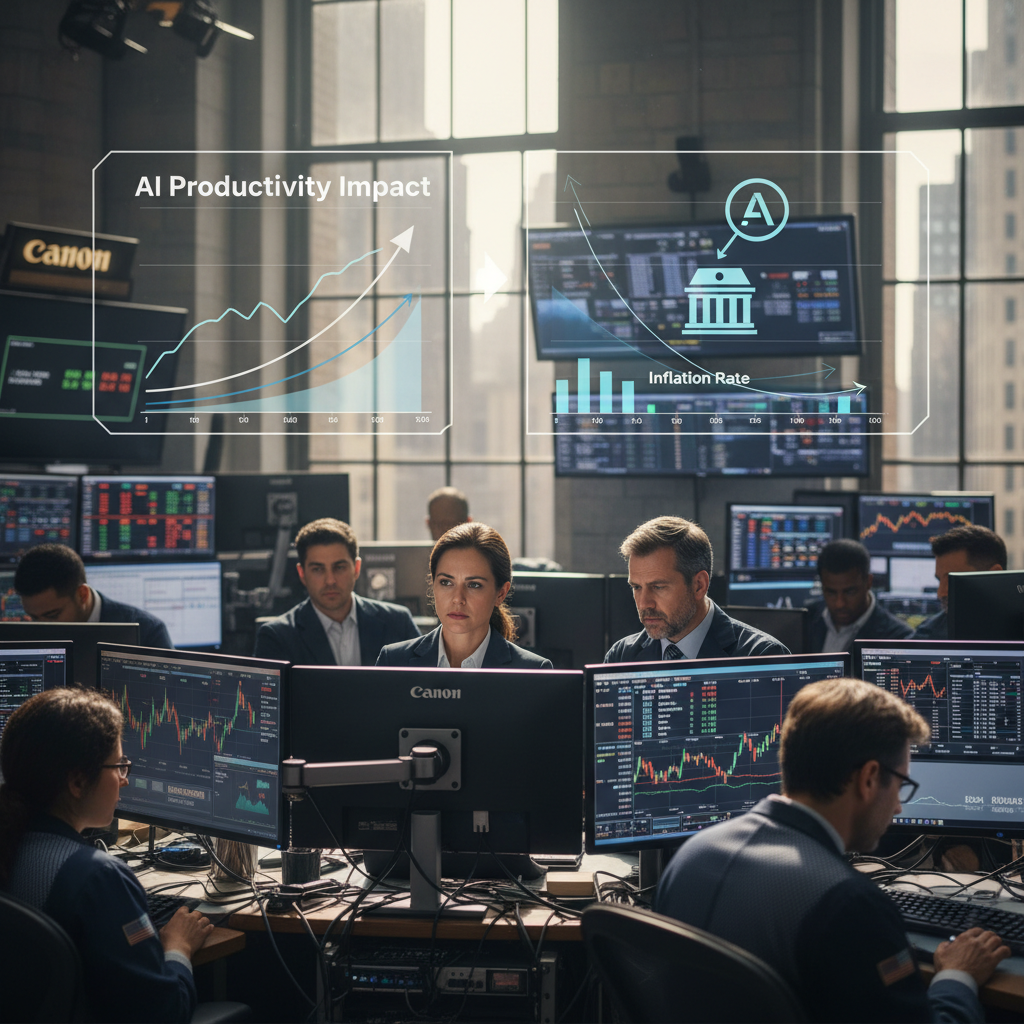
The Fed has long juggled two numbers — inflation and unemployment. Now a third, fast AI adoption, is throwing the arithmetic off.
This is not some sci‑fi sidebar. Across trading desks, call centers and back offices firms are deploying AI that raises output and trims labor needs. That forces a real policy question: does rising productivity pave the way for earlier rate cuts, or does the technology create new wage pressures that keep policy tight?
Some context helps. In the 1990s, productivity gains from information technology helped bring down inflation while supporting growth. The 1970s, by contrast, showed what happens when supply shocks and weak productivity meet loose policy. AI could turn out like the internet wave — deflationary over time — or it could concentrate rents in a few high‑skill pockets and push up prices in services. Reality may sit somewhere between those extremes.
Markets are split. One view says AI will lower unit labor costs and damp consumer prices, giving the Fed room to ease sooner. That view underpins optimism in rate‑sensitive areas like housing and long‑duration tech. The counterargument is a skill premium: wages for AI engineers and complementary roles surge while lower‑skilled workers get displaced, leaving core services inflation stubborn. Both stories have merit; which dominates depends on how broadly gains diffuse.
Practical signs to watch — not an exhaustive list, but the ones that matter. First, productivity and business investment: persistent capex on AI hardware and software would argue the deflationary scenario is gaining traction. Second, wages: if compensation in contact‑heavy services keeps climbing, the Fed will be reluctant to ease. Third, listen to the Fed’s framing on labor reallocation. If officials explicitly acknowledge structural shifts, they may favor a more cautious, slower path to easing.
How markets might move. Banks could fare well if rates stay elevated, yet automation also trims operating costs — so the winners will be the banks that actually implement AI, not just announce plans. Tech and AI leaders are priced for growth; a swift drop in inflation would support high multiples, but persistent inflation eats into long‑term cash flows. For bonds and mortgages, the yield curve will reflect the tug of war between productivity gains and wage stickiness — markets that bet too early on cuts could be in for a surprise.
One contrarian point worth holding: the Fed’s toolkit is built for cyclical swings, not structural change. AI is both cyclical and structural. That nudges policymakers toward words more than dramatic rate swings — calibrated forward guidance, careful signaling, smaller moves. In plain terms: expect a slower, more rhetorical Fed, and prepare for bouts of volatility when incoming data clash with big technological shifts.
If you’re positioning a portfolio or timing a home purchase, hedge across scenarios. Protect against rate sensitivity, favor firms showing real productivity gains from AI (not just hype), and keep a close watch on wage and capex trends over the next couple of quarters.