AI Regulation
Why Wall Street Is Rebuilding Its AI Playbook Because of New Rules
EU and U.S. regulatory shifts are forcing investment firms to retool models, rethink vendors, and pay for compliance — fast
P
Pedro Marini
June 4, 2026 · 4 min read
EU and U.S. regulatory shifts are forcing investment firms to retool models, rethink vendors, and pay for compliance — fast

Illustration by IMF Alpha editorial · Reviewed by Pedro Marini
Regulation has teeth now. What began as a policy debate has turned into an operational headache for quant funds, asset managers, and fintechs that built trading strategies and risk systems around large language models and black-box machine learning stacks.
The EU AI Act and an increasingly assertive group of U.S. regulators are shifting the math. At first it looks familiar — rules, compliance teams, checkboxes — but the practical knock-on effects are different: here AI lives inside data pipelines, live trading code, and vendor ecosystems, not in neat SaaS widgets.
Why this matters now
Practical consequences for Wall Street
Who wins and who loses
A few sharp comparisons
Counterpoints and trade-offs
What investors should watch
The upshot
This is not a one-off compliance exercise. It’s a structural recalibration of how financial firms build and deploy AI. Expect short-term pain, higher costs, and operational churn — and a longer-term reshuffling of winners and losers based on who truly embeds governance into the core of their stack.
A quick aside: regulation often arrives clumsy. Still, it disciplines markets. For investors that means watching execution, not rhetoric. Companies that turn governance into a product win twice — from regulators and from clients who now prize auditable, reliable models.

Cloud marketplaces, chipmakers and data clean rooms are turning customer behavior into proprietary model fuel — winners will own the data, not just the algorithms.
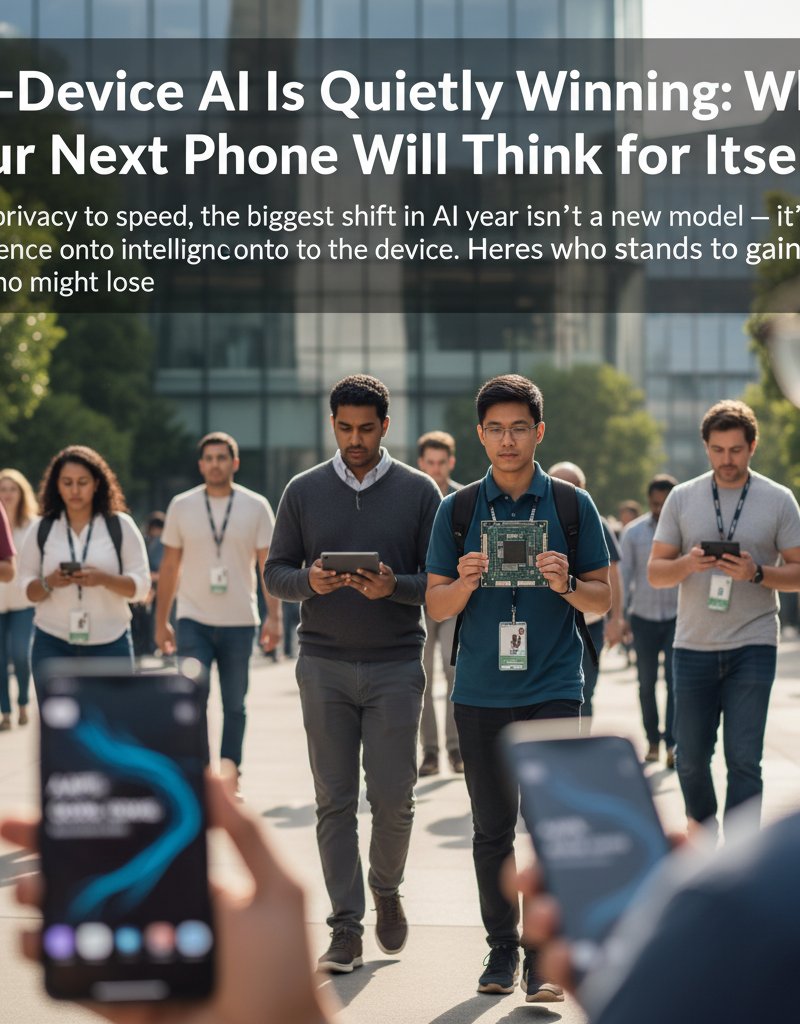
From privacy to speed, the biggest shift in AI this year isn't a new model — it's moving intelligence onto the device. Here's who stands to gain and who might lose.

AI-driven voice deepfakes and hyper-personalized scams are scaling fraud like assembly lines. Security teams and investors are watching who holds the line.