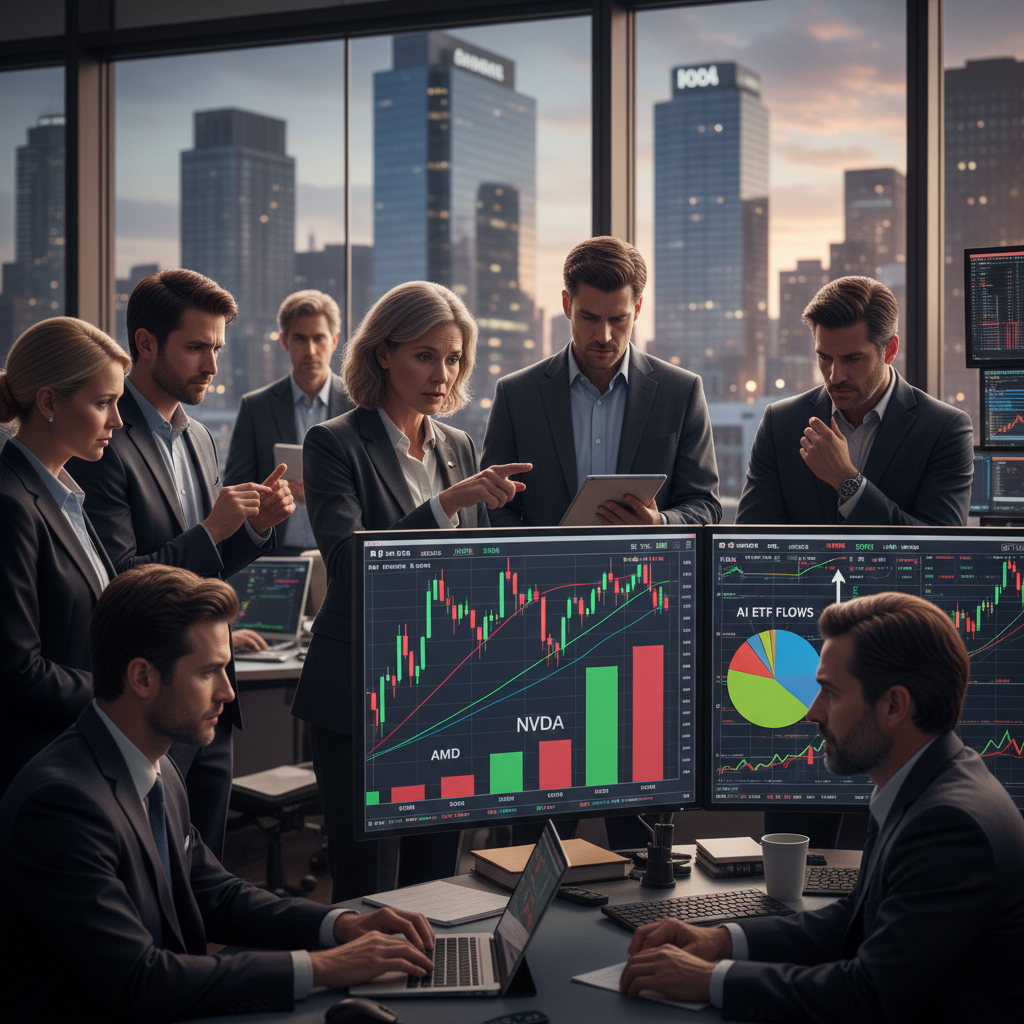
The rally in AI-focused ETFs has been one of the clearest market stories this past year: huge inflows, splashy returns, and a tiny group of winners carrying most of the load. At the center of that narrative sits Nvidia — not just the dominant AI chip supplier, but the one company whose moves can make or break the performance of many AI funds.
Why concentration matters now
ETF flows cut both ways. They can channel patient, index-like capital into secular winners and lower trading costs for broad exposure. They can also shove outsized sums into the biggest names, so different funds start to look alarmingly similar — and exposed.
This is not abstract. Anyone who lived through the tech bubble or the FAANG years recognizes the pattern: when a few stocks lead, sentiment feeds on itself until it stops. What’s different in 2026 is that AI demand is real and structural — driving revenue for chipmakers, cloud providers, and software vendors. Still, durable growth doesn’t erase the risk of concentration.
How that risk shows up
- Some AI ETFs put 15–30% or more into their top holding. One swing in that stock dents the whole fund.
- Big names attract options and derivatives activity, which can amplify intraday moves and volatility.
- Rebalancing events can force funds to buy into strength or sell into weakness, creating momentum-driven flows that exacerbate moves.
Where to look if you want less single-stock dependency
Diversifying away from Nvidia domination does not mean avoiding the AI theme. Consider a few alternatives.
- Cap-weighted hedge: seek ETFs with explicit weight caps or equal-weight AI funds to limit single-stock dominance.
- Supply-chain plays: equipment suppliers and network-chip makers often trade at lower multiples and still benefit as AI infrastructure scales.
- Cloud and software exposure: these firms can capture recurring revenue and tend not to concentrate in one stock the way some semiconductor plays do.
- Active managers: a skilled active ETF or fund can pare concentration through security selection and risk controls.
A few practical signals to watch
- Fund prospectus weightings and rebalancing dates. Those moments often cement or trim concentration.
- Options open interest relative to shares outstanding for the big names. Elevated ratios can foreshadow sharper moves.
- Insider activity and capex signals from chipmakers. When capex accelerates, supply dynamics can shift fairly quickly.
Counterpoints and a reality check
Nvidia’s lead isn’t just hype. Its GPUs and software stack are deeply embedded in large-scale model training, and switching costs for hyperscalers are real. That makes concentration, for many investors, a plausible trade-off for exposure to a market leader. Still, plausible doesn’t mean automatic. It needs conscious sizing — not passive byproduct.
For American investors
If you own AI ETFs, know the weight of the top holdings and ask whether you have an active view on those companies. If you do, think about a blended approach: core exposure to broad AI funds plus smaller satellite positions in capped or equal-weight ETFs, supply-chain names, and cloud/software plays.
The AI story is long. Portfolio construction is immediate. Treat concentration like you treat interest-rate risk: understand it, and size it so you can live with the next shock.
Action checklist
- Review the top 10 holdings and their weights in any AI ETF you own.
- Consider capped or equal-weight alternatives.
- Add selective supply-chain or cloud providers to blunt single-stock swings.
- Revisit position sizes ahead of earnings and rebalancing dates.
Pedro Marini