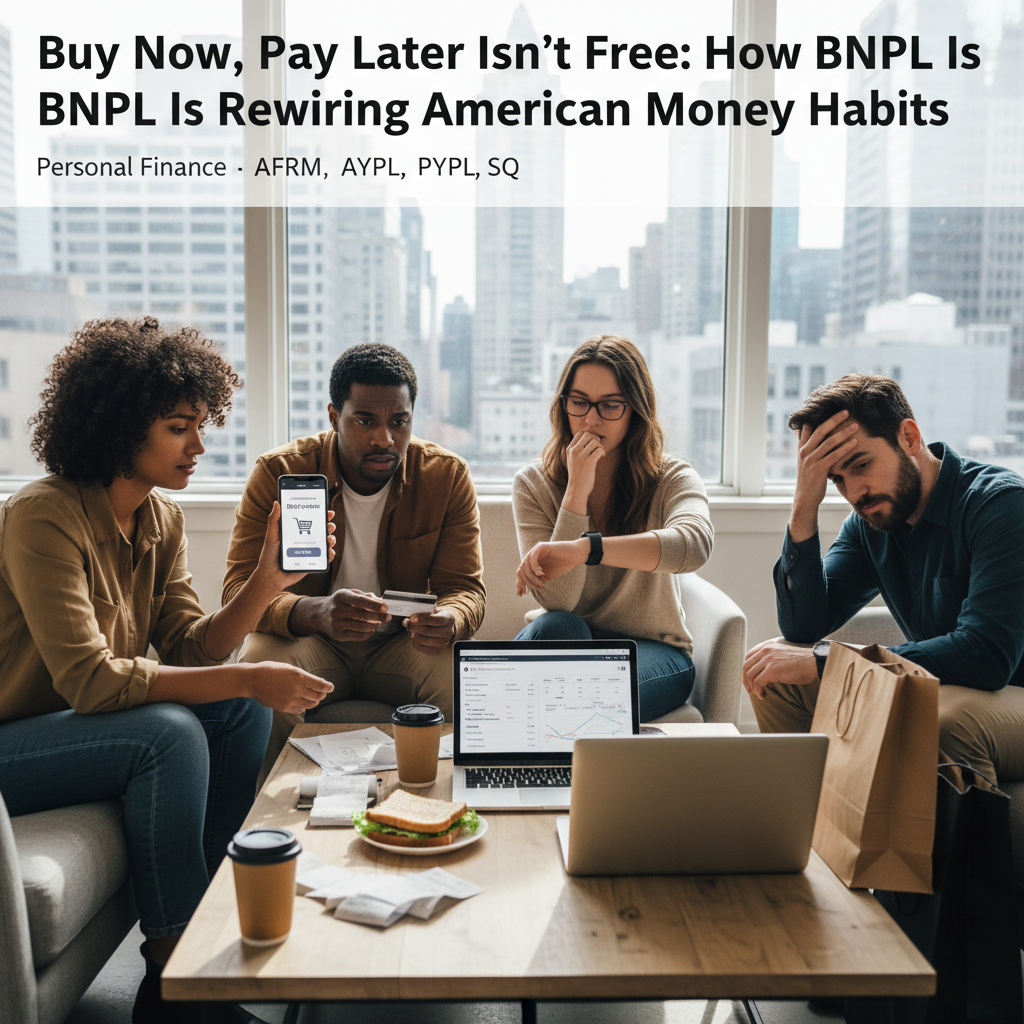
The pitch is simple: split a purchase into bite-sized payments and skip the credit card. For millions of Americans, Buy Now, Pay Later (BNPL) felt like a pandemic-born convenience that handed back immediate buying power without the sting of high credit card interest.
But convenience has edges. BNPL is not a magic eraser for credit risk — it’s a behavioral nudge wrapped into checkout UX. Think of it as layaway for the smartphone era: faster than the old store ledger, less regulated than a bank loan, and designed to catch you precisely at the moment of impulse.
Why it caught on
- It strips friction out of the checkout: minimal signup, no interest if you stay on schedule.
- Merchants like it because conversion rises and cart abandonment drops.
- Younger shoppers often prefer it — sometimes because it feels safer than a revolving credit balance.
What you don’t see immediately
BNPL can appear fee-free until it isn’t. Miss one payment and late fees, collection calls, or returned-item headaches can turn a small installment into a real problem. Returns make things messier: some retailers will refund the merchant side while leaving the consumer on the hook for the installment plan unless there’s coordination between platform and store. That coordination is often missing.
Regulatory and credit-score gray areas
Regulators have begun poking around. Many BNPL products initially avoided the underwriting and disclosure rules that govern credit cards and personal loans. Reporting is inconsistent: on-time BNPL payments might not boost your credit, but delinquencies can show up through collections or partner reporting. The net effect is unpredictability for consumers trying to manage their scores.
Not a new idea — just faster
Retail credit and layaway have existed for ages. What’s different now is speed, scale, and the data. Modern BNPL firms can profile shoppers, tune offers, and monetize repeat use — creating a spending loop that old layaway never could. That loop is interesting because it changes behavior in subtle ways; some users treat it like a budgeting tool, others slide toward impulse-fueled spending.
Winners and losers
Affirm, PayPal, Square (Block), and Apple are the most visible names. For merchants, BNPL often increases average order value. For consumers, it can be either a helpful payment option or a stealthy debt accelerator, depending on how it’s used.
A practical consumer playbook
- Use BNPL for purchases you planned for and can absorb if a payment is missed.
- Read the fine print: late fees, return policies, and whether the lender reports to credit bureaus.
- Treat it like a loan: set reminders or enroll in autopay. Missed payments erode both wallets and nerves.
- Don’t stack multiple BNPL plans across the same billing cycle; overlapping due dates are an easy trap.
Why this matters now
With inflation still a background hum and interest rates higher than they’ve been in years, many households are margin-conscious. BNPL can be a short-term relief, but it also shifts debt from a few credit cards to a web of smaller obligations that are harder to track. Policymakers, consumer advocates, and product designers will shape whether BNPL becomes a responsible financing option or a thorny regulatory problem.
Used deliberately, BNPL is powerful and practical. Used casually, it acts like an invitation to spend you may later regret.