What’s changed
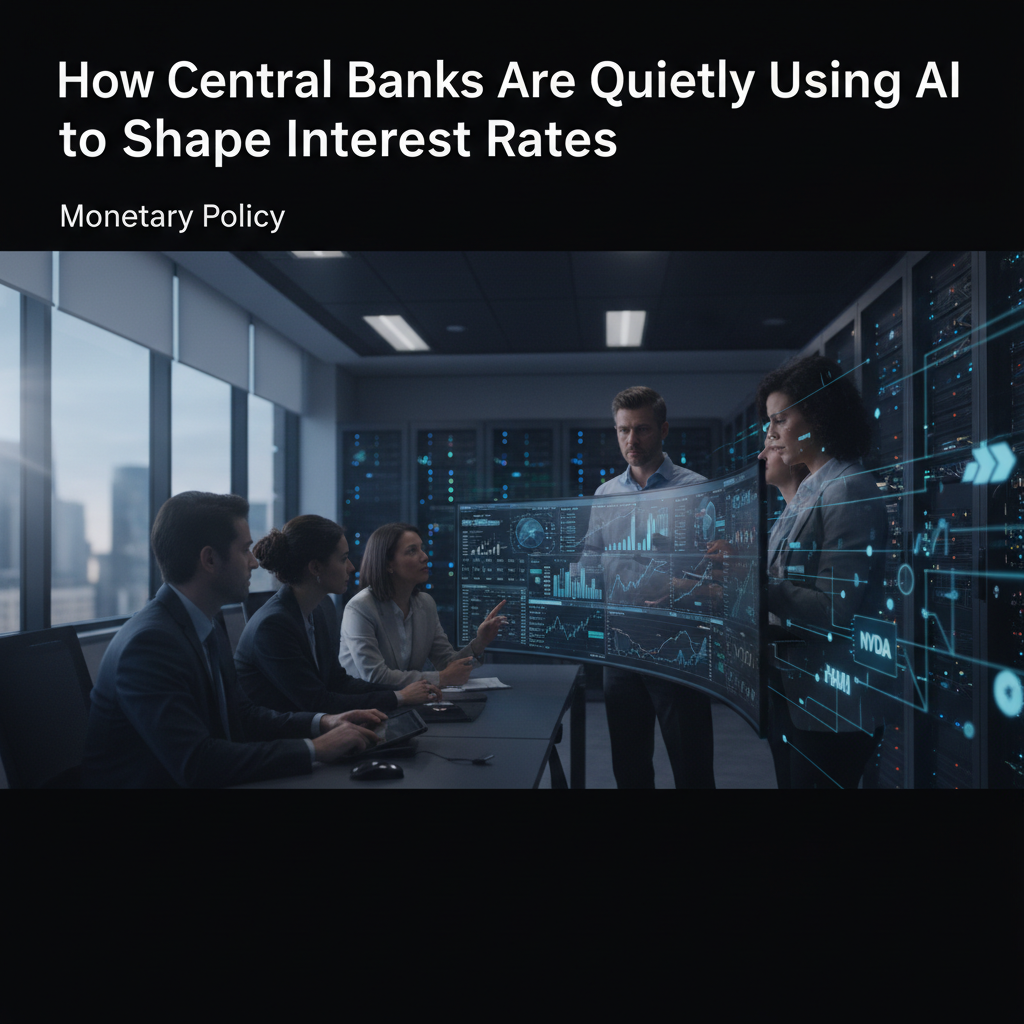
Central banks are moving beyond lab experiments and starting to run AI in day-to-day operations. Where analysts once relied mostly on macro models and monthly releases, teams now add machine learning to produce real-time inflation nowcasts, flag credit stress, and read alternative feeds — think web-scraped prices or payroll-like signals from online platforms.
Why it matters
The tempo of decision-making shifts when you have near-continuous estimates instead of waiting weeks for revised surveys or payroll reports. Policy staff can see core inflation and wage trends on a much higher frequency. That shortens the information lag and can make policy responses quicker — sometimes quicker than markets expect. Which, by the way, cuts both ways: faster signals can prevent surprises but also prompt more reactive policy.
Examples and context
- Fed teams have published research on nowcasting and machine-learning-enhanced forecasts for inflation and unemployment. The Bank of England, ECB and other majors are experimenting along similar lines.
- The BIS and several national central banks have piloted alternative data sources — web-scraped prices, job-posting analytics, card transaction flows — to augment traditional indicators.
- This is an extension, not a reinvention. Monetary policy has long absorbed better data and methods, from model-based rules in the 1990s to inflation targeting. Machine learning is the next analytical layer.
Market effects
- Faster signals can lower surprise risk but increase short-term volatility. If a model-based nowcast differs sharply from consensus, traders can unwind positions quickly.
- Banks and cloud providers may pick up business if central banks outsource compute or partner on infrastructure. Data vendors that supply high-frequency feeds gain influence — and pricing power.
Risks and frictions
- Opacity: many ML approaches resemble black boxes. That complicates communication; credibility depends on explanations people can understand.
- Overfitting and regime change: models trained in an extended low-rate period may misread shocks — supply disruptions or sudden tech-driven shifts can look like noise to them.
- Gaming and data manipulation: high-frequency alternative data are useful but noisy and, in some cases, susceptible to deliberate distortion.
How policymakers should respond
- Keep humans central. AI should inform scenarios and probabilities, not unilaterally set the policy dial.
- Require audits and publish methodology appendices so markets can see what drives model outputs and how confident the estimates are.
- Invest in robust data pipelines and clear legal frameworks for sourcing private data ethically and securely.
Net effect
Machine learning is nudging central banks toward faster, more granular decisions. That can reduce uncertainty in the long run if handled with transparency, but it opens fresh governance and market-stability questions right now. Near-term winners are likely to be firms that provide data infrastructure and explainable modeling; for policymakers the real prize is preserving credibility — which can be fragile when models run ahead of communication.
Quick hits
- Expect more nowcasts and AI-derived indicators in briefing books.
- Watch cloud, data and cybersecurity vendors for indirect macro exposure.
- Scrutinize central bank disclosures; clear limits and caveats on models will become a key part of policy management.
A human note
Policymaking has always mixed art and science. AI pushes the balance toward science, but it will never fully replace judgement — the background knowledge and intuition polished over decades. The hard work now is to keep that judgement visible, spoken plainly, so markets and citizens can follow why a rate decision was made.