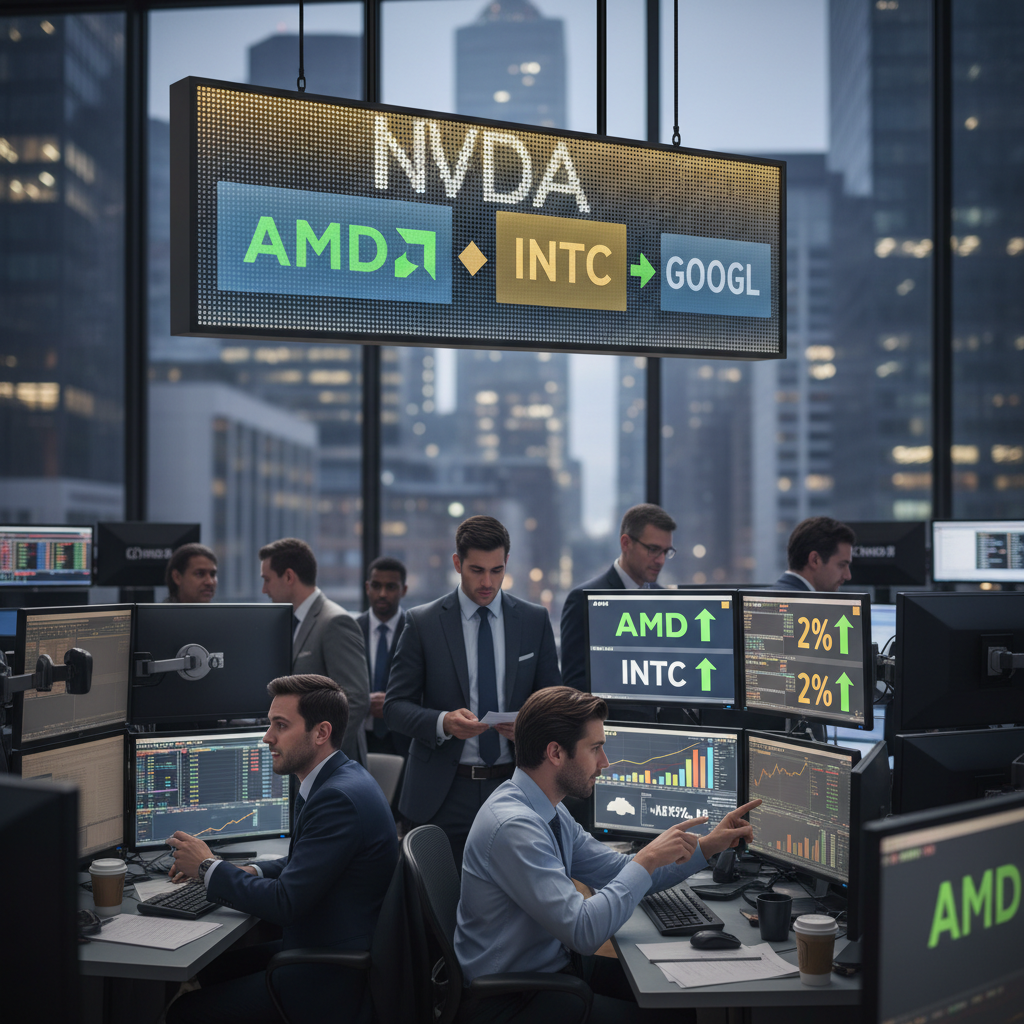
Nvidia’s leadership has been the story of the decade in AI investing. The crowd is no longer just cheering, though — at halftime people stand, stretch, glance for exits, and some quietly change seats.
Quick take: the huge piles of capital that went into the obvious winner are being nudged into smaller chipmakers, cloud AI plays and vertical software specialists. This is not a rejection of Nvidia’s advantage. Think of it as a classic rotation: valuations, capacity signals, and the hunt for the next compounder are nudging money elsewhere.
Why this rotation matters
- Valuation fatigue. When one name dwarfs the rest, investors get picky. Paying for future perfection feels risky, so capital starts hunting growth in cheaper tickers.
- Supply and capacity signs. Long lead times for specialized accelerators and foundry bottlenecks make customers and cloud providers test alternatives. That’s practical, not ideological.
- Software versus silicon. What’s interesting here is the split between hardware and monetization. Firms that embed AI into industry workflows can grow recurring revenue even if the chips underneath are commoditized.
Who’s in the crosshairs
- The familiar chip names: AMD and Intel. They’re obvious, but there’s also a rotating bench — niche accelerators, interconnect and networking vendors that keep data pipelines honest.
- Cloud and platform plays: Microsoft and Alphabet are no longer mere infrastructure vendors. They sell access to models and tooling; that product angle matters for revenue profiles.
- Vertical AI companies: fewer headlines, steadier revenue when they solve real problems — legal search, medical imaging, supply-chain optimization. Not as flashy, but more predictable.
A practical checklist for investors (not advice, just a framework to think with)
- Revenue exposure to data-center and AI sales. Higher exposure generally tracks pure-play AI demand.
- Gross margin and software mix. Software still buys you recurring, higher-margin cash flows.
- Valuation relative to growth. For early AI businesses, EV/revenue can be more telling than trailing P/E.
- Institutional ownership and insider moves. Rotations often show up first in 13F-style shifts and insider trades.
- Customer concentration and contract length. Multi-year AI deals blunt cyclicality.
Counterpoints and risks
- Nvidia’s CUDA ecosystem and model-optimization work are a serious moat. Switching large AI workloads is costly and slower than many assume.
- Smaller suppliers can win on price or niche performance, but they often trade technology leadership for margin and scale risk.
- Macro matters. AI projects live inside enterprise budgets. If IT spending slows, even well-positioned names feel the pinch.
A historical analogue (not perfect, but useful)
Remember the early smartphone era: a dominant platform created massive winners, then growth passed to firms that monetized new behaviors — apps, payments, services. The pattern repeats: hardware leadership builds an ecosystem, and capital then seeks the layer that actually captures recurring revenue.
Tactical mental models
- Want relative stability? Favor platform and cloud providers with diversified AI revenue.
- Comfortable with execution risk for upside? Look at specialized chipmakers and pure-play AI software firms showing real ARR expansion.
So: Nvidia isn’t being displaced. The market is just getting more granular. Smart allocation now means balancing exposure to the dominant platform with businesses that actually get paid to put AI to work.
Watchlist examples
- NVDA — set the bar
- AMD — GPU competition and server partnerships
- INTC — scale, foundry bets, enterprise footprint
- MSFT — cloud plus AI products
- GOOGL — custom accelerators and model stack
Stay skeptical of hype, insist on revenue proofs, and read the quarterly commentary — that’s where rotations surface before they show up on the chart.