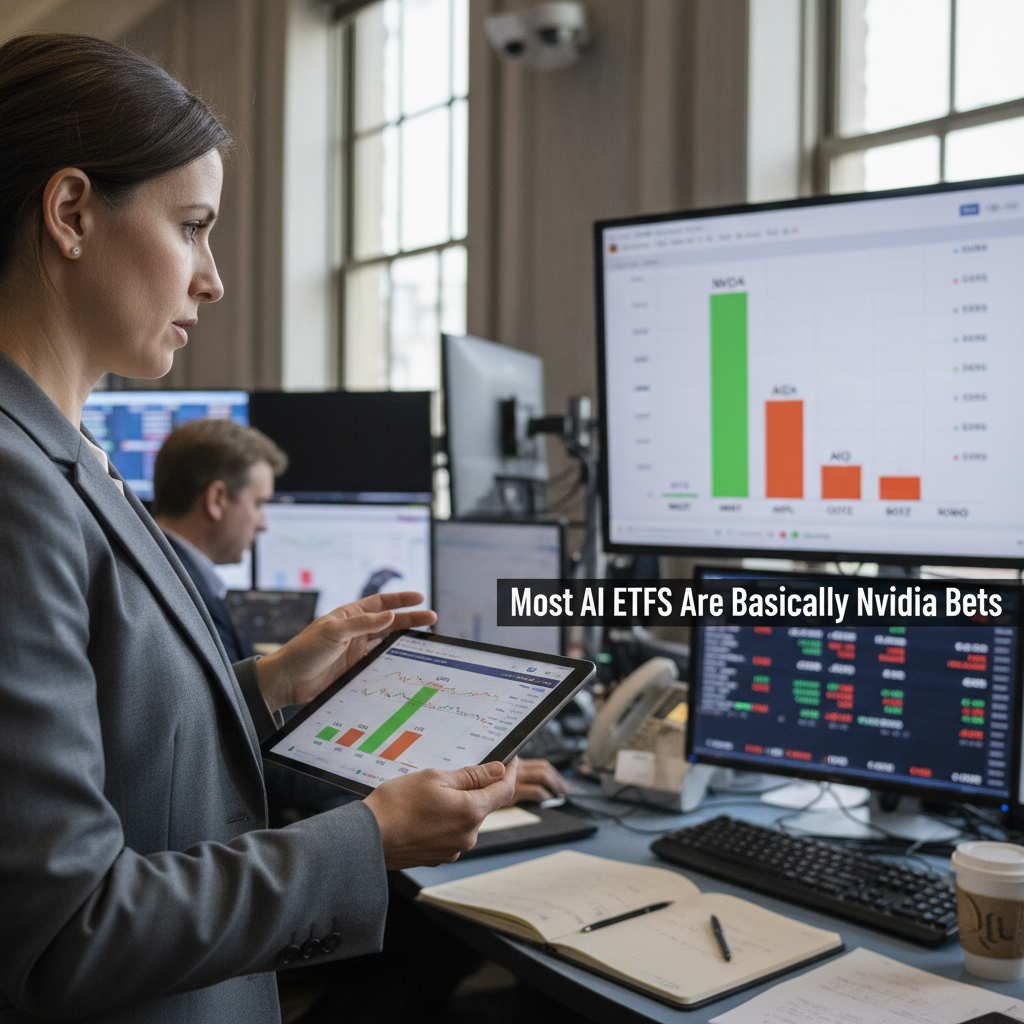
The pitch for AI ETFs is simple: get exposure to the next generation of computing without picking individual stocks. Sounds neat on paper. Until you pry open the holdings and realize many of these funds are basically big Nvidia bets, with Microsoft and Google filling out the rest.
This matters because thematic ETFs often attract retail money with slick names and marketing gloss, then their returns hinge on a handful of dominant firms. It’s like buying a basket called renewable energy and finding that a single solar company is the one steering the gains.
Where the concentration comes from
- Most AI ETFs are market-cap weighted or skew toward companies with the largest AI-derived revenues. When one firm — Nvidia — becomes the backbone of modern AI compute, its weight in those funds balloons.
- Typical Nvidia weights in common AI ETFs run roughly 15–35 percent, with Microsoft, Alphabet and Amazon grabbing much of the remainder.
Why that’s a problem
- Hidden single-stock risk. You may think you own a diversified theme, but you’re effectively riding the ups and downs of one company’s product cycle, management decisions, or regulatory headlines.
- Crowded positioning. Large passive inflows into similar ETFs amplify moves when the dominant company stumbles.
- Valuation stretch. If a couple of megacaps carry rich forward-looking multiples, they can make the whole ETF look expensive even when smaller AI names seem cheap.
But there’s another side
- Concentration sometimes reflects reality. Nvidia’s GPUs and software stack are genuinely central to current AI compute. That dominance isn’t always a quirk; it can be the economics of the industry.
- If your goal is pure exposure to AI compute winners, a concentrated ETF or direct Nvidia ownership might be exactly what you want. Just make that choice deliberately.
How to evaluate an AI ETF before you buy
- Check the top 10 holdings and their weights. If one name is north of 20 percent, pause and ask whether you’re comfortable with that single-stock exposure.
- Read the methodology. Market-cap weighting favors giants; equal-weight or factor approaches spread risk differently.
- Compare fees and turnover. Thematic funds often charge a premium, and frequent trading will erode returns.
- Look at correlation to broad indices. If the fund moves almost lockstep with the S&P 500, you could be paying extra for marginally different exposure.
Practical ways to avoid the trap
- Build your own theme. Hold a core of proven megacaps and add a small basket of mid-cap AI names or specialty ETFs.
- Use allocation limits. Keep any single thematic ETF to a modest slice of your equity allocation.
- Consider active managers who can rotate within the theme rather than follow rigid index rules.
A short historical lens
This isn’t new. In the 2010s cloud-focused ETFs concentrated around a few platform winners; in the early 2000s internet-themed funds became bets on a handful of survivors. The pattern repeats: themes can be useful, but implementation determines the outcome.
A pragmatic take
AI is real and will reshape industries, but slapping AI on a fund doesn’t automatically buy you diversification. Read the holdings. Assume concentration until proven otherwise. If you want Nvidia exposure, buy Nvidia intentionally and size it deliberately instead of outsourcing that decision to a fund name.
Quick checklist
- Top 10 holdings and their combined weight
- Fund methodology (cap-weighted vs equal-weighted)
- Fee and turnover
- Overlap with your existing portfolio
- Alternatives: active funds, direct stock purchases, or smaller niche ETFs
If you’re chasing AI via a thematic ETF, do the homework. The next market story could crown a new leader — or punish those who mistook a catchy theme for true diversification.