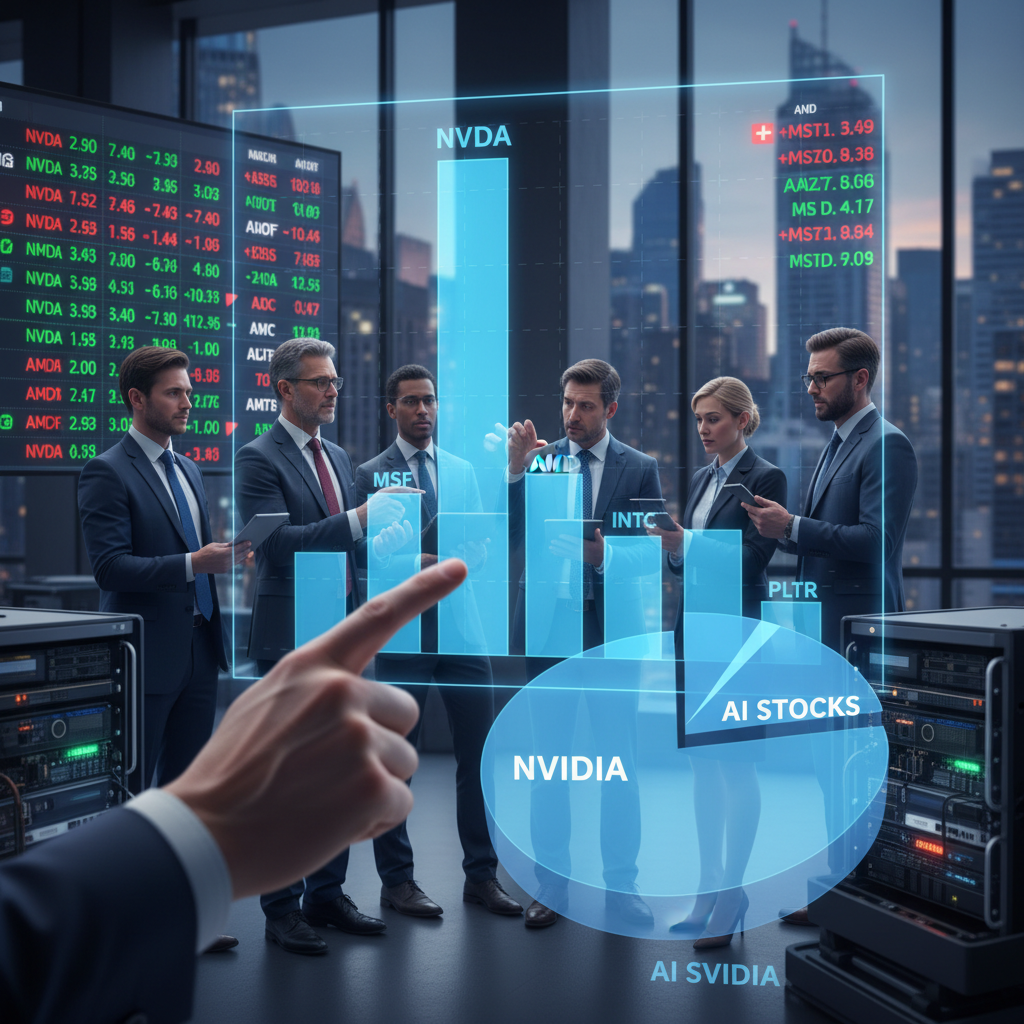
Nvidia is the story everyone invests through — and that’s the problem.
Retail and institutional flows have piled into a few names that power large language models and data-center workloads. The effect isn’t just outperformance; it’s concentration. When one chipmaker largely determines the returns of many AI ETFs and much of the tech rally, what looked like diversification can become a single-point-of-failure.
Why concentration matters now
- Valuation risk. Nvidia’s price already embeds years of aggressive growth. If demand softens or margins compress, the fall could be sudden.
- Policy and parity risk. Antitrust scrutiny and export controls on advanced chips are not theoretical—regulatory moves can cascade through portfolios that lean heavily on one supplier.
- Supply-chain and product-cycle risk. AMD and Intel are closing gaps across packaging, memory interconnects and energy efficiency. Over time a moat looks less like a cliff and more like a fence.
A short history reminder: memory-chip booms and single-product winners have swung wildly before. Early-2000s chip leaders stumbled when customers shifted or pricing normalized. The AI market is bigger now, sure, but the mechanics of concentration risk haven’t changed.
Reasons to still sleep uneasily
Yes, Nvidia has real engineering edge and ecosystem effects. The software stack, developer mindshare and custom accelerators are meaningful advantages that don’t appear magically overnight. That said, history offers parallels: competitors sometimes win by owning adjacent layers or by simply outcompeting on price-performance. It’s happened before; it could happen again.
Where to look instead of doubling down on one name
- If you buy ETFs, check the top holdings and the true effective concentration. Some funds that call themselves diversified are still dominated by a single chip stock.
- Balance hardware exposure with cloud incumbents that monetize AI differently: platform fees, services, advertising — not just chips. Microsoft and Amazon are obvious examples.
- Add smaller, overlooked plays that patch infrastructure gaps: networking, cooling, inference accelerators, and enterprise software that runs models at scale.
Practical portfolio moves
- Trim after outsized runs; take gains and rebalance into broader exposures.
- Size positions sensibly and consider downside hedges when one stock is a large share of your tech allocation.
- Track signal-rich indicators rather than headlines: hardware bookings, cloud capex commentary, enterprise AI adoption metrics.
A human note
Investing in AI feels a bit like being at a fair where one roller coaster dominates the skyline. It’s thrilling. But when that coaster is the whole park, the drop matters a lot more. Enjoy the ride — but don’t bet your summer on a single ticket.
My take
Nvidia is not a bad company. It may shape the next decade of compute. But the market has already priced many possible futures into one ticker. For portfolios that need to last, diversify across business models that capture AI’s profits, not just the best-selling chip.