Forget the old cloud-versus-edge debate — the edge just got louder
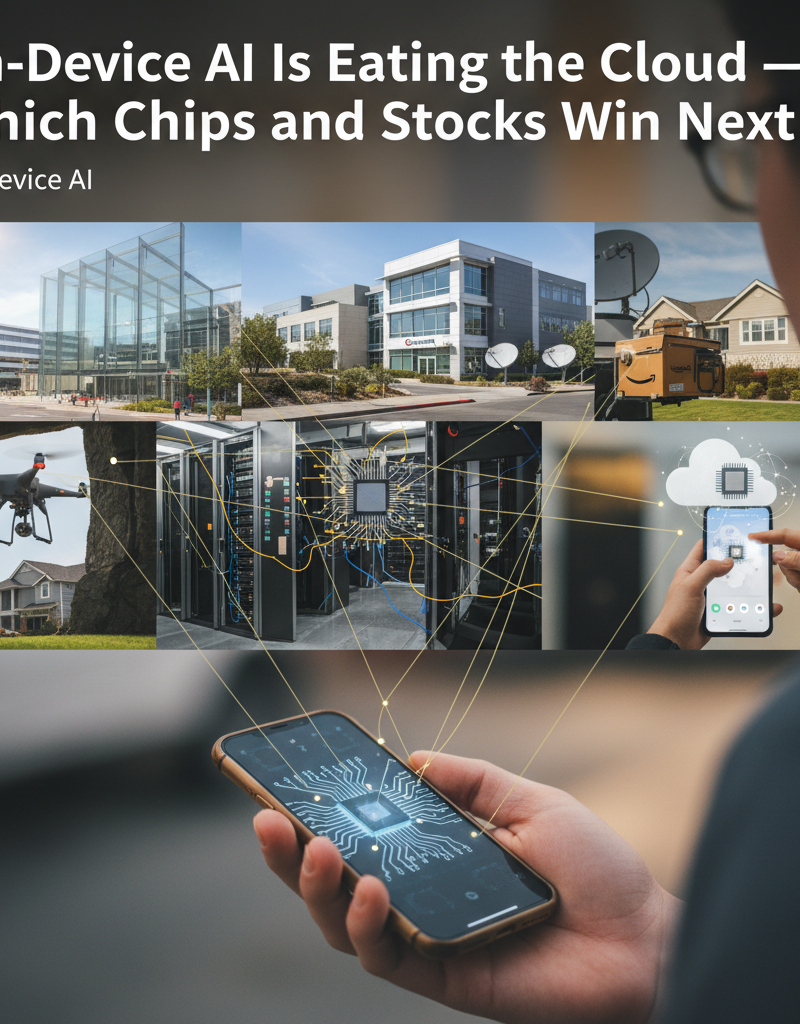
A new wave of AI tools is pushing models out of hyperscale datacenters and onto laptops, phones and on-prem servers. That shift matters because it changes the economics, the privacy trade-offs, and who can realistically compete for workflows used by knowledge workers and developers.
For decades AI looked like a mainframe story: giant models trained in clusters of specialized hardware, accessed through remote APIs. Moving capable models to devices feels more like the personal-computer era — local apps beat remote terminals on latency, cost and control. The analogy cuts both ways, though. PCs didn’t just change speed; they spawned platforms, marketplaces and whole new businesses. Local AI will do the same, in ways we don’t fully see yet.
Why this is accelerating now
- Model efficiency has improved. New compact architectures and aggressive quantization let useful models run without a rack of GPUs.
- Inference is cheap on-device. For many tasks a single local inference beats repeated API calls and network lag, especially when you’re iterating on prompts.
- Privacy and compliance pressure is real. Healthcare, legal and finance teams want models that never leave the device to avoid messy data-residency questions.
- Hardware and tooling have caught up. Modern SoCs, better ML runtimes and open toolchains make packaging and distribution far easier than two years ago.
Real implications for builders and businesses
- Product UX becomes the competitive edge. Latency and offline capability look like small wins until users stop returning to the sluggish web app.
- Economics flip. Instead of a perpetual cloud bill you pay more up front for engineering, optimization and distribution. Teams that get small-model efficiency right can undercut API-heavy incumbents.
- Security and risk shift, not vanish. Local doesn’t equal secure: update mechanics, model provenance and poisoned-data attacks move from cloud providers onto devices and into IT queues.
Why the cloud still matters
- Training will stay centralized for a while. Massive models and continuous pretraining still demand scale and specialized accelerators.
- Heavy multimodal workloads and high-volume orchestration run where GPUs are plentiful.
- Centralized deployments make debugging, consistent safety layers and single-point governance simpler for some enterprises. That ease of control has real value.
Early signs and examples
- Consumer apps with local assistants shipping instant drafts, summaries and code completions without an API call.
- Enterprises spinning up private LLM instances on internal servers to handle regulated data — faster workflows, fewer compliance headaches.
- Hardware vendors redirecting investment toward inference accelerators and optimized runtimes. The supply chain is betting this demand is sticky.
Signals worth watching
- Adoption spikes: more installs of local-AI apps, rising downloads of edge runtimes, or corporate RFPs for on-prem model bundles.
- The cost crossover: when total cost of ownership for local deployment undercuts ongoing API fees for common workflows.
- Regulatory nudges that favor data minimization — those could accelerate enterprise on-device adoption faster than we expect.
A few loose ends
This isn’t a binary choice. The likeliest future is hybrid: cloud for heavy lifting, devices for speed, privacy and personalization. The interesting work sits at the seams — sync, model distillation, and developer tools that let teams move workloads fluidly between device and datacenter. Treat local AI as a product layer, not just a deployment target, and you get different design choices and different winners.
If you build or buy AI tools, ask whether speed, privacy and the cost curve favor local models for your core workflows — and be explicit about what it takes to ship updates and governance at scale. That technical discipline will decide who becomes a platform and who stays an API-dependent utility.