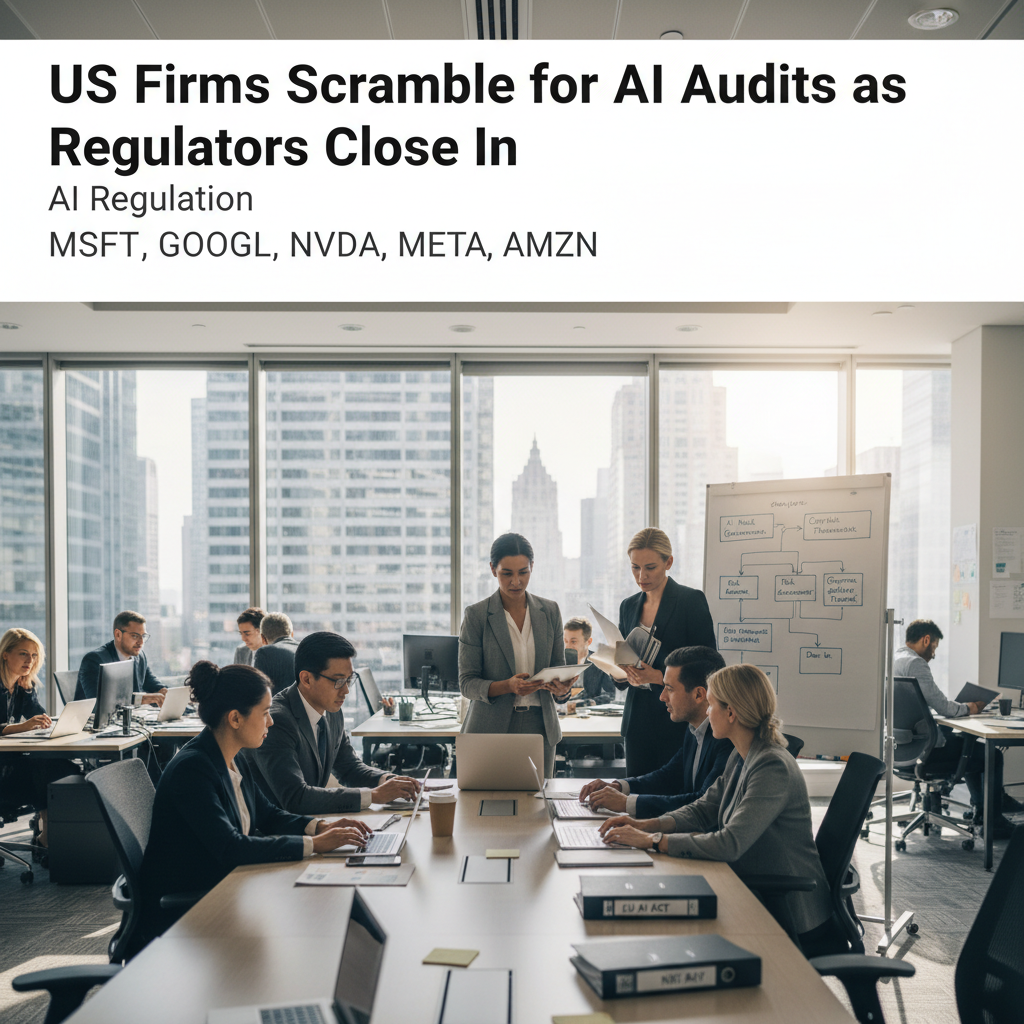
It feels familiar: compliance shoots to the top of the to-do list the moment regulators start circling. This time the focus is artificial intelligence — not just chatbots but the models hidden behind loan pricing, resume screening and ad targeting.
Regulatory pressure is coming from three directions. The European Union's AI Act, though European, reaches beyond borders: companies serving Europeans face mandated risk assessments, documentation and, for high-risk systems, independent audits. At home, the Federal Trade Commission plus guidance from NIST and the White House are pushing for more transparency and accountability, even if Congress has not yet produced a single nationwide law.
The predictable result: firms are building audit pipelines now. Retrofitting models after a regulator shows up is expensive and reputationally damaging.
What companies are actually doing
- Building model inventories and version control for anything tagged AI or machine learning. Not glamorous, but necessary.
- Producing model cards and risk-assessment write-ups aimed at regulators and customers.
- Hiring third-party auditors to run fairness and security tests; a small compliance team can quickly become a boutique audit market.
- Running red-team exercises to find hallucinations, privacy leaks and poisoning vectors.
Smaller firms and startups are improvising. Some add human review gates before outputs go public. Others limit deployments to narrower markets to avoid being classified as high risk. Creative workarounds — and not all of them pretty — are already cropping up.
Costs, friction and the new moat
Compliance is not free. The cycle looks a lot like post-2008 banking: an initial shock, then a whole industry of consultants, standards and recurring audit fees. For large tech vendors and cloud providers, compliance becomes an asset — they can spread the cost across customers and sell compliance-as-a-feature.
That, naturally, favors incumbents. Big platforms with deep legal and engineering teams will certify, document and audit faster than a two-year-old fintech. Well-intentioned rules could therefore widen the gap between giants and challengers. Which is ironic, and worth watching.
Why investors should care
- Earnings: higher implementation and audit costs will show up in SG&A for growth companies.
- Product risk: features that relied on unconstrained model experimentation may be paused or rolled back.
- Legal risk: missing documentation or undisclosed training data can trigger enforcement actions or class suits.
If you hold AI-heavy names, scan corporate disclosures and proxy statements for language about model governance, third-party audits and incident-response commitments.
A quick historical comparison
Think Sarbanes-Oxley running into Basel. After a systemic shock, rulemakers demand transparency and standardized controls. But unlike banking rules that were narrowly technical and capital-focused, AI rules mix ethics, engineering and sectoral safety. That blend makes compliance messier and more subjective — and harder to audit with a single checklist.
Counterpoints and open questions
- Overly prescriptive rules could slow useful deployments in healthcare and climate tech.
- High audit costs may push some experimentation offshore or into private, hard-to-regulate channels.
- Alternatively, a sensible regime could create trust and open markets where auditable services command a premium.
What’s interesting is that small differences in drafting will matter a lot. One regulator’s definition of high risk could decide who survives.
What boards and execs should do this quarter
- Treat AI governance like financial reporting: inventory, documentation and independent attestation.
- Update vendor contracts to include audit rights and model provenance requirements.
- Prioritize incident-response playbooks for model failures and data leaks — write them down and rehearse them.
Regulation rarely arrives neatly. Expect a messy patchwork of federal guidance, state proposals and sector-specific rules. The safe play is to prepare — not because every rule will be draconian, but because the cost of not documenting is immediate, visible and reputationally unforgiving.
Pedro Marini