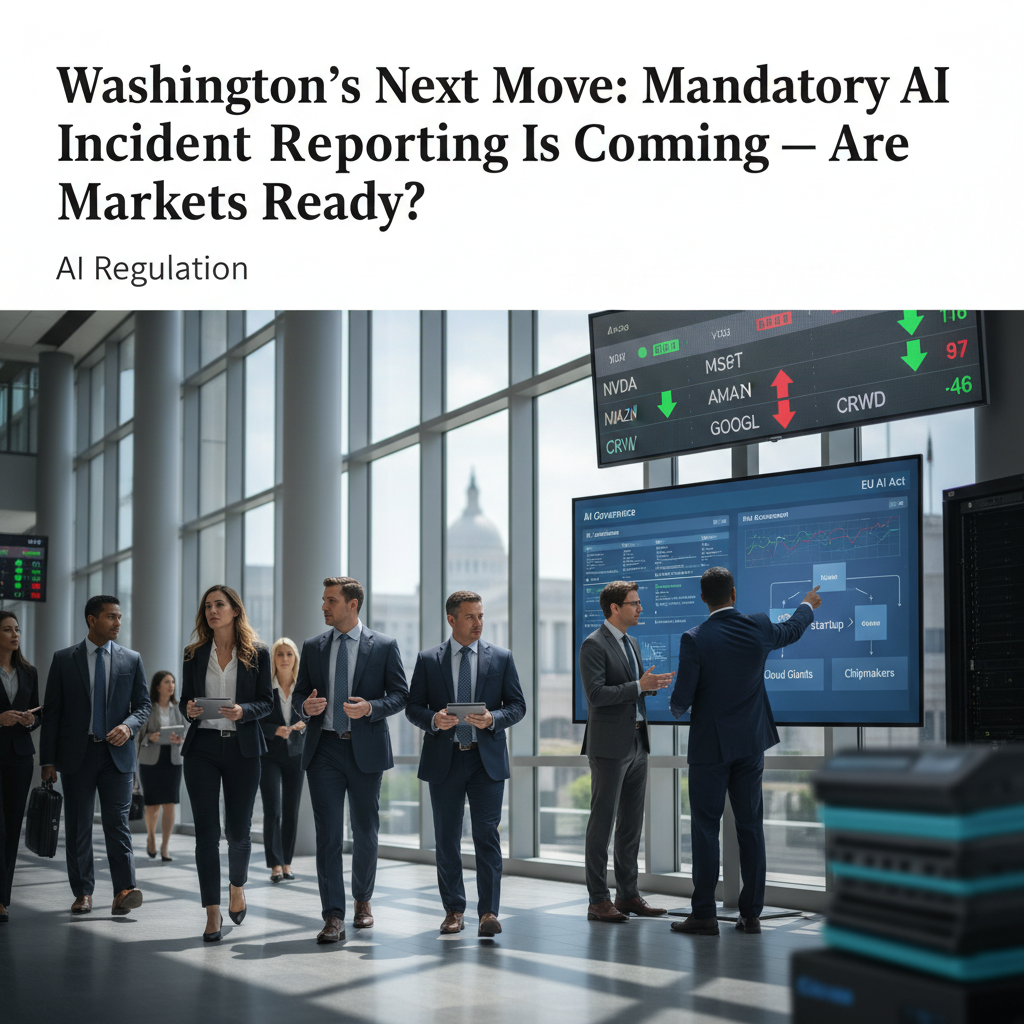
A policy pivot that smells like cybersecurity rules, but for algorithms
Washington keeps circling one idea: make companies report AI incidents the way public firms report cyber breaches. It is not a single bill yet. Instead there’s a sprawl of proposals, agency guidance and industry pressure that feels like regulatory momentum. The implied outcome is straightforward — faster disclosure of harmful outcomes, clearer accountability for vendors, and a new compliance market — but the route there will be messy.
Why it matters now
- Regulators want quicker, standardized signals when models go wrong — whether that is bias in lending, hallucinations from legal assistants, or safety lapses in autonomy.
- Policymakers are cribbing from the EU AI Act while trying not to smother U.S. innovation. Expect hybrids: incident-reporting deadlines, inventories of deployed models, and third-party audits for high-risk systems.
- Investors and boards are learning the same lesson cyber incidents taught them: a few hours of opacity can translate into billions of dollars at risk.
What’s interesting is how familiar this feels. The playbook is similar to what happened after big cybersecurity blows — same actors, same incentives — but now the asset is models and datasets, not just servers and logs.
A practical sketch of what mandatory reporting could require
- A register of production models and named owners.
- Clear definitions of an incident, with severity tiers that scale by impact.
- Tight timelines for regulator and public notification, plus required remediation roadmaps.
- Evidence retention, red-team results, and other artifacts kept for audit, with narrowly limited disclosure to protect sensitive material.
Think of it as Sarbanes-Oxley crossed with the SEC cybersecurity disclosure regime — but for models and datasets rather than servers and network traffic.
Market implications — winners, losers and new entrants
- Big cloud providers and systems integrators will eat much of the compliance cost, and they’ll monetize it. Expect Azure, AWS and Google Cloud to push compliance tooling and certified stacks. That will help Microsoft and Amazon in both compliance conversations and sales cycles.
- Chipmakers and infrastructure vendors will see mixed effects. There could be short-term investor jitters for accelerators, but demand for secure, auditable stacks supports the sector over time.
- Mid-size startups and fintechs are the most exposed: tight budgets plus the need for audit trails and independent testing will pressure launches. Some will pause, some will pay for vendor services, and some will be ripe acquisition targets.
- A compliance economy will bloom: logging and model-risk management SaaS, red‑teaming boutiques, and insurers focused on model failures — new total addressable markets everywhere.
A concrete example
Picture a mid-size online lender. Its scoring model starts rejecting a particular borrower segment at a higher false-negative rate. Under mandatory reporting the lender must document the incident, notify regulators quickly, and publish remediation steps. The immediate result: slower lending decisions and extra legal and consulting bills. The less obvious result: cleaner vendor contracts, clearer model provenance, and incremental pressure toward fairer outcomes.
It’s a trade-off. You slow things down, but you also raise the bar for governance.
What executives and investors should do this quarter
- Map production models and vendors now. A tidy inventory is cheap insurance.
- Budget for third-party audits, red teams and systematic record-keeping for anything material.
- Rework vendor contracts to require explainability, data lineage and breach clauses.
- Consider insurance for model failures; the market is nascent, but moving quickly.
These are practical, immediate steps — not silver bullets — but they reduce a lot of downstream friction.
Counterpoints and trade-offs
- Overbroad rules could hamper beneficial deployments in health, emergency response and some consumer finance use cases.
- Excessive disclosure risks exposing trade secrets and giving adversaries a roadmap.
- A one-size-fits-all regime will misprice risk: a national telecom operator and a boutique algorithmic trader do not deserve identical treatment.
Policymakers will have to thread a narrow needle: force useful transparency without kneecapping the agility that delivers AI value.
Where this trend leads
Near-term we will see a patchwork: state bills, agency guidance and private standards. Over a few years, those threads are likely to converge toward federal guardrails. For investors, the mid-term bet is clear enough: firms that invest early in governance should trade at a premium; laggards become takeover targets or face regulatory drag.
Policy and markets are negotiating a new social contract for software that learns. The immediate winner may not be a single tech giant but an entire category of compliance vendors — while incumbent cloud providers and cautious enterprise IT teams collect most of the spoils.
If you follow tech policy for capital markets, now is the moment to stop applauding every shiny demo and start managing the risks.