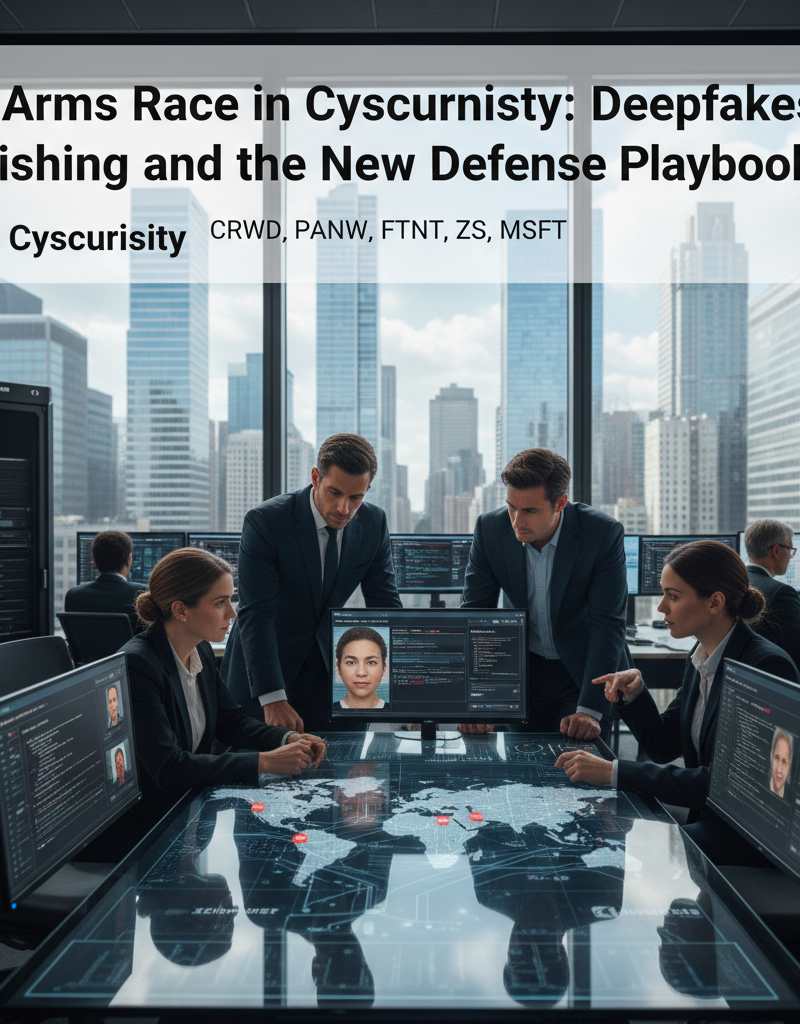
Deepfake phishing, model theft and AI-driven attack campaigns are forcing US CISOs to rethink defenses — vendors and boards are finally paying attention
Generative AI has lowered the bar for sophisticated phishing. Expect smarter scams, a hotter market for defensive tools, and tricky tradeoffs for CISOs and investors.
Security teams are racing to close a subtle, fast-moving hole: prompt injection is turning helpful chatbots into data exfiltration tools for attackers and insiders alike.
Attackers are combining large language models and voice cloning to automate highly convincing scams. Defenders are racing to turn AI into the antidote.
Large language models have lowered the bar for sophisticated cybercrime. Practical steps for security teams to blunt the surge and regain the upper hand.
As attackers weave large language models into phishing, malware obfuscation and supply-chain schemes, CISOs face a fast-moving threat and a market shift.
From synthetic voices to hyper-personalized emails, attackers are using generative AI to scale deception. Here’s what companies and investors should actually do next.
Enterprises rushed to deploy large language models, then discovered a stealthy threat: LLM-enabled data exfiltration and model attacks. Here’s a practical playbook for security and finance leaders.
Deepfake audio is no longer sci‑fi. Executives, treasury teams and insurers face a fast-moving threat—here's what it costs, why it works, and how to stop it.
Generative AI lowers the skill barrier for attackers and forces defenders to rebuild assumptions. Here’s who benefits, who loses, and what U.S. firms must do next.
Ransomware and phishing are getting smarter — not because hackers learned to code better, but because they now have powerful language models on tap. What that means for enterprises and defenders.
Large language models are turning one-size-fits-all scams into personalized digital ambushes. Security teams are racing to use the same tools to stop them.
Generative AI is lowering the technical bar for crafting sophisticated attacks. Defenders, regulators and investors are being forced to rethink everything from detection to deterrence.
Generative models are lowering the bar for high-precision attacks — from LLM-crafted phishing to voice deepfakes — forcing a rethink of defense and policy.
From hyper-personalized phishing to voice deepfakes, generative AI is scaling attacks. Practical steps security teams and executives should take today.
Enterprises are deploying AI-driven systems that can detect and act without human sign-off. Faster containment, bigger risks—here's what CIOs and investors need to know.
Generative models are lowering the cost of bespoke cyberattacks — and defenders are racing to build AI-aware shields before compromise becomes commonplace.
Generative models are turning targeted fraud into an industrial operation. Insurers, security vendors, and boards face fast-moving choices — and new winners.
Audio deepfakes and AI-driven social engineering are turning customer-service lines into a prime attack surface. Banks, regulators, and startups are racing to adapt.
Generative AI is sharpening attacks and defenses at once. Enterprises, investors, and CISOs face a fast-moving threat that demands strategy, not band-aids.
Attacks are becoming cheaper, faster and eerily personalized. CISOs need blunt, practical fixes — and investors should pay attention to which defenders stand to gain.
Attackers are turning large language models into automated exploit builders. Defenders can fight back with their own AI, but the result is an arms race that changes risk, insurance and enterprise strategy.