
Synthetic Data Is the New Oil for AI — But Is It Worth the Hype?
As privacy rules tighten and labeling costs skyrocket, companies are betting on synthetic datasets to train models. Here’s who stands to gain — and who might lose.

Banks Are Buying Fake Data to Train Real AI — Why Synthetic Data Became Finance’s Trade Secret
As privacy rules and scarce real-world datasets collide with the need for powerful models, financial firms are turning to synthetic data and data marketplaces to keep AI moving — with trade-offs.

Why Companies Are Replacing Real Customers with Fake Data
Synthetic data is moving from novelty to corporate staple as firms chase privacy, speed, and regulatory cover — but it brings new risks and market winners.

Why Synthetic Data Became the New Oil for AI — and Why That Comparison Is Dangerous
Enterprises are buying fabricated datasets to train models faster and safer, but pitfalls—bias, fidelity, regulation—could turn a shortcut into a liability.

The Synthetic Data Gold Rush: How Clouds and Startups Power AI's Next Wave
Enterprises are buying fake but useful data to dodge privacy, speed training, and cut costs — but accuracy, bias, and regulation are closing the gap.

Banks Are Buying Fake Customers: How Synthetic Data Became Wall Street's New Training Fuel
From fraud models to credit scoring, financial firms increasingly prefer synthetic customer data to train AI — a pragmatic fix that raises fresh privacy and accuracy questions.

Synthetic Data Is the Quiet Fuel Behind America's AI Boom
From Wall Street simulations to synthetic patient charts, U.S. firms are using fake data to train serious AI — and investors, compliance teams, and regulators are taking note.

Synthetic Data Is the New Oil — Who Will Own the Wells?
As companies rush to replace costly, messy real-world datasets, synthetic data is shifting from niche tool to mainstream commodity — with winners, losers, and new regulatory headaches.

Why Synthetic Data Is the New Currency for AI — and What That Means for Big Tech and Startups
Enterprises are swapping raw customer logs for algorithmically generated datasets to skirt privacy, cut labeling costs, and bridge edge cases — but the shortcut brings fresh risks and a coming regulatory squeeze.
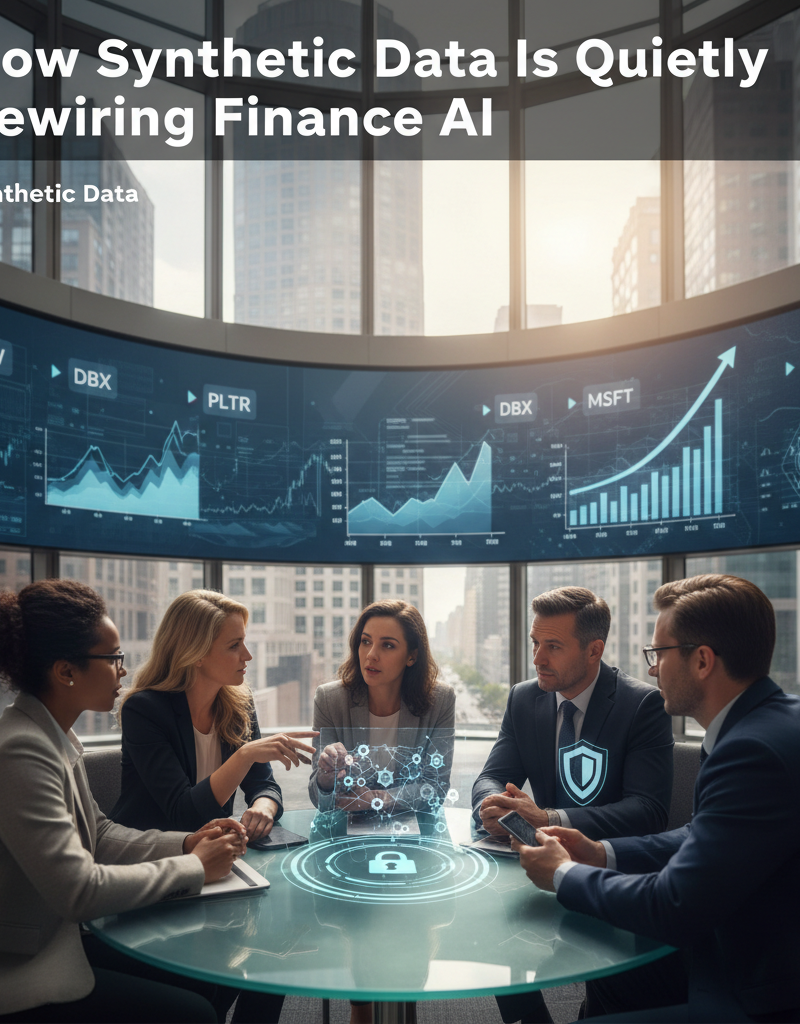
How Synthetic Data Is Quietly Rewiring Finance AI
Banks and fintechs are turning to synthetic data to sidestep privacy and unlock models — but fidelity, regulation, and adversarial risk are the silent dealmakers and dealbreakers.

Banks Bet on Synthetic Data to Train AI — But Is It Safe?
From clean rooms to simulated customers, financial firms are racing to create usable datasets for generative AI while dodging privacy pitfalls

Banks Are Betting on Synthetic Data — and That’s a Risky Trade
Financial firms race to replace sensitive records with synthetic datasets to power AI. The payoff is real — but so are the blind spots investors and regulators can’t ignore.

Why Investors Are Betting Big on Synthetic Data — and Why It Might Be the Safer AI Play
As lawsuits and privacy rules squeeze scraped training sets, synthetic data firms are drawing capital and corporate deals. Practical wins, hidden risks.
Synthetic Data Is the New Money in AI — Especially for Finance
How banks, cloud vendors and chip makers are betting on fake-but-faithful data to train models while dodging privacy landmines—and why that bet has limits

Inside the Synthetic Data Gold Rush: Who Wins the Next Wave of AI Data
As generative models eat real data, synthetic datasets and marketplaces emerge as the quiet battleground for AI, finance, and regulatory risk.

Wall Street's New Gold: How Synthetic Data Is Powering Financial AI — and What Could Go Wrong
Banks and fintechs are racing to replace fragile real-world datasets with synthetic alternatives. That promises speed and privacy, but also new biases, regulatory headaches, and systemic risk.
Banks Are Training AI on Fake Data — Why That Matters for Your Money
Synthetic data is moving from lab experiments to live banking systems. Faster models, fewer privacy headaches — and new risks regulators can't ignore.
Why Synthetic Data Is the New Battleground for AI — and Which Stocks Could Win
As privacy rules bite and data costs spike, synthetic data startups and cloud giants are racing to replace real-world training sets. Investors should be selective.

Synthetic Data and Clean Rooms: Where AI’s Training Fuel Is Coming From Next
Companies are trading raw user logs for engineered data and locked-down pipelines. That shift reshapes winners, risks, and regulation in the U.S. AI market.

Banks Embrace Synthetic Data: A Privacy-Safe Shortcut for AI
Financial firms are using synthetic datasets to train models without risking customer privacy — but the shortcut comes with hidden trade-offs for investors and regulators.

U.S. Crackdown on Data Brokers Is Rewriting the Playbook for AI in Finance
New rules and state pressure are pushing banks and AI vendors away from shadowy datasets toward synthetic and consented data — winners will be those who control compliant pipelines.

Synthetic Data and Clean Rooms Are the New Oil for AI—Here’s Who’s Profiting
A privacy-driven scramble is shifting the raw material for machine learning from scraped data to simulated and shielded datasets. That creates clear winners — and subtle risks.
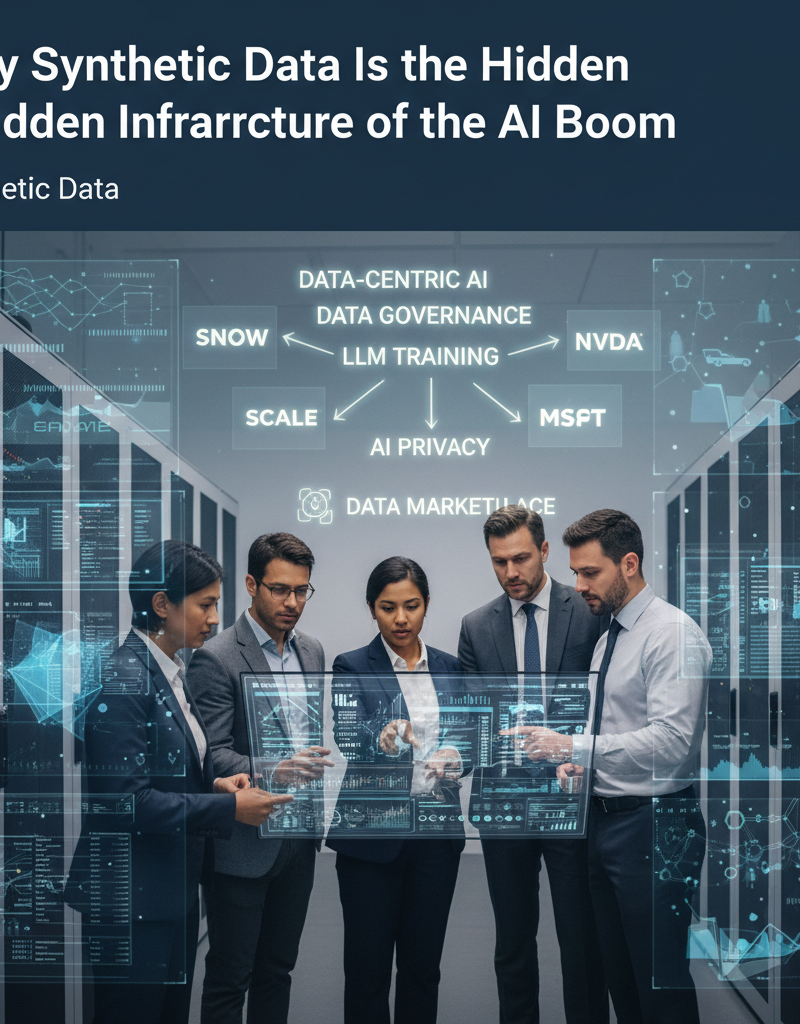
Why Synthetic Data Is the Hidden Infrastructure of the AI Boom
Enterprises are swapping risky, expensive real-world datasets for generated alternatives. The shift has investment, regulatory, and technical consequences.

Synthetic Data Is the New Oil for AI — But Who's Refining It?
Startups and cloud giants are racing to sell fake-but-real datasets into healthcare, finance, and adtech. The upside is big; the blind spots could be bigger.

Banks Bet on Synthetic Data to Train AI — And It Could Save or Sink Their Models
As privacy rules and scarce labeled financial data bog down AI projects, synthetic datasets and data clean rooms are becoming the fast lane — with big risks attached.

The Synthetic Data Gold Rush: How Startups Are Rewriting AI's Feedstock
As real-world data becomes harder to buy and use, synthetic datasets are surging — and investors, cloud giants, and regulators are taking note.
Why Synthetic Data Is Quietly Eating Real Data’s Lunch
As privacy rules tighten and models hunger for edge-case examples, synthetic data is becoming the secret fuel for AI — and Wall Street is sitting up.
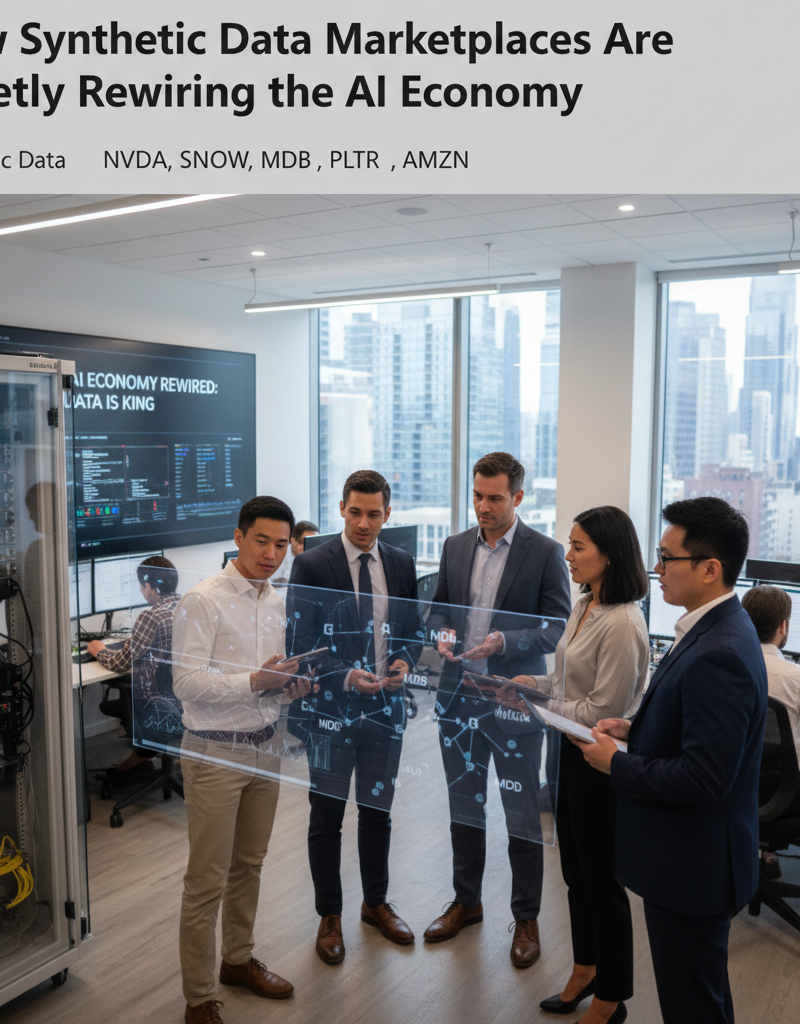
How Synthetic Data Marketplaces Are Quietly Rewiring the AI Economy
As enterprises shift from chasing bigger models to buying better data, new marketplaces are rewriting the rules for chips, cloud costs and startup valuations.

The Synthetic Data Stampede: How Startups and Cloud Giants Are Rewriting AI's Fuel
As privacy rules and model hunger collide, synthetic data marketplaces are exploding — but investors and engineers should watch the realism gap and provenance problem.
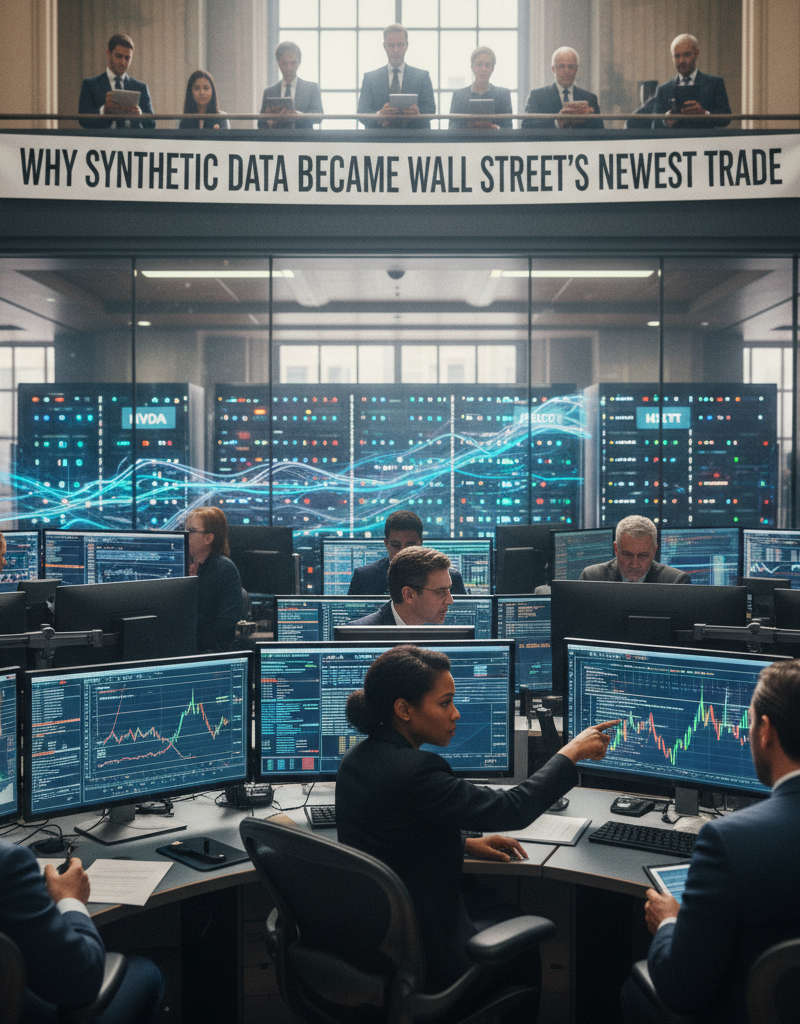
Why Synthetic Data Became Wall Street's Newest Trade
Banks and fintech are swapping real records for fake ones to train AI — a privacy play that creates winners, losers, and a fresh set of regulatory headaches.

How Synthetic Data Became the Quiet Fuel Powering America’s AI Boom
From data clean rooms to privacy-first marketplaces, startups and cloud giants are competing to sell the one thing models actually crave: curated, model-ready data.

Data Brokers Pivot to Synthetic Gold: How Privacy Rules Are Rewriting AI's Fuel
With third-party data under fire, synthetic datasets and clean-room services are the new battleground. Investors and advertisers face a fast-moving landscape.
Synthetic Data's Moment: The Hidden Risks Behind the Gold Rush
As firms race to replace messy customer records with synthetic sets, investors and risk teams face a paradox: privacy gains, but new blind spots for finance models.

Banks Are Training AI on Fake Customers: Why Synthetic Data Is the New Power Play
From loan models to anti-fraud systems, financial firms are increasingly turning to synthetic datasets to skirt privacy hurdles and accelerate AI — but trade-offs remain.

Synthetic Data: The Quiet Gold Rush Powering the Next AI Wave
How startups and enterprises are trading privacy headaches for editable, monetizable data — and who stands to win (and lose).

Why Synthetic Data Is Becoming the New Oil for AI — and What It Means for Companies
Startups and incumbents rush to replace risky customer datasets with synthetic alternatives, promising privacy, scale and cost savings — but trade-offs are real.
Why Synthetic Data Suddenly Became the Hottest Asset in AI
Regulatory risk, licensing fights and mounting privacy pressure are pushing U.S. companies to buy and build synthetic datasets — and investors are paying attention.

Synthetic Data Is the New Currency for AI — Are U.S. Companies Ready?
Privacy-safe, high-volume training sets are going mainstream — but fidelity, bias and regulation are the sticking points for American firms.

Banks Are Buying Synthetic Data: The Quiet AI Play That Could Reshape Finance
How synthetic data is letting banks train powerful AI without exposing customer records — and why investors should care now
Why Synthetic Data Is the New Currency for AI — and Who's Cashing In
As generative AI demands more training material, synthetic and clean-room datasets are becoming strategic assets for U.S. firms. Here’s what investors, engineers, and policy makers need to know.