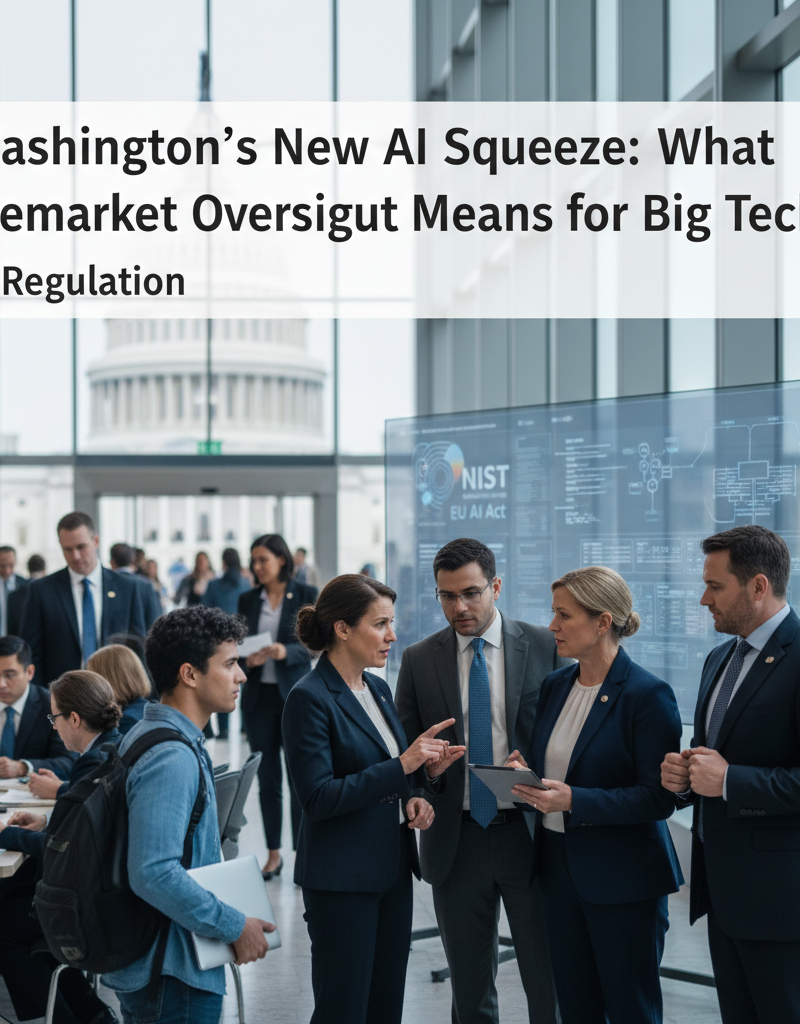
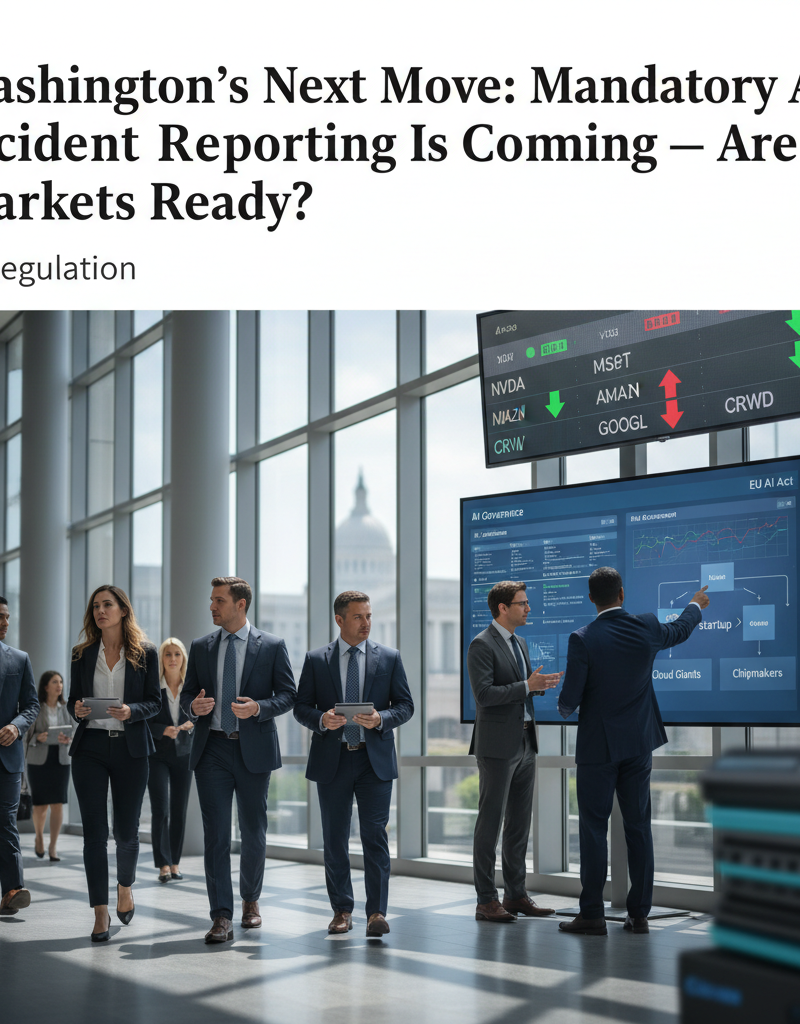
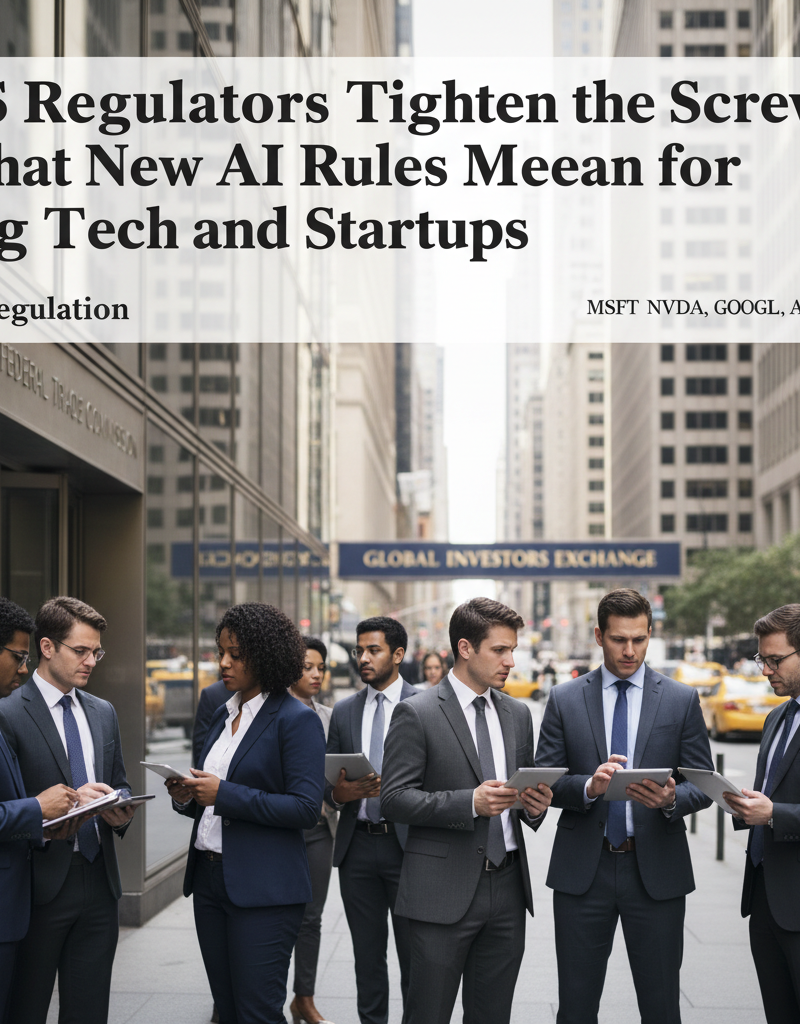
As Washington tightens its grip on artificial intelligence, public companies could face new disclosure rules that reshape risk, valuation and compliance costs.
A coordinated push from the FTC, SEC and state enforcers is shifting AI from a tech strategy question to a compliance imperative — and investors are watching.
Regulatory agencies are scrutinizing the expanding role of artificial intelligence in financial markets, focusing on disclosure, risk management, and the potential for market instability.
FTC, DOJ and lawmakers are converging on disclosure, watermarking and audit rules that could change how Big Tech deploys generative AI and how investors price risk.
Regulatory bodies are increasing their focus on the integration of artificial intelligence in financial markets, specifically addressing its impact on trading practices and corporate disclosures.
Bipartisan momentum is pushing U.S. AI policy from high-level principles to concrete premarket checks — and markets, startups and regulators will all feel the squeeze.
Regulators are signaling public companies may soon have to disclose how AI affects their business models, risks and customer outcomes — and investors should pay attention.
The EU AI Act is not just a European story. Compliance costs, transparency rules and banned practices are forcing U.S. firms to redesign products, shift go-to-market plans and rethink risk — fast.
From model inventories to human oversight, American firms face an extraterritorial rulebook that will change product roadmaps, vendor contracts and risk budgets.
Enforcement-first AI oversight targets deceptive ads, model safety, and data use — expect faster fines, safer architectures, and a shake-up in who wins the AI race.
Both the Securities and Exchange Commission and the Commodity Futures Trading Commission are increasing scrutiny of artificial intelligence's role in financial markets, focusing on risk management and transparency.
The EU’s sweeping AI rules are already forcing American companies to redesign products and budgets. Compliance is costly — but it may create a long-term advantage.
A fast-moving bipartisan effort would force audits, model registries and new disclosures — and it could reroute dollars from growth bets to compliance.
Regulatory bodies are increasing scrutiny of artificial intelligence in financial markets, focusing on risk management and transparency in automated trading systems.
As lawmakers push model transparency and incident disclosure, cloud giants and chipmakers face costs and opportunities — and startups could be squeezed.
Companies are racing to formalize AI impact assessments—spurred by federal guidance, investor pressure and state rules—to avoid fines, litigation and brand damage.
New federal pressure for independent audits, model cards, and training-data disclosure is reshaping how AI products are built, sold and insured in America.
A patchwork of federal guidance, state laws and the EU AI Act is forcing companies to build regulation into products. That shift will tilt winners and losers across tech and finance.
A new push in Washington aims to force AI systems to label their outputs. The proposal could cut deepfakes and scams—but it raises technical limits, free speech fights, and global coordination headaches.
Federal and state agencies are building playbooks to audit AI models. For finance and fintech, the cost of opacity is about to rise — and not everyone is ready.
A patchwork of agencies from the FTC to the SEC are converging on rules that would force companies to disclose, test and audit AI systems — here’s a practical read for leaders and investors.
Signals from the FTC, SEC and federal guidance show a shift from voluntary guardrails to enforceable AI transparency. For fintechs this is compliance, competition and survival.
After the White House laid down broad principles, states are racing to write their own AI laws. The result: a compliance maze that will reshape product roadmaps and investor risk.
From FTC draft rules to state-level bills, American policymakers are reshaping how models are built, labeled and sold — and investors need to read the fine print.
SEC, FTC and the White House are pushing for clearer AI transparency rules. Companies face trade-offs between secrecy, compliance costs and investor trust.
A regulatory push is building to force disclosure, testing and registration of large language models. Expect compliance costs, legal risk and a new compliance market.
Lawmakers and regulators are circling transparency rules that could require models to carry provenance labels and embedded watermarks — and reshape how tech firms build and sell AI.
By Pedro Marini
The IMF Brief · Daily Newsletter
The AI economy, decoded before the open.
Five minutes. One email. The signal cutting through the noise at the intersection of artificial intelligence and Wall Street. Free, forever.