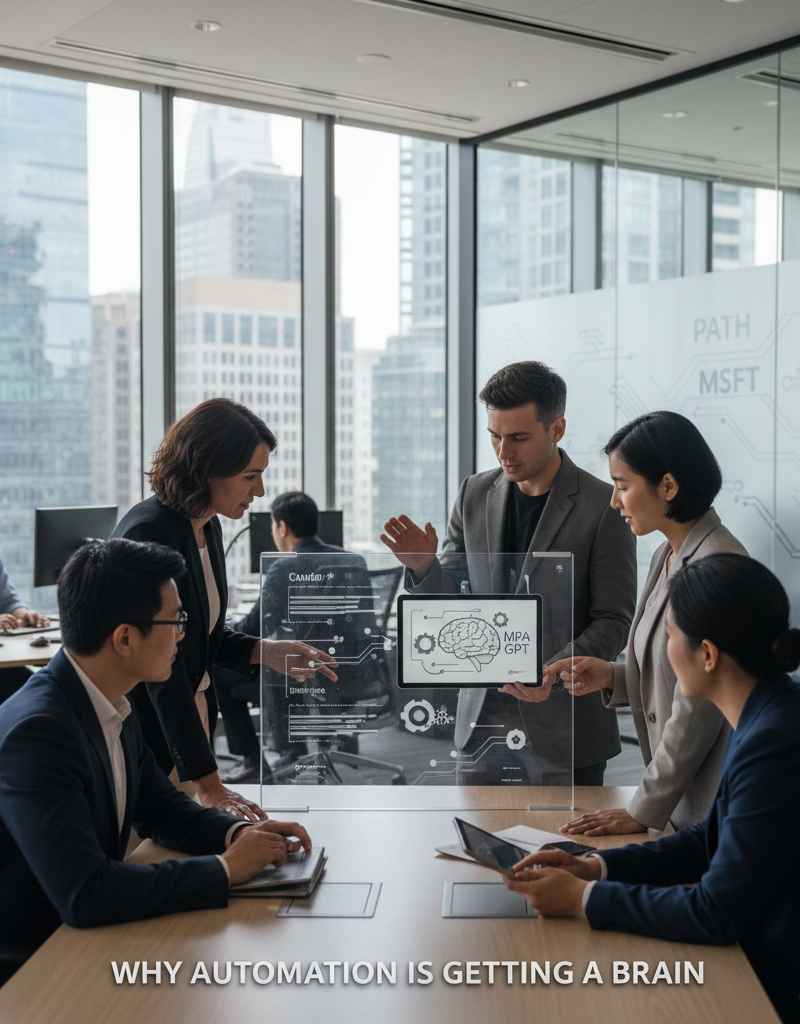
When RPA Met GPT: Why Automation Is Getting a Brain
Generative AI is bleeding into enterprise automation. Expect fewer rigid bots and more adaptive workflows — with big winners, hard trade-offs, and a short window for action.
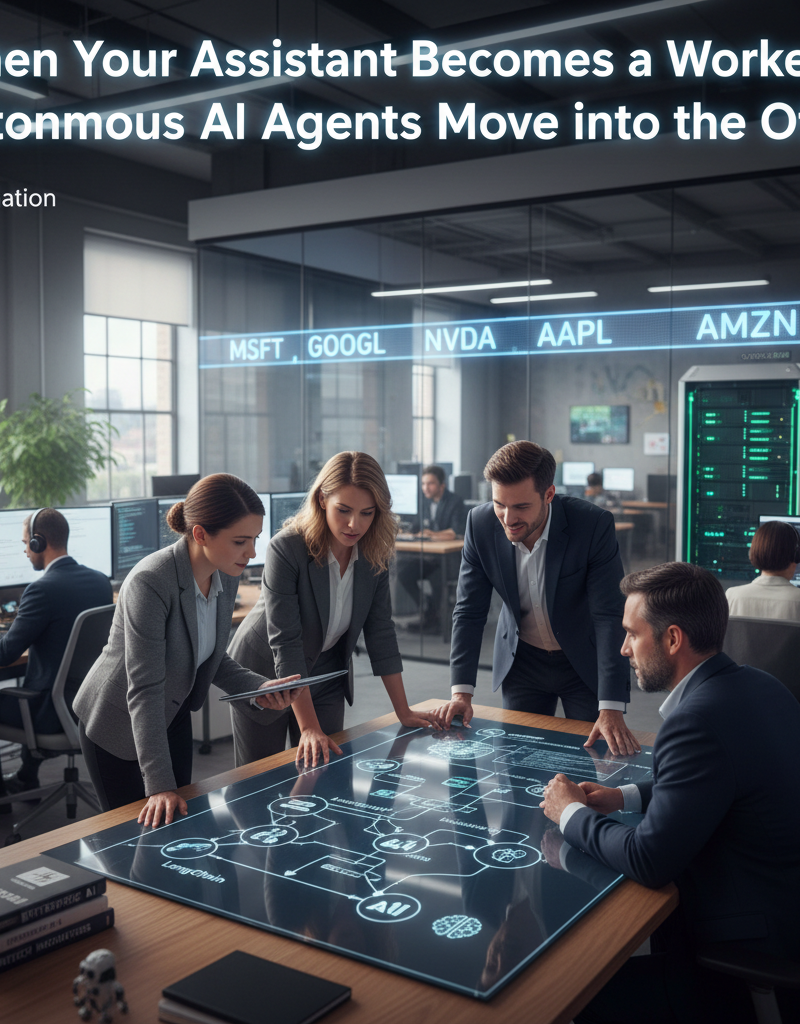
When Your Assistant Becomes a Worker: Autonomous AI Agents Move into the Office
Startups and big tech are packaging autonomous AI agents that execute multi-step tasks. Expect productivity gains, new risks, and a scramble over who controls the agent stack.

RPA Meets Generative AI: The Quiet Explosion Automating Knowledge Work
How robotic process automation paired with generative models is turning back-office work into a scalable, risky, and investable frontier

When AI Agents Meet RPA: The Next Wave of Office Automation
Autonomous AI agents are folding into robotic process automation to shave hours off knowledge work, reroute IT budgets, and force managers to pick winners fast.

The New AI Assistants Replacing Junior Staff: Autonomous Agents Go to Work
Companies are deploying autonomous AI agents to handle outreach, bookkeeping and research. Expect cost cuts, faster cycles—and new oversight headaches.

When No-Code Automation Meets Generative AI: The New Productivity Playbook
Citizen developers, UiPath, Microsoft and ServiceNow are stitching RPA to large language models — faster automations, thorny governance, and a fresh CIO checklist.

GenAI Just Supercharged Automation — What CFOs and Traders Should Watch
Generative AI has turned basic robotic process automation into a strategic productivity lever. Here's the short list of winners, risks, and what to trade.
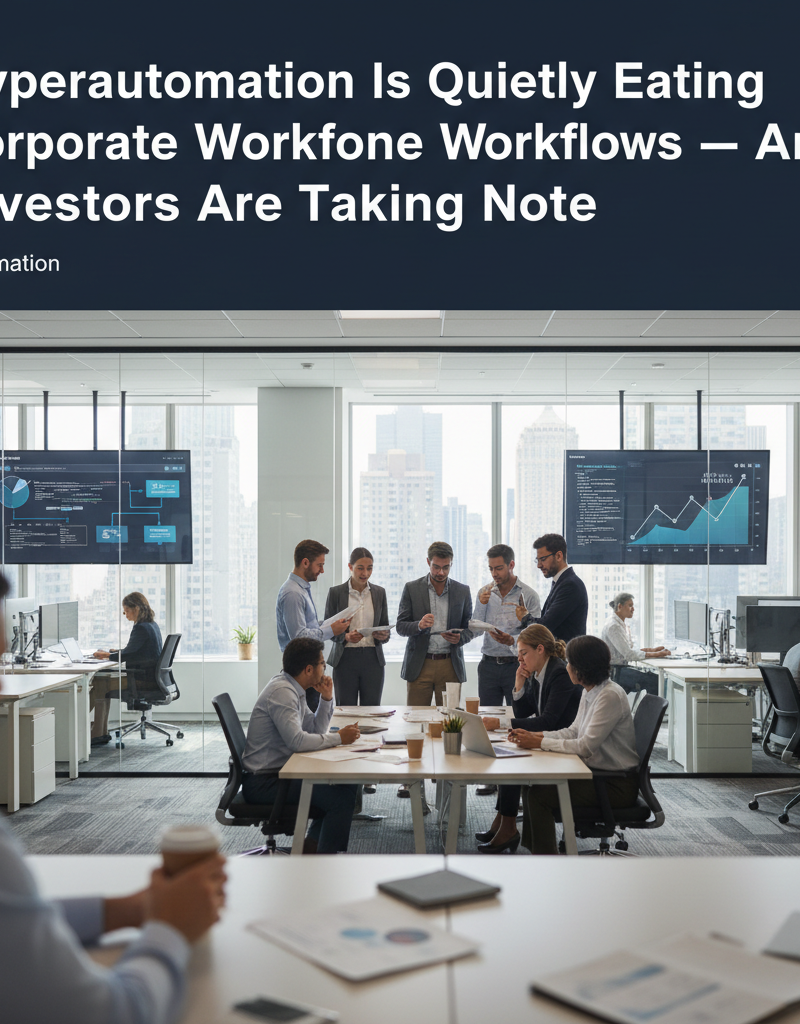
Hyperautomation Is Quietly Eating Corporate Workflows — And Investors Are Taking Note
AI, RPA and low-code are fusing into 'hyperautomation.' It promises big savings, messy rollouts, and an unequal market for winners and losers.

The New Hyperautomation: How Generative AI Is Supercharging RPA and Cutting Costs at Scale
Generative AI is turning rule-based bots into context-aware assistants, forcing companies to rethink automation strategy, compliance and workforce planning.
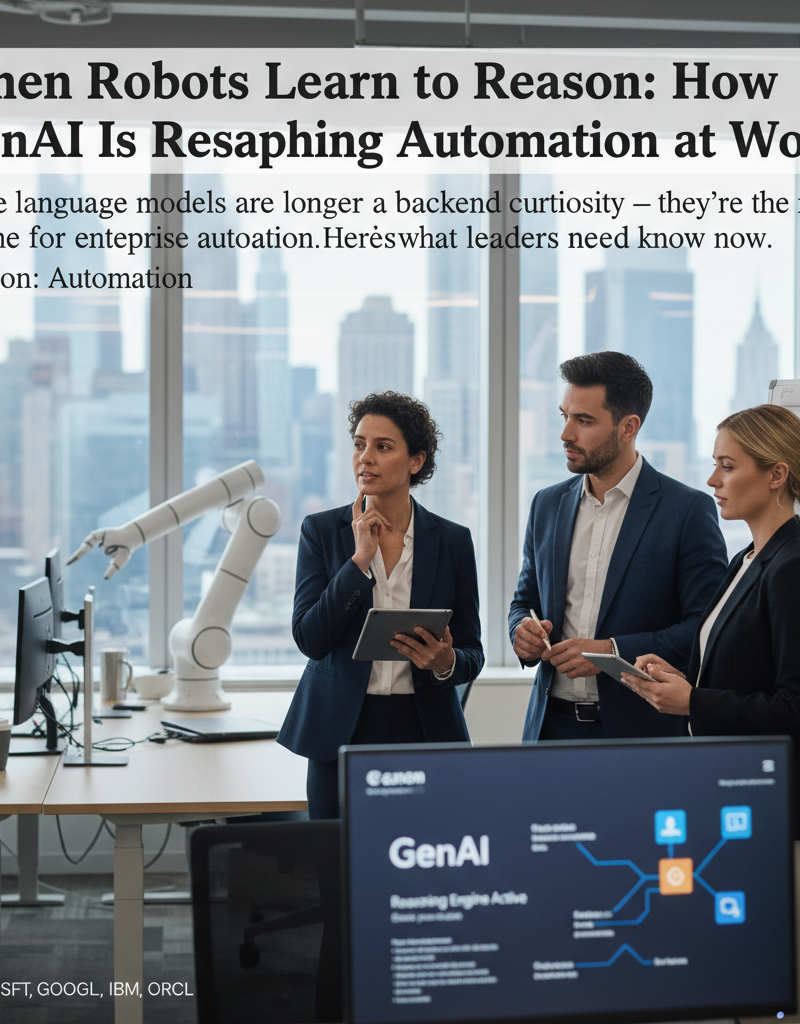
When Robots Learn to Reason: How GenAI Is Reshaping Automation at Work
Large language models are no longer a backend curiosity — they're the new engine for enterprise automation. Here’s what leaders need to know now.

LLMs Are Giving RPA a Second Wind — What CIOs Need to Do Next
From brittle scripts to context-aware bots: how generative AI is turning stale automation into decision-capable workflows and what enterprise leaders should prioritize.

Hyperautomation 2.0: How GenAI Is Rewiring Corporate Workflows
Companies are marrying RPA with generative AI to automate judgment-heavy work. The result: faster scaling, new risks, and a very different vendor landscape.

How Generative AI Is Supercharging RPA — And What Investors Miss
RPA is no longer just scripts and macros. Generative AI is turning rigidity into conversational automation — but the winners won't look like last decade's favorites.
When LLMs Learn to Automate: The Hyperautomation Moment Investors Shouldn’t Ignore
Generative AI is ripping the rulebook on robotic process automation. Here’s how LLM-driven automation changes economics, risk and the vendor landscape.
When Bots Learn to Talk: How Generative AI Is Rewiring RPA and the Office
Generative models are turning rule-based bots into workflow co-pilots. CIOs face big gains and new hazards — and a narrow window to get governance right.

When AI Starts Doing Your Job: The Rise of Autonomous Agents in Business
From pilots to production: why companies are betting on autonomous AI agents now, what they actually deliver, and where they can still fail
When RPA Learns to Think: How Generative AI Is Turning Bots Into Autonomous Workers
Generative models are elevating robotic process automation from scripted helpers to autonomous agents. Finance leaders face faster closes, higher risk — and a narrow window to govern and reskill.
When Generative AI Met RPA: The New Era of Office Automation
Large language models have injected reasoning and context into robotic process automation, turning simple bots into decision aides and forcing a rethink of jobs, governance and investment.
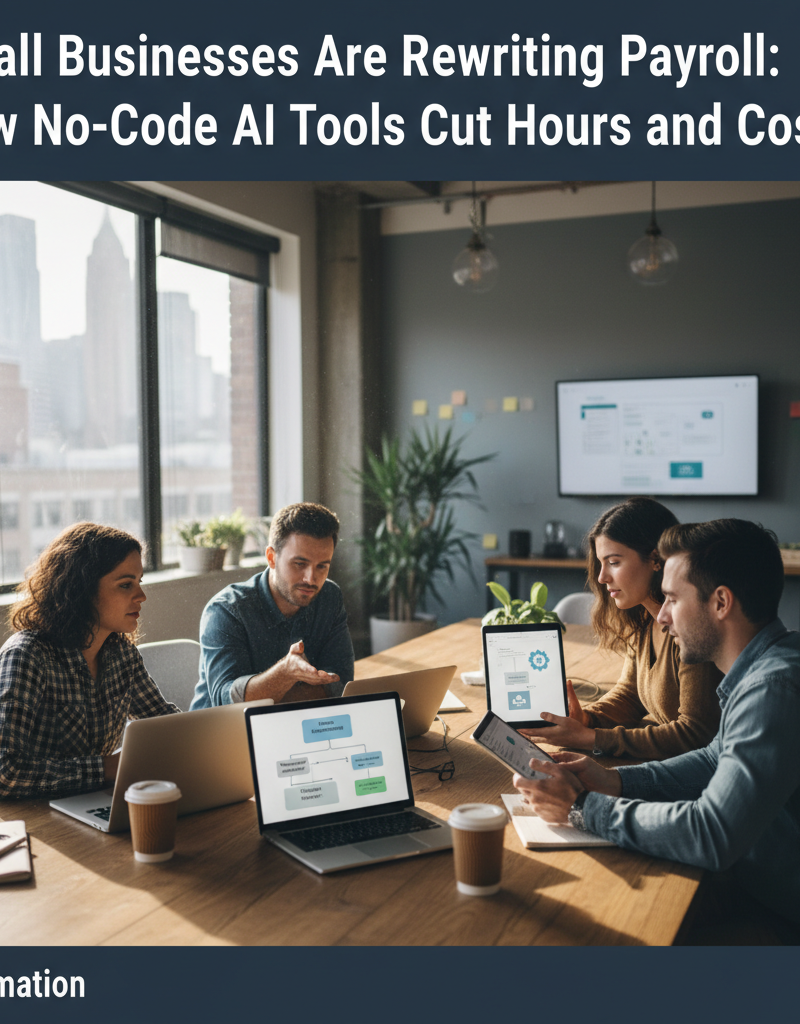
Small Businesses Are Rewriting Payroll: How No-Code AI Tools Cut Hours and Costs
Zapier AI, Make, Power Automate and new LLM plugins are turning entry-level tasks into automated workflows. Winners, losers and what investors should watch.

GenAI + RPA: The Quiet Automation Wave Remaking Corporate Finance
How generative AI is finally teaching rule-based bots to think — and what CFOs and investors should watch next

Why Hyperautomation Is Quietly Rewriting Finance Jobs — and What Comes Next
AI-powered hyperautomation is shaving hours from back-office workflows. Firms gain speed and control, but the human cost and opportunity are uneven.
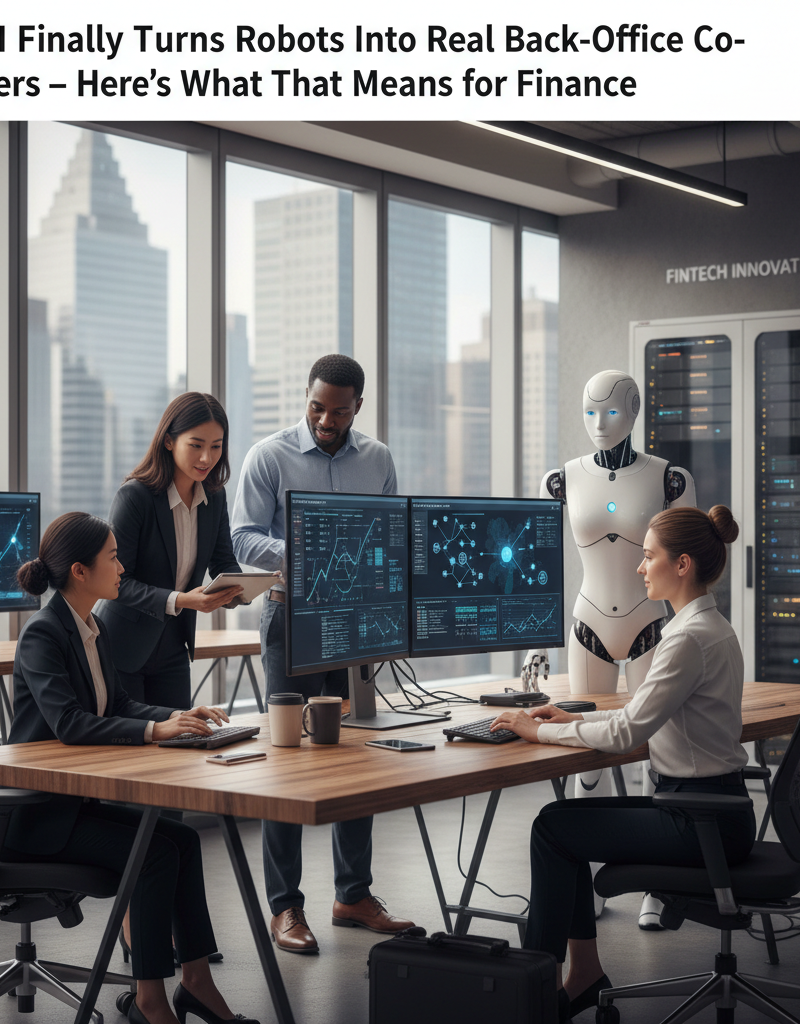
GenAI Finally Turns Robots Into Real Back-Office Co-Workers — Here’s What That Means for Finance
Banks and fintechs are wiring large language models into robotic process automation to speed payments, cut compliance costs and reshape jobs — fast and messy.

How LLMs Are Rewriting Automation: The End of Traditional RPA?
Generative AI is turning brittle, rule-based bots into conversational operators — forcing companies to rethink workflow design, risk, and who actually 'builds' automation.
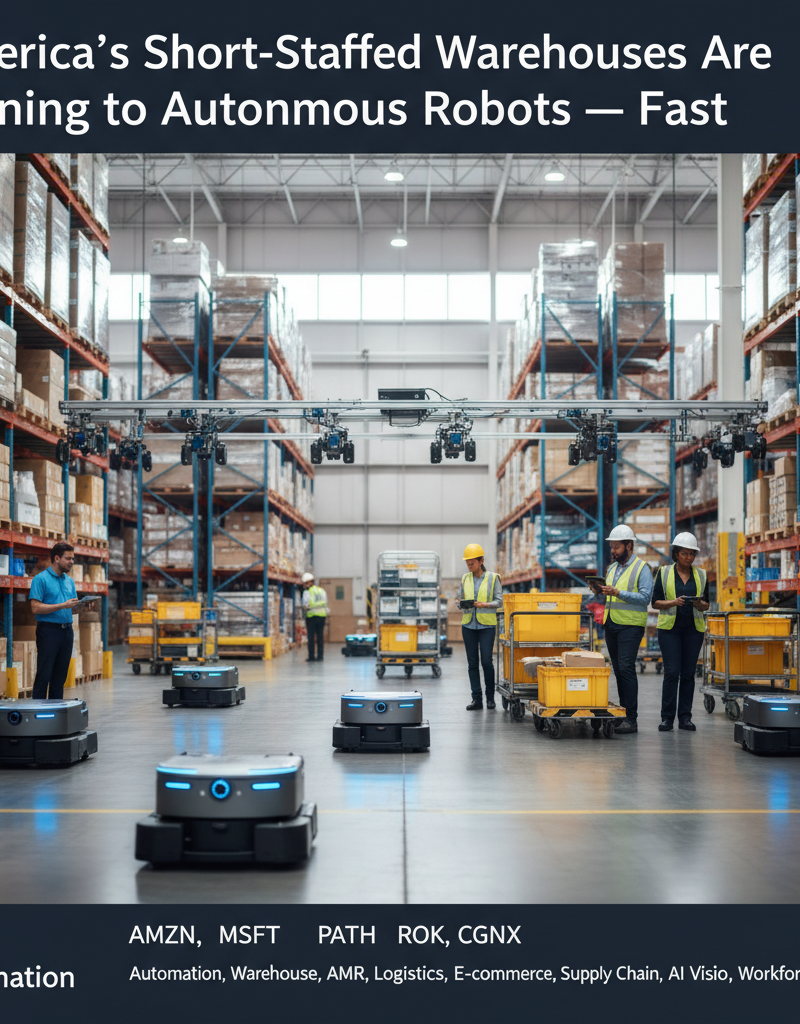
America's Short-Staffed Warehouses Are Turning to Autonomous Robots — Fast
With labor tight and e-commerce surging, retailers and logistics firms deploy AI-driven mobile robots and vision systems to cut costs, speed fulfillment and force a rethink of warehouse work.

Generative AI Is Turning RPA From Button-Presser to Cognitive Assistant
The new wave of automation stitches large language models into robotic process automation, speeding finance workflows — and forcing businesses to rethink governance and jobs.
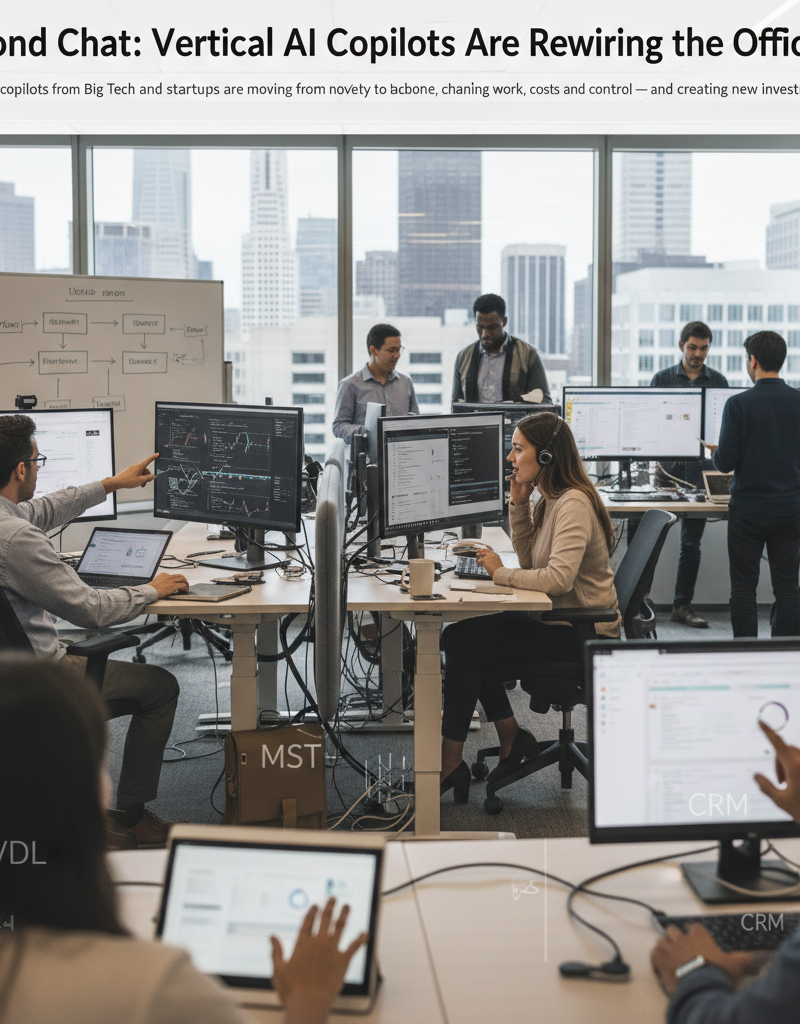
Beyond Chat: Vertical AI Copilots Are Rewiring the Office
Specialized copilots from Big Tech and startups are moving from novelty to backbone, changing work, costs and control — and creating new investment bets.

The End of RPA as We Knew It: How AI-Native Automation Is Rewriting the Playbook
Generative AI is turning scripted bots into intent-driven systems — investors, CIOs, and workers should rethink strategy now.

The Quiet Automation Boom: Generative AI Is Rewriting Office Workflows
From drag‑and‑drop RPA to autonomous AI agents — why companies are ditching old playbooks and what that means for workers and investors.

Hyperautomation's Next Act: How Generative AI Is Turning Knowledge Work Into Workflows
Generative AI is not replacing RPA — it's splicing it into smarter, context-aware workflows. What CIOs and CFOs need to know now.

When LLMs Sidestep RPA: How Finance Automation Is Getting a Lot Less Robotic
Rule-based bots built the automation boom. Now large language models are doing the messy, creative work — and finance teams must choose between speed, risk, and new kinds of jobs.
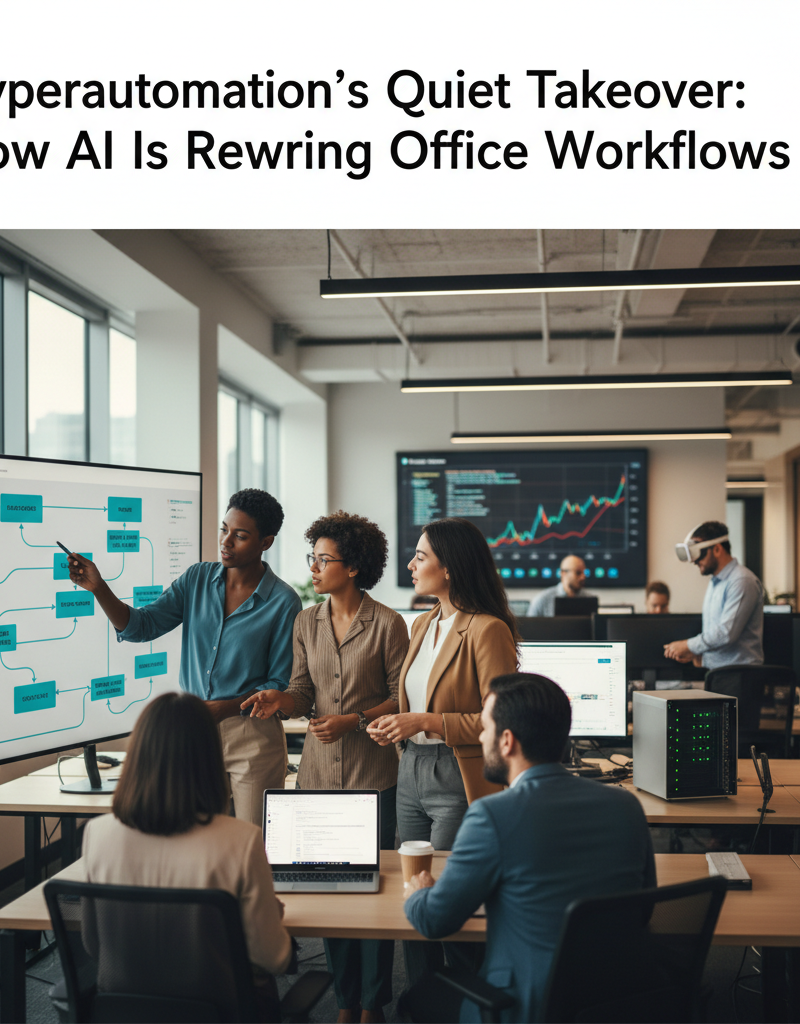
Hyperautomation's Quiet Takeover: How AI Is Rewiring Office Workflows
From Copilot in Power Automate to UiPath's AI tooling, automation is moving from scripts to judgment — what firms and workers should actually prepare for

RPA’s AI Makeover: Why Enterprises Are Wiring LLMs Into Automation Workflows
Robotic process automation is getting a generational upgrade as large language models move from pilots to production. Here’s what CIOs, investors, and operators need to know.
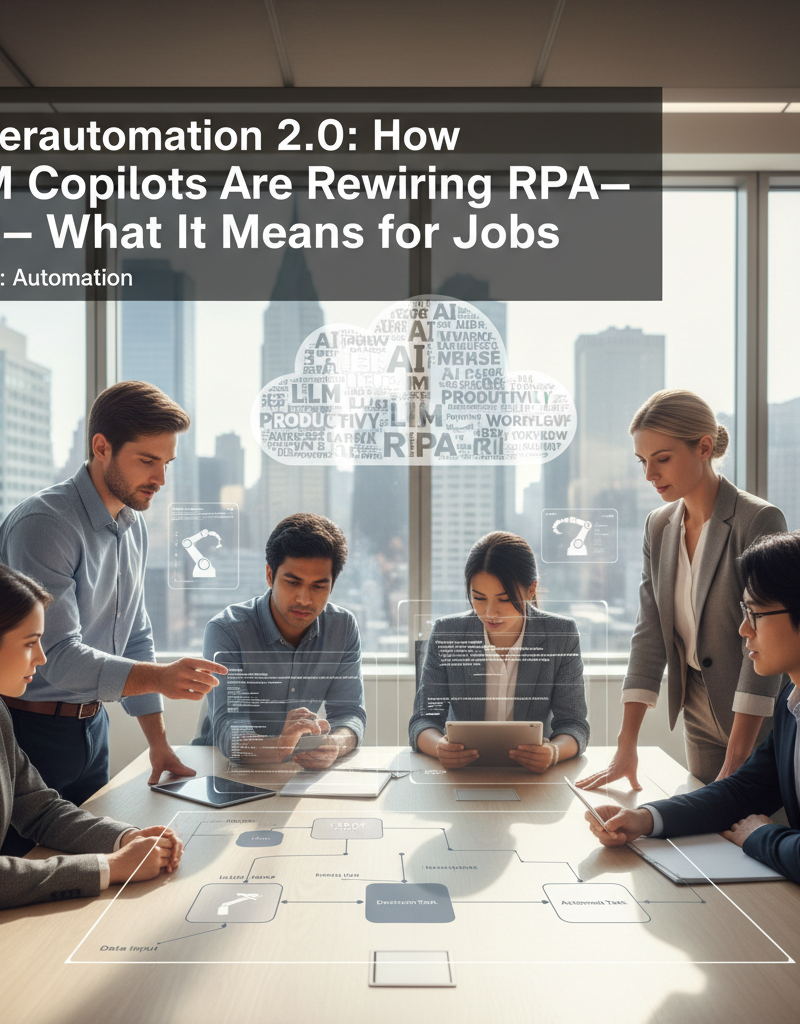
Hyperautomation 2.0: How LLM Copilots Are Rewiring RPA—and What It Means for Jobs
Large language models have moved from assistants to workflow builders. Enterprise automation is becoming creative work—and a battleground for skills, costs and control.

LLMs Are Breaking RPA: What Microsoft, UiPath and Companies Must Do Next
Large language models are turning rule-based bots into cognitive workers. How Power Automate, UiPath and peers will redraw productivity, risk and jobs.

GenAI Meets RPA: How Automation Is Moving From Rules to Judgment
From UiPath to Microsoft, automation suites are folding in generative models so software can interpret ambiguity — and change which roles get automated.

Autonomous AI Agents Break Out of the Lab — What Businesses Need to Do Now
From AutoGPT experiments to production-grade copilots: autonomous agents are moving into real workflows. Here’s where value — and risk — will show up first.

When Bots Become Strategy: How Autonomous Agents Are Rewiring Enterprise Automation
Generative AI is turning RPA into autonomous agents that plan, execute and learn. Companies that move fast get productivity — and governance headaches.

When Bots Get Smarter: How Generative AI Is Supercharging Enterprise Automation
LLMs are turning rule-based RPA into adaptive, data-aware workflows — reshaping cost structures, job roles and vendor strategies across American corporations.
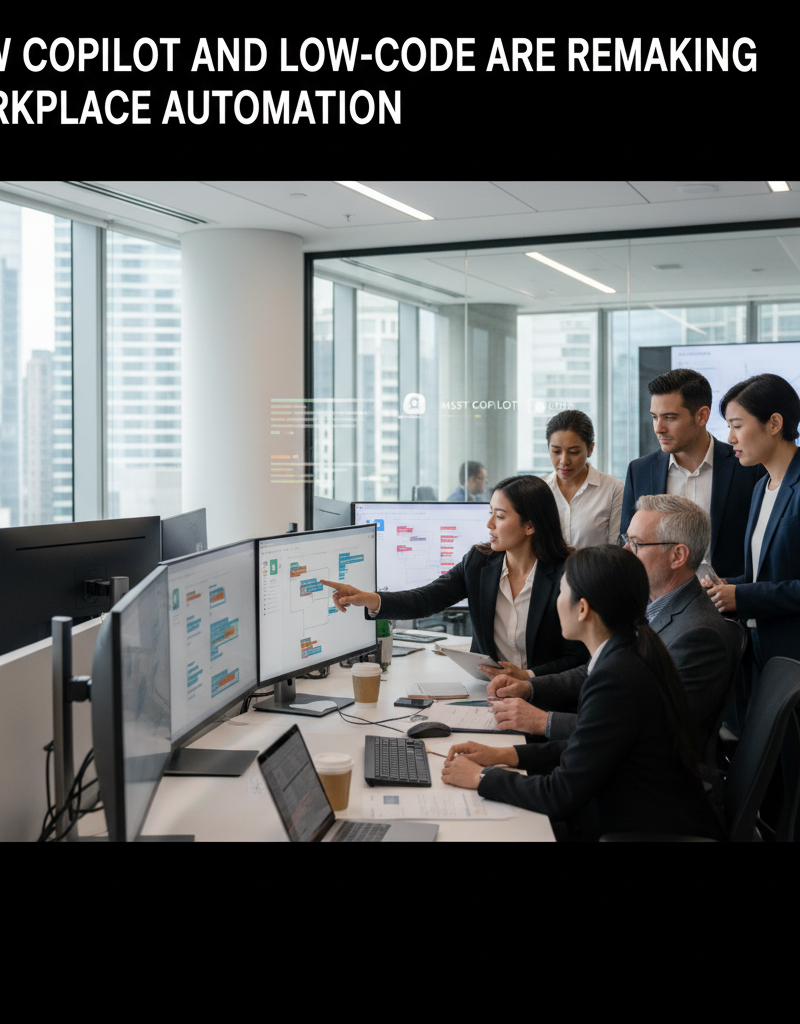
How Copilot and Low-Code Are Remaking Workplace Automation
Microsoft's Copilot is collapsing the barrier between business users and automation. What that means for finance teams, RPA vendors and investors.

GenAI Broke Into RPA — Now Automation Can Replace the Middleman
Large language models are fusing with robotic process automation to stitch emails, APIs and spreadsheets into end-to-end workflows. Companies must adapt fast.