
Phones Without Cloud: How On‑Device AI Is Rewiring Big Tech and Chip Stocks
A quiet hardware arms race is moving large language models onto handsets. Privacy, latency, and profit margins are shifting the balance between cloud giants and chipmakers.
The Offline AI Rush: How On‑Device LLMs Are Rewriting the Smartphone Playbook
From privacy gains to battery headaches, on‑device large language models force chipmakers, apps and regulators to rethink mobile AI—and investors to reassess winners.

On-Device AI Goes Mainstream: Your Phone as a Private, Powerful Assistant
As chip makers and developers push compact LLMs and NPUs into handsets, expect faster answers, tighter privacy—and a shakeup in how apps make money.

How On‑Device LLMs Are Rewriting the Rules for AI Tools
As models shrink and compute spreads to phones and laptops, startups and incumbents race to make generative AI private, fast, and cheaper—here’s what that really means.

On-Device AI Boom: Privacy-First LLMs Move From Labs to Laptops
As small, powerful language models run locally on phones and Macs, startups and incumbents are racing to redefine AI tools around privacy, latency and new business models.

The Offline AI Arms Race: How Phones Are Becoming Private Copilots
From Apple’s Neural Engine to Qualcomm’s AI silicon, on-device models promise speed and privacy — but power, updates, and monetization will decide the winners.

When Your Phone Balances Your Budget: On-Device AI Comes for Finance
Local LLMs and edge intelligence are pushing budgeting, fraud checks, and credit insights onto your handset — faster, private, and messier than you think.

On-Device AI Breaks Out: Local LLMs, Chip Wars, and Why Privacy Isn't Enough
Phones and laptops are starting to run useful language models locally. Expect faster experiences, new business models, and a messy scramble over hardware and control.

Why On-Device AI Is the Next Profit Frontier for Apple and Qualcomm
Offline models are no longer a privacy-only talking point — they cut latency, save cloud costs, and open new app economics that will redraw who captures value in AI.

On-Device AI Is Coming for Your Phone: Why Offline LLMs Will Reshape Privacy and Profits
Local large language models are moving onto smartphones and edge chips. Expect faster responses, new business models, and a headache for cloud-only players.

Your Next Phone Will Run GPT-Like Models Offline — Here’s What That Means
On-device AI is finally practical: expect faster privacy-preserving assistants, new app business models, and headaches for battery, updates, and regulators.

The Silent Shift: On-Device AI Tools Turning Your Phone into a Private Supercomputer
Local LLMs and edge AI are trimming latency, cutting cloud bills, and forcing a rethink of how firms monetize intelligence — and investors should pay attention.

The Local Brain: How On-Device AI Is Quietly Rewriting the Smartphone Playbook
Phones are becoming their own AI servers. That matters for privacy, latency, and who wins in silicon and services—cloud is not dead, but its role is shifting.

Local LLMs on Your Phone: How On‑Device AI Is Rewriting Privacy, Performance and Profits
From NPUs to 4-bit quantized models, on-device generative AI is reshaping apps, monetization and investor bets — and not always in the ways you expect.
The On‑Device AI Wave: How Tiny LLMs Are Rewriting the Tools Market
Lightweight language models moving from the cloud to phones and edge chips are changing privacy, speed, and who profits from AI tools.

On-Device LLMs Are Coming for Your Wallet: How Tiny AI Will Rewire Personal Finance
Tiny language models running on phones promise private, instant finance features. Here is who wins, who loses, and what this means for banks and investors.
The Phone That Thinks Offline: How On‑Device AI Is Rewriting Big Tech's Playbook
A pivot from cloud-first to edge-first AI is quietly remaking privacy, app economics, and the chip race. Phones running LLMs are not sci‑fi — they’re a market shift investors ignore at their peril.
The Quiet Revolution: On-Device LLMs Are Rewiring AI Tools
From instant replies to privacy-first features, local models are forcing startups, chipmakers, and cloud giants to rethink how AI tools are built and sold.

Why Americans Are Moving AI Off the Cloud — The Rise of Local LLMs
On-device AI is winning users on privacy, cost and latency. What that means for consumers, startups and the cloud giants.

The Local LLM Rush: Why Your Phone Is Becoming a Private AI Hub
From Apple’s Neural Engine to Qualcomm’s AI cores — on-device models are reshaping privacy, app economics, and where intelligence actually lives.

Why On‑Device LLMs Are the Next Big Thing in AI Tools
Local large language models are quietly changing how companies build AI tools—speed, privacy and new business models are breaking the cloud-first script.

How On-Device AI Is Quietly Rewriting Big Tech’s Playbook
Smartphones, chips and lean models are pushing intelligence off the cloud—here’s what that means for privacy, latency, and investors.

The Local AI Rush: How Tiny LLMs Are Turning Every Phone Into a Private Assistant
Quantized models, faster NPUs and a privacy-first narrative are remaking apps, cloud economics and what your smartphone can do offline

Your Phone as a Private Financial Advisor: On-Device AI Comes for Banking
Lightweight local models are enabling offline budgeting, privacy-preserving credit tools, and a new battleground for chips and banks.

On-Device AI Is Now a Battleground: How Apple, Qualcomm and Google Are Rewriting Mobile Intelligence
Tiny models, big stakes — why the shift from cloud-first to on-device AI will reshape apps, chips and user privacy in the next smartphone cycle

On-Device LLMs Break Free: The End of Cloud-Only AI for Phones?
How local large language models are reshaping privacy, app economics, and the chip wars—what consumers and investors need to know now.
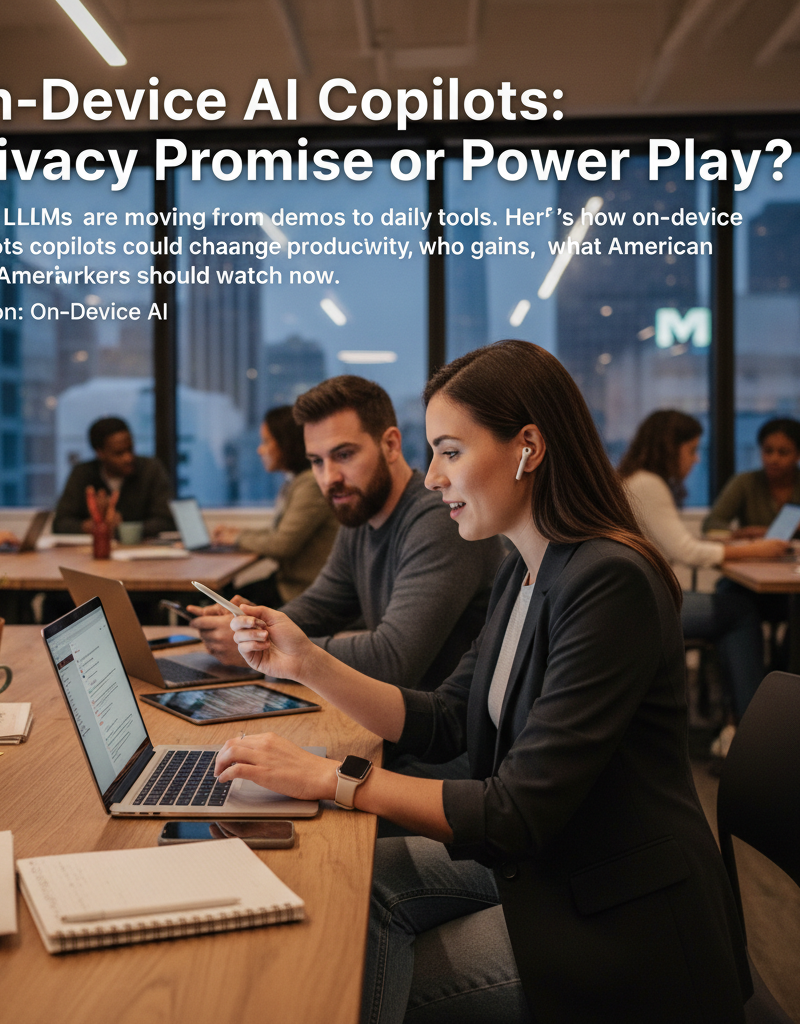
On-Device AI Copilots: Privacy Promise or Power Play?
Local LLMs are moving from demos to daily tools. Here’s how on-device copilots could change productivity, who gains, and what American workers should watch now.

On-device AI is eating the cloud: How edge LLMs will remake the AI business
A quiet structural shift is underway as small, powerful models move onto phones and gateways—upending cloud fees, privacy promises and who wins in the AI value chain.
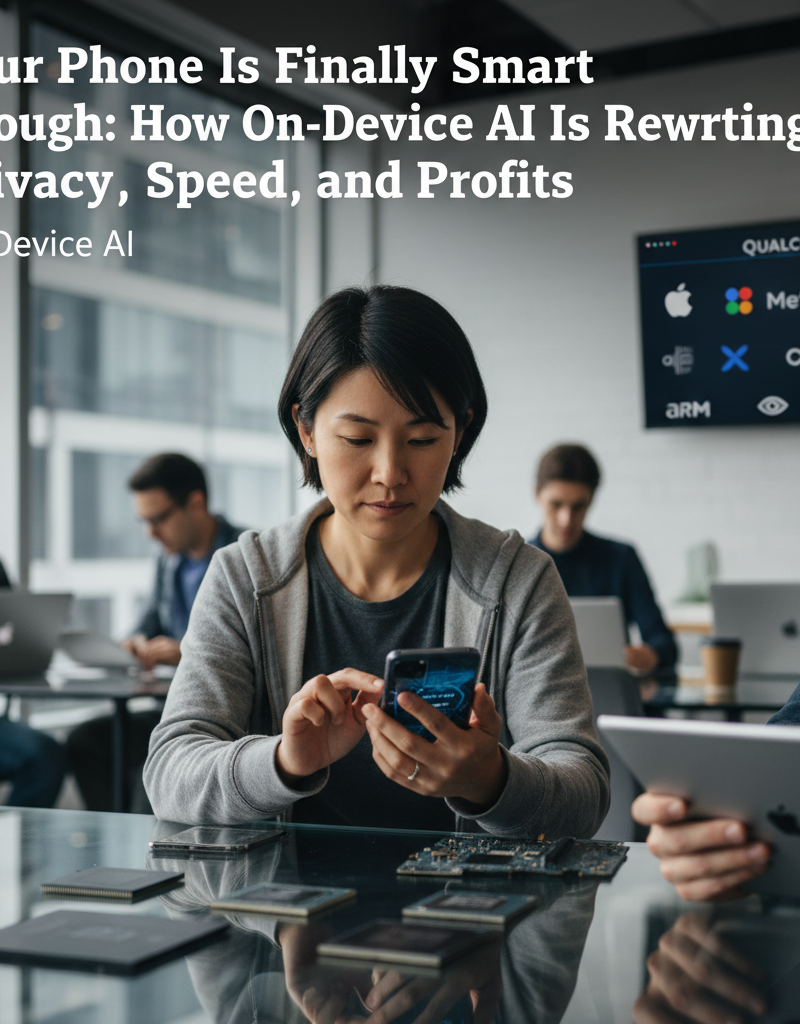
Your Phone Is Finally Smart Enough: How On-Device AI Is Rewriting Privacy, Speed, and Profits
Tiny neural engines, aggressive quantization and smarter chips mean generative AI can run on phones — and that will upend cloud businesses, chip winners, and privacy trade-offs.

Why On‑Device AI Is Quietly Eating the Cloud—and What It Means for iPhone Users and Investors
Phones are becoming full-fledged AI hubs. The shift to on‑device LLMs changes privacy, latency, app economics and chip winners—and the cloud won't disappear, but it will look different.

The Quiet Coup: On‑Device LLMs Are Rewriting the AI Tools Playbook
As enterprises chase privacy and lower costs, local large language models are shifting AI tools from cloud-only copilots to on-prem and edge assistants — and that matters more than most headlines suggest.

Local AI Is Here: What Device-Based LLMs Mean for Privacy, Big Tech and Your Wallet
Edge LLMs—models that run on your phone or laptop—are moving from demos to daily drivers. Here’s why that shift matters for consumers, cloud giants and chipmakers.

Why Your Next Phone Will Run a Full-Fledged AI — Offline
On-device LLMs are crossing the gap from lab demos to everyday apps. Here’s what that means for privacy, performance, and the companies that stand to win.

The Offline AI Boom: Why Phones Are Becoming Privacy-first Supercomputers
On-device models are finally practical — a shift that rewrites privacy, chips, and who profits from AI. Here’s what consumers and investors should watch.
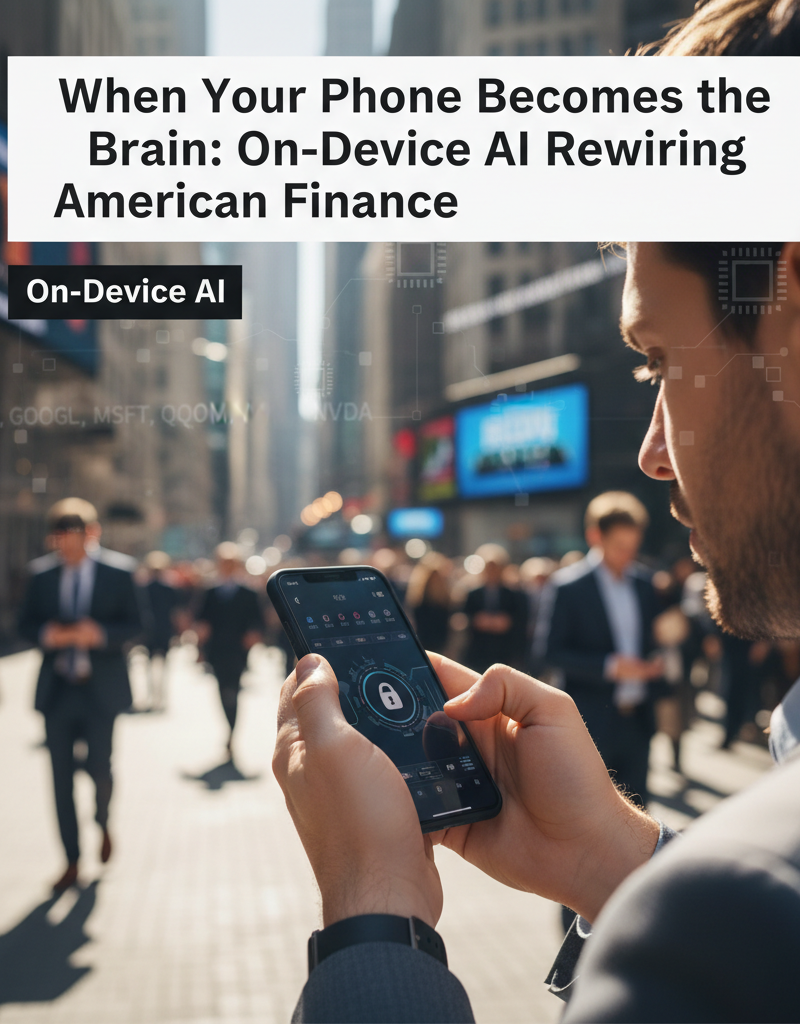
When Your Phone Becomes the Brain: On-Device AI Rewiring American Finance
Tiny LLMs and new silicon are shifting fraud detection, personal finance and trading tools to the handset—privacy gains, regulatory headaches, and fresh monetization models

The Edge Is Eating the Cloud: How On‑Device LLMs Threaten Big AI Players
Local large language models are shedding the cloud's monopoly on intelligence — and investors, enterprises, and consumers need to recalibrate fast.

Why Companies Are Pulling LLMs Off the Cloud and Running Them at the Edge
Enterprises are trading GPU rentals for on-prem inference — a pragmatic reaction to cloud costs, latency, and privacy. Here’s what it means for chips, clouds and CIOs.

Your Phone Just Became an AI Server: The Rise of On‑Device LLMs
How local language models are rewriting privacy, performance, and the mobile app playbook — and which companies and risks matter now

On-Device AI Is Coming for the Cloud: Why Phones Will Cut Your API Bills
Efficient NPUs, quantized models, and new OS-level tooling are shifting LLM compute into smartphones — a disruption that helps privacy, hurts cloud margins, and rewards chipmakers.

Why Local LLMs Are Winning: The New Wave of Privacy-First AI Tools
From server racks to your laptop: how offline and on-device AI tools are reshaping enterprise workflows, developer economics, and investor bets.